

 6 hours ago
3
6 hours ago
3
PROTECT YOURSELF with Orgo-Life® QUANTUM TECHNOLOGY
Orgo-Life the new way to the future Advertising by AdpathwayAfrica Intelligence
One email, every weekday morning. African markets, politics and business — filed from our newsroom in Rio.
Yesterday’s subject line: “Africa's most industrial economy just stopped growing”
Free. We send a confirmation link first — nothing arrives until you click it. Unsubscribe with one click in any edition. If you stop opening us for 30 days we stop sending by ourselves, as we assume the interest is no longer there. See our privacy policy. We never share your email.
DR CONGO · SECURITY
Key Facts
- —The strikes The Congolese army carried out airstrikes on Tuesday evening, September 8, against positions held by the AFC/M23 rebellion at Malemo, in Masisi territory, and at Luola, in Walikale territory, the Kinshasa-based outlet Actualité.cd reported.
- —Why now The strikes followed days of ground fighting on the Masisi–Walikale frontier and the arrival of fresh rebel fighters and ammunition in the area.
- —The result No reliable casualty toll is available, and local sources say the rebels still hold the positions that were targeted.
- —What followed Reinforcement movements were observed after the bombardment around Malemo and toward Ihula, in the Balindu locality of Walikale, raising fears of a wider rebel push toward the strategic town of Pinga.
- —The bigger picture The escalation widens the North Kivu front west of Goma and puts further strain on the Doha ceasefire framework signed in July 2025, which both sides accuse each other of violating.
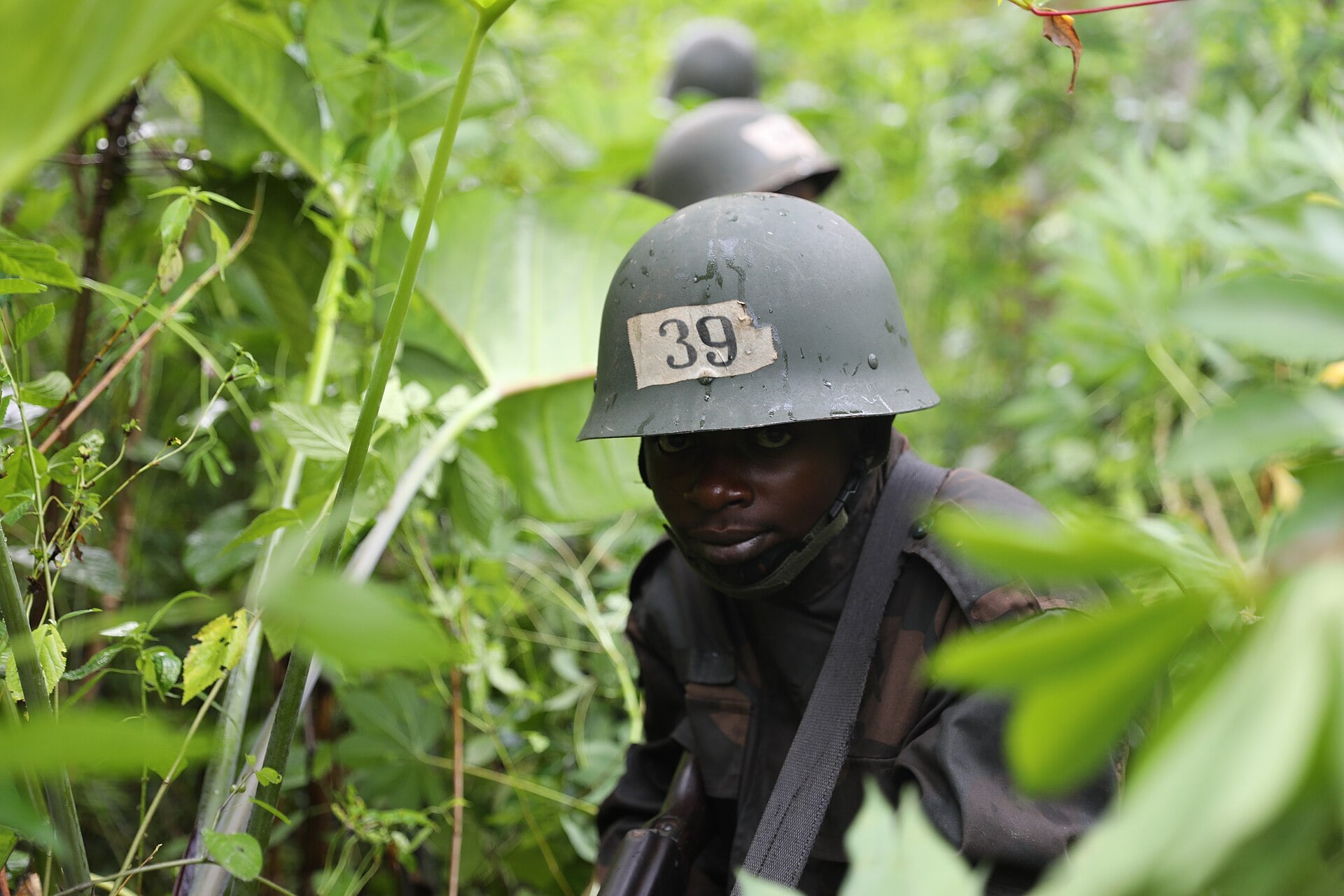
The Congolese army has thrown its air force into the battle for the hills between Masisi and Walikale, bombing rebel positions on Tuesday evening after a week of escalating ground combat. The rebels are reported to be holding their ground — and bringing in reinforcements.
One-stop reference
Company Intelligence
Every listed company in Latin America — financials, ownership and structure for 1,450+ companies across 26 exchanges, in one place.
What happened on Tuesday evening
At around 5 p.m. local time on Tuesday, aircraft of the Armed Forces of the Democratic Republic of the Congo — known by their French initials, FARDC — struck positions held by the AFC/M23 rebellion at Malemo, in the Bashali Mokoto groupement of Masisi territory, and at Luola, in the Kisimba groupement of neighbouring Walikale territory, according to local sources cited by Actualité.cd.
Residents reported loud detonations across the area, causing acute anxiety among civilians. The strikes came after the rebels reinforced their positions along this strategic frontier with new fighters and ammunition. As of Wednesday, no reliable casualty toll was available, and the same sources said the rebels remained in the targeted positions.
After the bombardment, reinforcement movements were observed around Malemo and toward Ihula, in the Balindu locality of Walikale. Local sources told Actualité.cd the movements could be preparation for a broader offensive along the Malemo–Mindjendje and Luola–Mpety axes, with the presumed objective of advancing toward Pinga, a strategic town in Walikale.
A frontier that has been burning for a week
Tuesday’s airstrikes did not come out of nowhere. The army, fighting alongside pro-government militias known as the wazalendo — Swahili for “patriots” — had already been trying for days to retake Luola and a nearby hilltop position from the rebels, with heavy and light weapons fire reported since at least September 2.
Over the weekend the fighting spread. Radio Okapi, the UN-backed broadcaster, reported intense clashes around Kibundi and Mwima that drove residents of at least eight villages to flee toward Ntoto. Local notables also reported bombardments attributed to the AFC/M23 around Mindjendje, about ten kilometres from Pinga, in which government positions on the Katobi, Burayi and Malemo hills were hit and loyalist forces pulled back toward Mpeti.
Displaced families who reached areas judged safer are now waiting to see which way the battle turns, Radio Okapi reported.
Who is who on this front
The FARDC is the national army of the Democratic Republic of the Congo. Against it stands the AFC/M23: the March 23 Movement, a Tutsi-led rebellion that reignited in 2021, now fighting under the umbrella of the Congo River Alliance (Alliance Fleuve Congo, AFC). United Nations experts and several Western governments say the rebels are backed by neighbouring Rwanda, which Kigali denies. The wazalendo are a patchwork of local self-defence militias fighting on the government side.
The AFC/M23 seized Goma, the capital of North Kivu, in early 2025 and still holds it. The Masisi–Walikale frontier lies to the west and northwest of the city, and control of its hilltop villages decides who commands the roads toward the mineral-rich interior.
The Doha framework, under strain
In July 2025 the Congolese government and the AFC/M23 signed a declaration of principles in Doha, Qatar, meant to lead to a ceasefire and a broader peace deal. Fighting never fully stopped, and each side routinely accuses the other of violating the framework. A week of escalation around Masisi and Walikale, now including airstrikes, is the heaviest strain on the Doha track in months.
We reported on August 30 on the government’s counteroffensive on the Kavumu–Kalehe road in South Kivu, the neighbouring province. The new air campaign at the Masisi–Walikale line suggests the army is now trying to stretch the rebellion on two fronts at once — while the rebels, for their part, are signalling that they intend to push west toward Pinga rather than dig in.
This report is based on Actualité.cd’s September 9 dispatch from the Masisi–Walikale frontier, Radio Okapi’s reporting on the weekend escalation and displacement, and background on the Doha process from Anadolu Agency and UN coverage.
Frequently asked questions
Where did the Congolese airstrikes hit?
Rebel-held positions at Malemo, in Masisi territory, and at Luola, in Walikale territory — both in North Kivu province, west of Goma — at around 5 p.m. local time on Tuesday, September 8.
Who are the AFC/M23?
The March 23 Movement, a rebellion that reignited in 2021 and now fights under the Congo River Alliance (AFC) umbrella. It holds Goma and large parts of eastern Congo, and is accused by the UN of receiving Rwandan backing, which Rwanda denies.
Who are the wazalendo?
Pro-government self-defence militias — the word means “patriots” in Swahili — who fight alongside the Congolese army (FARDC) against the M23.
Were there casualties?
No reliable casualty toll is available. Local sources say the rebels still held the targeted positions after the strikes.
What is the Doha framework?
A declaration of principles signed by the Congolese government and the AFC/M23 in Doha in July 2025, intended to produce a ceasefire and peace deal. Fighting has continued regardless, with each side accusing the other of violations.
This article was produced by The Rio Times’ automated newsroom system. How we use AI · Report an error
The Rio Times · Power Map
See who really holds power in Latin America
Click to open the Power Map →











 English (US) ·
  French (CA) ·
  French (FR) ·