

 5 hours ago
4
5 hours ago
4
PROTECT YOURSELF with Orgo-Life® QUANTUM TECHNOLOGY
Orgo-Life the new way to the future Advertising by AdpathwayAfrica Intelligence
One email, every weekday morning. African markets, politics and business — filed from our newsroom in Rio.
Yesterday’s subject line: “Africa's most industrial economy just stopped growing”
Free. We send a confirmation link first — nothing arrives until you click it. Unsubscribe with one click in any edition. If you stop opening us for 30 days we stop sending by ourselves, as we assume the interest is no longer there. See our privacy policy. We never share your email.
MOROCCO · ELECTIONS
Key Facts
- —The latest offer The Left Alliance, a coalition of two small socialist parties, launched a 431-measure election programme in Casablanca on Tuesday costed at MAD 500 billion (about US$53 billion) over five years.
- —The rivals’ price tags The Authenticity and Modernity Party (PAM) has costed its platform at MAD 350 billion (about US$37 billion) in additional five-year spending. The Party of Progress and Socialism (PPS) proposes MAD 575 billion (about US$61 billion) in new spending against MAD 622 billion (about US$66 billion) in new revenue.
- —The vote Moroccans elect all 395 seats in the House of Representatives on 23 September; 198 seats are needed for a majority. The party of incumbent Prime Minister Aziz Akhannouch is defending its lead.
- —The watchers The national accreditation committee has approved 3,006 election observers to monitor the vote, alongside a civil-society coalition fielding about 1,700 more.
- —The exchange rate Conversions in this article use a rate of about 9.4 Moroccan dirhams (MAD) to the US dollar, as quoted by currency.me.uk on 9 September 2026.
Two weeks before Moroccans vote, the country’s election campaign has turned into an auction. On Tuesday the Left Alliance presented 431 fully costed measures with a total price tag of half a trillion dirhams — the largest, but not the only, nine-figure promise of a campaign in which every major party now publishes a bill for its ambitions.
One-stop reference
Company Intelligence
Every listed company in Latin America — financials, ownership and structure for 1,450+ companies across 26 exchanges, in one place.
What the Left Alliance is promising
The Left Alliance brings together the Democratic Left Federation (known by its French initials, FGD), a coalition of small left-wing parties led by Abdessalam Aziz, and the Unified Socialist Party (PSU), led by Jamal El Asri. The two parties formed the alliance in June and presented their joint programme in Casablanca on Tuesday under the slogan “Dignity first — for a democratic, productive and just Morocco.”
The platform is a five-year roadmap running from 2027 to 2031, with 431 measures and a total envelope of MAD 500 billion (about US$53 billion). Its centrepieces are social: a unified minimum wage of MAD 5,000 (about US$530) net per month by 2029 across agricultural and non-agricultural sectors; a birth bonus of MAD 5,000 (about US$530) for mothers giving birth in public hospitals; a monthly allowance of MAD 1,500 (about US$160) for unemployed graduates, people with disabilities and pensioners without pensions; and an increase in direct social support to MAD 39 billion (about US$4.1 billion) a year.
On education and health — described as absolute priorities — the alliance earmarks MAD 70.9 billion (about US$7.5 billion) for schools and universities and MAD 80.2 billion (about US$8.5 billion) for public health. It also proposes buying the assets of the mothballed Samir oil refinery to restore domestic fuel production, which it estimates could lower fuel prices by MAD 3 to 5 (about US$0.30 to 0.55) per litre.
The alliance says it would finance the programme mainly through what it calls fiscal justice rather than new debt: raising the tax burden to 25.8 percent of gross domestic product, cutting unjustified tax breaks by about 39 percent, bringing treasury debt down to 63 percent of GDP and holding the budget deficit between 3.8 and 4 percent.
The numbers war
What makes this campaign unusual for Morocco is not the generosity of the promises but the fact that they come with price tags. The Authenticity and Modernity Party (PAM) — a liberal-leaning party founded in 2008, now the largest opposition bloc in parliament with 87 seats, led by Fatima Ezzahra El Mansouri — has promised at least one million net jobs by 2031 and costed its platform at MAD 350 billion (about US$37 billion) in additional cumulative spending over five years, roughly MAD 70 billion (about US$7.4 billion) per year. PAM says most of that would come from higher revenue generated by faster growth, targeting an average of 5 percent a year.
The Party of Progress and Socialism (PPS) — the successor to Morocco’s historic communist party, led by Nabil Benabdallah and currently holding 22 seats — went further. It says its programme requires MAD 575 billion (about US$61 billion) in additional spending over five years, but claims this would be covered by MAD 622 billion (about US$66 billion) in new revenue, leaving a surplus of about MAD 47 billion (about US$5 billion). The party concedes the arithmetic is a projection: it says each measure carries a specified cost, financing source and deadline, but has not detailed how the additional revenue would be raised.
The governing parties, led by Prime Minister Aziz Akhannouch’s National Rally of Independents (RNI), which holds 102 of the 395 seats, have so far campaigned on their record rather than on a single headline figure. Whether the costed-manifesto race pressures them into publishing their own consolidated number is one of the questions of the final fortnight.
The mood behind the bidding
The context for the auction is a restless electorate. Aziz, opening the Left Alliance’s presentation, recalled that transport stations had filled with young Moroccans trying to leave the country — a reference to the recent surge in youth attempts to reach the Spanish enclave of Ceuta — and argued they were emigrating because they no longer trusted their country’s future. Drought, the cost of living and a series of protests by teachers, medical students and other professional groups have shaped the campaign.
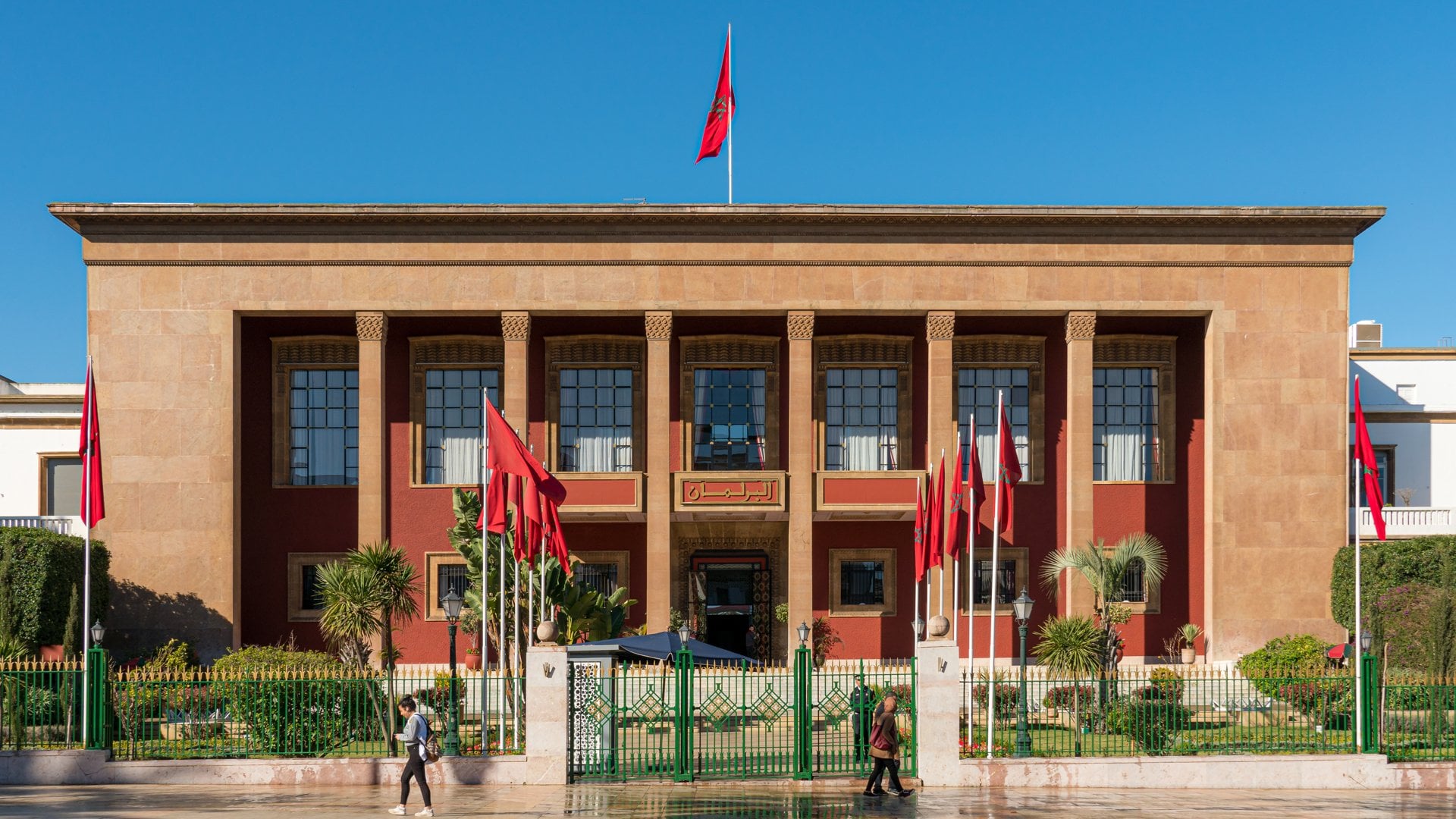
Morocco’s elections are managed contests in a monarchy where King Mohammed VI holds ultimate authority and appoints the prime minister from the winning party. But the parliamentary competition on 23 September is real: all 395 seats in the House of Representatives are at stake, 198 are needed for a majority, and the outcome determines the government’s direction for five years. Turnout, which fell sharply in 2021, is the number the parties fear most.
Who is watching
The national committee responsible for accrediting election observers has approved 3,006 observers — from non-governmental organisations, the National Human Rights Council (CNDH) and international bodies — to monitor the various stages of the vote, according to Moroccan media. A separate civil-society coalition, the Collective for Associative Election Observation, says it will deploy about 1,700 independent observers of its own.
Their reports will matter. A campaign fought over costed programmes gives observers — and voters — an unusually concrete benchmark against which to measure whoever forms the next government.
Frequently asked questions
When is Morocco’s election?
Moroccans vote on 23 September 2026 for all 395 seats in the House of Representatives, the lower house of parliament. A majority requires 198 seats.
What is the Left Alliance in Morocco?
A coalition formed in June 2026 between the Democratic Left Federation (FGD), a grouping of small left-wing parties, and the Unified Socialist Party (PSU). It launched a 431-measure election programme costed at MAD 500 billion (about US$53 billion) over five years.
What are the other parties promising?
The Authenticity and Modernity Party (PAM) has costed its platform at MAD 350 billion (about US$37 billion) in additional five-year spending and promises one million jobs by 2031. The Party of Progress and Socialism (PPS) proposes MAD 575 billion (about US$61 billion) in new spending, which it says would be covered by MAD 622 billion (about US$66 billion) in new revenue.
What is the dirham worth?
About 9.4 Moroccan dirhams (MAD) to the US dollar, the rate quoted by currency.me.uk on 9 September 2026. All conversions in this article use that rate.
Will international observers monitor the vote?
Yes. A national accreditation committee has approved 3,006 observers from NGOs, the national human rights council and international organisations, and a civil-society collective plans to field about 1,700 more.
Sources
- Morocco World News — Left Alliance launches election program of 431 measures
- Hespress English — PPS election program proposes MAD 575 billion (about US$61 billion) in additional spending
- Barlaman Today — PAM sets out MAD 350 billion (about US$37 billion) financing plan
- Yabiladi — Morocco accredits more than 3,000 observers for 2026 elections
- Hespress English — Election coalition deploys 1,700 observers
This article was produced by The Rio Times’ automated newsroom system. How we use AI · Report an error
The Rio Times · Power Map
See who really holds power in Latin America
Click to open the Power Map →








 English (US) ·
  French (CA) ·
  French (FR) ·