

 6 hours ago
2
6 hours ago
2
PROTECT YOURSELF with Orgo-Life® QUANTUM TECHNOLOGY
Orgo-Life the new way to the future Advertising by AdpathwayAfrica Intelligence
One email, every weekday morning. African markets, politics and business — filed from our newsroom in Rio.
Yesterday’s subject line: “Africa's most industrial economy just stopped growing”
Free. We send a confirmation link first — nothing arrives until you click it. Unsubscribe with one click in any edition. If you stop opening us for 30 days we stop sending by ourselves, as we assume the interest is no longer there. See our privacy policy. We never share your email.
WEST AFRICA · CENTRAL BANK
Key Facts
- —What happened The BCEAO — the shared central bank of the eight CFA-franc countries of West Africa — held its main interest rate at 3.00% at its policy meeting in Dakar on September 9.
- —The other dials The marginal lending rate, the emergency window for banks, stays at 5.00%. Both rates have been unchanged since March 16, 2026. The reserve requirement remains 3.00%.
- —The turn Inflation has flipped positive: 0.4% in the second quarter after minus 0.2% in the first, then 1.2% in July and 1.7% in August, driven by fuel and transport costs.
- —The growth base The union’s economy grew an estimated 6.0% year on year in the second quarter, with 6.1% forecast for 2026 as a whole. Credit to businesses and households rose 6.6% in the year to June.
- —The risk named The bank flagged the Middle East crisis and its effect on energy prices as the main threat to the inflation outlook, and reserved the right to act if needed.
West Africa’s shared central bank left its interest rates untouched in Dakar on Wednesday and turned its attention to a new problem: inflation, after two years of falling prices, is climbing again on the back of fuel costs.
One-stop reference
Company Intelligence
Every listed company in Latin America — financials, ownership and structure for 1,450+ companies across 26 exchanges, in one place.
What the BCEAO is, and what it decided
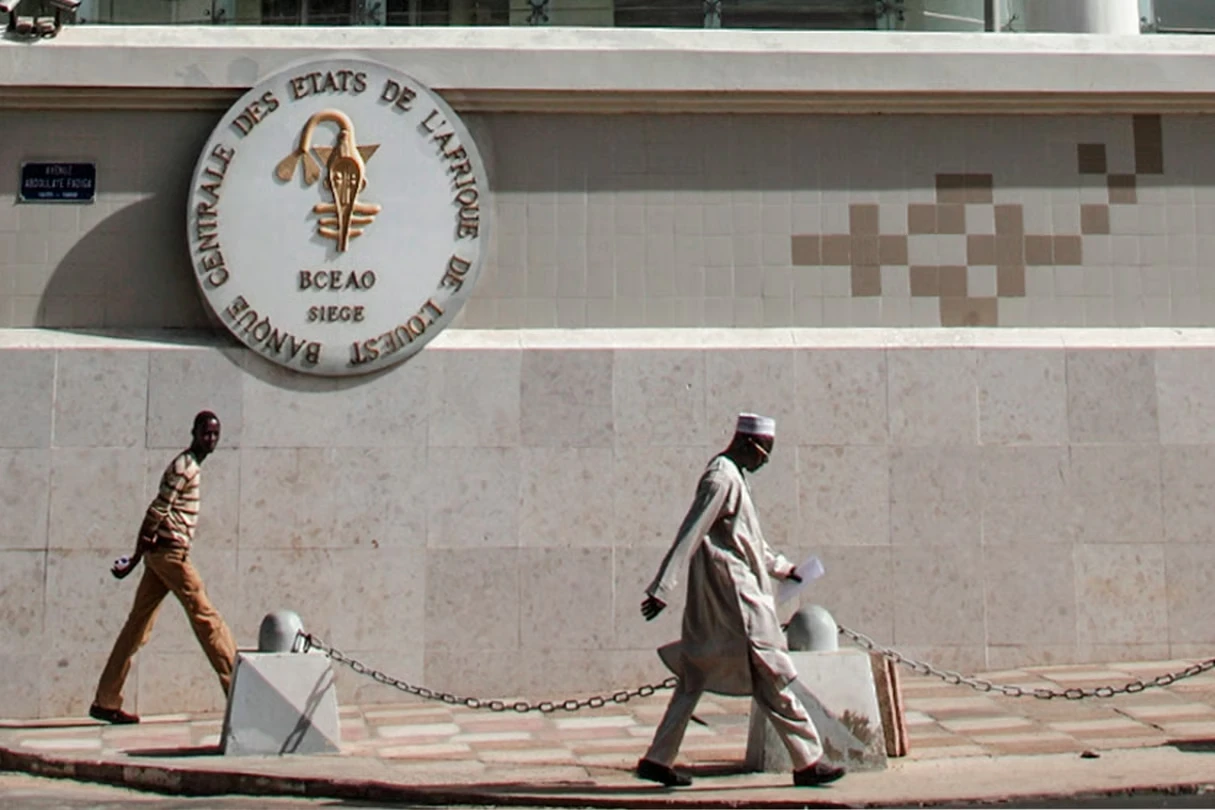
The BCEAO — the Central Bank of West African States, from its French initials — is the shared central bank of eight countries that use the CFA franc: Benin, Burkina Faso, Côte d’Ivoire, Guinea-Bissau, Mali, Niger, Senegal and Togo. Together they form the West African Economic and Monetary Union, known by its French acronym UEMOA, and the currency is pegged to the euro.
Its monetary policy committee — the equivalent of the Federal Reserve’s rate-setting panel — met in Dakar on September 9 and left every instrument unchanged. The main policy rate, the price at which commercial banks borrow from the central bank, stays at 3.00%. The marginal lending facility, the more expensive emergency window, stays at 5.00%. Both have held since March 16, 2026.
The reserve requirement — the share of deposits banks must park at the central bank rather than lend out — remains 3.00%.
Why holding still is the story
For two years the union’s inflation problem ran in reverse: prices were falling. That ended this year. Inflation came in at minus 0.2% in the first quarter, then plus 0.4% in the second, and the monthly readings since have accelerated — 1.2% in July and 1.7% in August.
The driver is transport. Most member states have raised pump prices as oil has firmed, and fuel feeds directly into the cost of moving everything else. Housing, meat, fish and vegetables added to the pressure.
The BCEAO expects inflation to average about 1% across 2026, after roughly zero in 2025 — still comfortably below the union’s 3% tolerance band. Holding rates steady while prices accelerate gently is a deliberate choice: the bank is protecting the recovery first and watching prices second.
The growth that buys it room
The union’s economy expanded an estimated 6.0% in the second quarter compared with a year earlier, after 6.1% in the first, and the bank forecasts 6.1% for the full year. That is among the fastest regional growth rates in the world.
Exports are helping. The external position strengthened in the second quarter on rising earnings from gold, cotton, cocoa and oil. Bank credit to the private sector grew 6.6% in the year to June, up from 6.0% in the year to March — a sign that cheap central-bank money is reaching the real economy.
Governor Jean-Claude Kassi Brou framed the decision as steadiness under uncertainty: the indicators are green, but the committee will act if price risks materialize.
The risk it cannot control
The named danger is the Middle East. The crisis there has already lifted energy prices, and the union imports most of its fuel. A further rise would push inflation above the forecast and force the bank to choose between its growth stance and its price mandate.
For now, the committee’s message is that monetary conditions fit the moment. The next test arrives with the autumn inflation readings — and with whatever the oil market does next.
Background: Brazil Inflation Rate 2026: IPCA, Selic and What’s Next.
Frequently Asked Questions
What is the BCEAO?
The Central Bank of West African States, the shared central bank of the eight countries that use the CFA franc: Benin, Burkina Faso, Côte d’Ivoire, Guinea-Bissau, Mali, Niger, Senegal and Togo. It is headquartered in Dakar.
What did the BCEAO decide on September 9?
It held its main policy rate at 3.00% and its marginal lending rate at 5.00%, both unchanged since March 16, 2026, and kept the reserve requirement at 3.00%.
Is inflation rising in West Africa?
Yes, from a very low base. After falling prices in 2025 and early 2026, inflation reached 0.4% in the second quarter and accelerated to 1.7% by August, driven by fuel and transport. The bank forecasts about 1% for 2026.
How fast is the region growing?
The monetary union grew an estimated 6.0% year on year in the second quarter of 2026, and the BCEAO forecasts 6.1% growth for the full year.
What is the CFA franc?
The common currency of the union’s eight members, pegged to the euro and backed by a shared central bank — which is why one rate decision in Dakar applies from Benin to Senegal.
Sources: BCEAO monetary policy committee communiqué (Dakar, September 9, 2026) via Financial Afrik; APS; Sika Finance.
This article was produced by The Rio Times’ automated newsroom system. How we use AI · Report an error
LatAm Markets: Live Signals → — real-time movers, turnover leaders and FX across Latin America.
The Rio Times · Power Map
See who really holds power in Latin America
Click to open the Power Map →















 English (US) ·
  French (CA) ·
  French (FR) ·