

 2 months ago
52
2 months ago
52
PROTECT YOURSELF with Orgo-Life® QUANTUM TECHNOLOGY
Orgo-Life the new way to the future Advertising by Adpathway- The rand is on course for a 8% drop in March, which will outstrip its losses during “Nenegate”.
- The Iran war has triggered a dollar rally as investors flee to safety, while there are concerns about SA’s terms of trade and inflation outlook.
- For now, however, the rand’s slide over the past month is still not among the most dramatic in recent years.
- For more financial news, visit News24 Business.
The rand has already lost nearly 8% of its value in March, putting it on course to surpass the 7% “Nenegate” crash in December 2015, when former President Jacob Zuma fired Finance Minister Nhlanhla Nene.
From below R16 early in March, the local currency is currently trading at R17.09 – after blowing out to above R17.2490 as uncertainty about the Iran war, which started a month ago, continues.
The rand has come under pressure as investors flee to the dollar, with the war putting a halt to the US currency’s four-month-long losing streak. Amid market uncertainty, the dollar has benefited from safe-haven flows, with the rand traditionally one of the first currencies to be sold off when investors are risk-averse.
As a net energy exporter, the US has not been as affected by the effective closure of the Strait of Hormuz, which has throttled the world’s oil supplies. But US fuel costs have surged along with the global oil prices, which will fuel inflation. US interest rates are now expected to increase this year. This will make the rates offered on rand assets look less attractive by comparison.
The rand has also been hit by concerns about inflation in South Africa and the country’s growth outlook.
On Wednesday, the diesel price is expected to be hiked by more than R10 a litre, and the transport cost shock will push prices higher across a range of goods.
READ | It’s going to be rough: The final fuel increases you must expect
Concerns about SA’s current account has added to pressure on the rand, with reduced foreign income from exports expected, along with an increase in import prices. Together this will reduce the demand for the local currency.
“Oil prices are 30% higher while the gold price has declined by around 20%, resulting in a deterioration in SA’s terms of trade,” said Nolan Wapenaar, head of fixed income and co-CIO of Anchor Capital. “As a net importer of oil, this dynamic places pressure on SA’s current account and contributes to rand weakness.”
“Although we do not believe a sustained move in the rand beyond R17.00/$ is fundamentally justified, sentiment-driven volatility and global risk aversion may lead to temporary overshooting.”
READ | Rand at mercy of Trump’s ‘Truth’ as Iran war clouds rates, inflation outlook
“The longer the Strait of Hormuz is closed, the more volatility we can expect,” says Gryphon Asset Management portfolio manager Casparus Treurnicht.
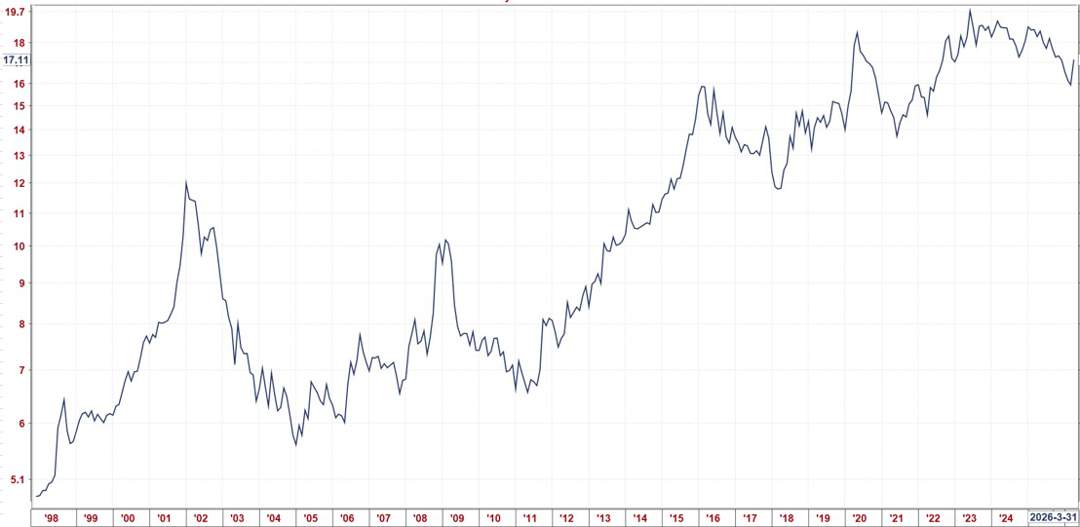
Dollar-rand exchange rate (monthly rates)
Gryphon Asset Management
For now, however, the rand’s slide over the past month is still not among the most dramatic in recent years:
October 2008 –19% decline in the dollar/rand exchange rate over the month

Employees comfort each other outside Lehman Brothers' London on September 15, 2008 in London. The fourth largest American investment bank filed for bankruptcy protection during a growing financial crisis.
Cate Gillon/Getty Images
The global financial crisis was at fever pitch after the investment bank Lehman Brothers collapsed. In the following weeks, this caused a rush into safe-haven assets like the dollar and US bonds, with the rand and other riskier assets sold off. The rand slumped from R8.191 to close to R11.90 on the month, ending at R9.77.
December 2001 –17%
The rand blew out from R10.26 to above R13.80 over the month, ending at around R12. The September 11 attacks on the US depressed the global economic outlook and worsened risk aversion, which contributed to rand selling. Investors were concerned about SA’s outlook, in part due to its current account deficit.
September 2011 –16%
The European debt crisis blew up, with fears that Greece would default or leave the euro. Across the world, investors were unnerved and pulled money out of emerging markets like South Africa to move it into safer assets. The local currency lost more than R1, falling from below R7 to above R8 during the month.
March 2020 –14%
The Covid-19 pandemic triggered a sharp market shock, with the rand one of the biggest victims. Unnerved by the economic impact of global lockdowns, investors dumped emerging-market assets for the safety of the dollar. The rand ended the month at R19.72/$ after trading below R18.05 at the start of March 2020.
May 2003 –13%
After huge losses in 2001, the rand staged a comeback the following year, rocketing more than 30%. It started 2003 on a strong footing thanks to interest rate hikes (which make SA assets more attractive to yield-seeking investors) and the Reserve Bank’s commitment to inflation targeting. Amid the uncertainty about the economic fallout of the Iraq War, which started in March, the currency suffered a correction in May, falling from R7.16 to R8 at the end of the month.
May 2013 –12%
After trading below 8.90, the rand breached R10 by the end of the month as strikes at mines and vehicle factories hit SA’s exports. In addition, the rand was hurt by a global “taper tantrum”. On May 22, 2013, the former head of the US central bank, Ben Bernanke, announced that the Fed would start scaling back its bond-buying programme, which has been supporting markets. This set off a wave of panic selling that hurt emerging markets, as the expectation of higher US rates would make other assets look less attractive.
May 2006 –12%
The rand was hit hard during an emerging market crisis, which was triggered by the US Fed hiking interest rates. This caused concern about global economic growth and dimmed the attraction of emerging market assets, which looked less attractive for investors looking for high interest. The currency weakened below R6 the rand weakened to R6.70.
May 2005 –11%
A US rate hike was again to blame for weakness in the rand and other emerging market currencies. The local currency slumped from R15.93 to R6.76.
August 2018 –11%
The rand suffered a double blow: An emerging-market crisis after a 25% slump in the Turkish currency, as well as investor jitters about land reform. An announcement by president Cyril Ramaphosa that the Constitution would be changed to accommodate land expropriation without compensation drew backlash from US president Donald Trump.
The rand dropped from below R13.20 to R15.41, ending the month at R14.69.
May 2016 –10%

A decade ago, the markets slumped amid reports that Pravin Gordhan, who died in 2024, was targeted by authorities during the Zuma regime.
Guillem Sartorio/Bloomberg via Getty Images
The rand slumped from below R14.15 to close to R16 amid reports that the late Pravin Gordhan, then finance minister, faced imminent arrest.
May 2012 –10%
The European debt crisis continued to take a toll on riskier assets, with the rand weakening from R7.69 to R8.50 by the end of May 2012.
January 2008 –10%
Global markets suffered their worst crashes since the 2001 terrorist attacks at the start of 2008, as the first signs of a sub-prime crisis emerged in the US. The rand started the year at around R6.67, but would end the month at R7.49.























 English (US) ·
  French (CA) ·
  French (FR) ·