

 4 hours ago
3
4 hours ago
3
PROTECT YOURSELF with Orgo-Life® QUANTUM TECHNOLOGY
Orgo-Life the new way to the future Advertising by Adpathway
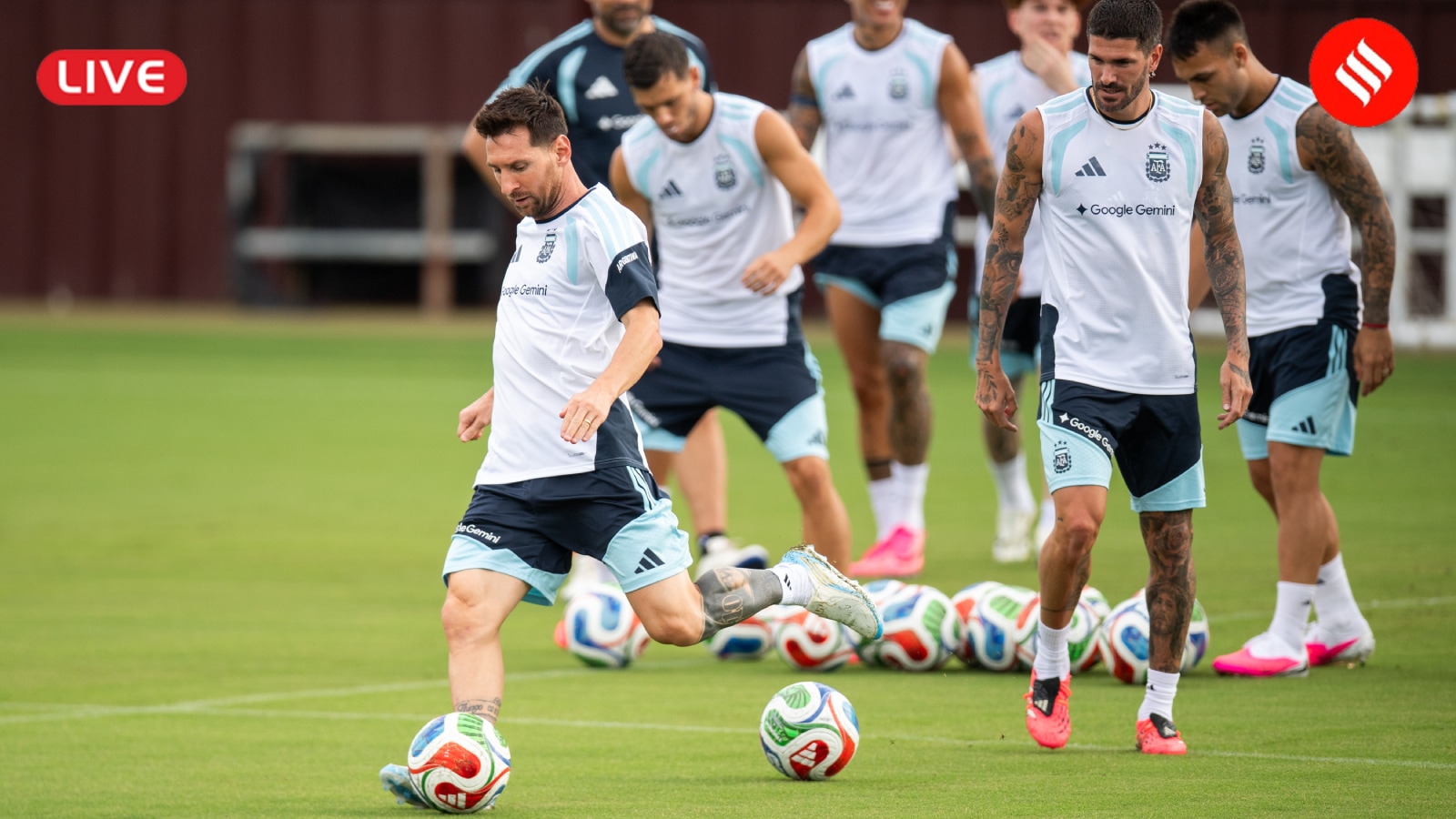
Bafana Bafana's training session at Estadio Hidalgo. (@Tuzos/X)
International football is a high-stakes world where preparation is everything. As South Africa’s Bafana Bafana geared up for the 2026 Fifa World Cup, a recent incident has spotlighted a growing concern: the breach of privacy in training sessions.
Their final warm-up match against Jamaica, played behind closed doors at Estadio Hidalgo in Pachuca, Mexico, on Sunday 7 June 2026, ended in a 1-1 draw.
Yet clips of the encounter quickly surfaced on social media, prompting questions about how footage from a supposedly private fixture became public. Coach Hugo Broos expressed surprise but remained unfazed, focusing on the team’s readiness for their opening clash against Mexico.
While no evidence points to deliberate espionage by opponents, the leak underscores a broader issue plaguing modern football: unauthorised surveillance that compromises tactical secrecy.
The match, intended as a low-pressure environment to test strategies without external scrutiny, saw goals from Oswin Appollis for Bafana Bafana and a late equaliser for Jamaica. Behind-closed-doors protocols exist precisely to safeguard such preparations but in an era of smartphones and instant sharing, maintaining the veil has become challenging.
This incident is far from isolated. Football history is rife with spying scandals that have tested the boundaries of sportsmanship. In football, Marcelo Bielsa’s “Spygate” involving Leeds United in 2019 made headlines when a staff member was spotted observing Derby County’s training. Bielsa openly admitted to the practice, saying he did it for every opponent and viewed it as standard due diligence.
While not illegal, it sparked ethical debates and highlighted how some coaches prioritise intelligence-gathering over mutual respect. Similar incidents have occurred elsewhere, including drone spying by the Canadian women’s team at the Olympic Games in 2024 and various club-level infiltrations.
The episodes reveal a troubling pattern. Teams invest heavily in tactics, set pieces and player positioning, only for rivals to potentially gain unfair advantages through covert means. In professional environments, scouting is legitimate. Public matches and video analysis are fair game. But crossing into private sessions through drones, hidden cameras or leaks violates the spirit of competition.
This undermines Fifa’s core philosophy of Fair Play, enshrined since 1987 through the Fifa Fair Play Award. Fair Play extends beyond avoiding fouls. It encompasses respect for opponents, adherence to the laws of the game and upholding the game’s integrity both on and off the pitch. It promotes playing to win while accepting defeat with dignity, rejecting discrimination and fostering camaraderie. Spying erodes the ideals by introducing deception and paranoia, shifting focus from skill and strategy to subterfuge.
When teams feel constantly watched, trust evaporates. Players might withhold full effort in “closed” sessions, coaches alter plans unnecessarily and the purity of preparation suffers. In international tournaments such as the Fifa World Cup, where national pride is at stake, such breaches can disadvantage under-resourced teams such as Bafana Bafana, which rely on every edge in tactical innovation rather than financial muscle.
Fifa and governing bodies must respond with stricter protocols. They must enhance security at training venues, impose penalties for leaks or unauthorised filming and perhaps deploy technological countermeasures. Clubs and federations should also self-regulate, emphasising ethical scouting.
Ultimately, football’s beauty lies in its unpredictability and the human drama of eleven-versus-eleven, with merit deciding the outcome. Spying scandals, whether intentional or caused by careless leaks, chip away at this foundation.
As Bafana Bafana step onto the pitch against Mexico, the focus should remain on their talent and preparation, not on who might have watched them train. Restoring and defending Fair Play is essential if the beautiful game is to retain its soul in an increasingly surveilled world.
Lelo Mzaca is an award-winning multitalented journalist, copywriter and presenter of The Big Breakfast Show on Radio 2000. He has an overwhelming passion for sport, lifestyle, music, arts and culture.




















 English (US) ·
  French (CA) ·
  French (FR) ·