

 2 months ago
98
2 months ago
98
PROTECT YOURSELF with Orgo-Life® QUANTUM TECHNOLOGY
Orgo-Life the new way to the future Advertising by Adpathway4 min readNew DelhiJun 24, 2026 05:12 AM IST
 In contrast, pollutants primarily associated with vehicular emissions showed improvement. Average nitrogen dioxide (NO₂) concentrations declined by 9.4%, from 48 µg/m³ in 2025 to 44 µg/m³ in 2026. Ground-level ozone levels also fell by 20%, averaging 35 µg/m³.
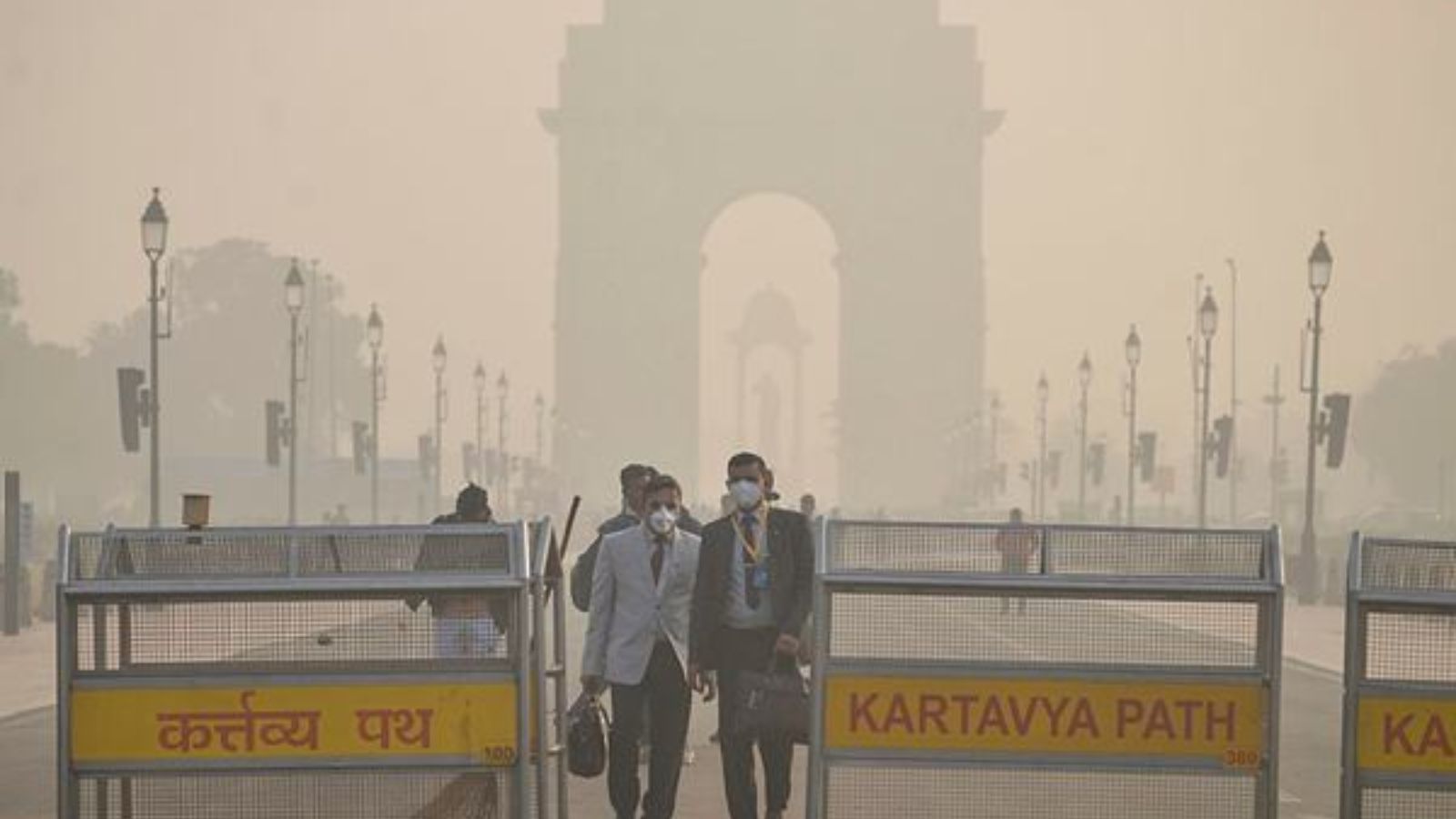
With the monsoon expected to improve air quality conditions in the Capital in the upcoming weeks, a new analysis by think tank EnviroCatalysts shows that Delhi’s pollution levels presented a contrasting trend during the first half of 2026.
The study released on Tuesday analysed air quality data from January 1 to June 20 with the corresponding period in 2025. It found out that while nitrogen dioxide (NO₂) and ground-level ozone concentrations decreased this year, fine particulate matter (PM2.5) — particles capable of penetrating deep into lung tissue — remained persistently elevated, accompanied by increasingly intense winter pollution episodes
During peak regional pollution events in mid-January, Anand Vihar recorded a peak hourly PM2.5 concentration of 876 µg/m³, followed by RK Puram (792 µg/m³), Ashok Vihar (768 µg/m³) and Mundka (738 µg/m³). “..neighbourhoods bordered by high-density transit corridors and commercial construction became severe ‘red zones’,” the study noted. Red zones refer to pollution hotspots.
In comparison, stations at the Cantonment area, IMD Lodhi Road and JNU consistently recorded relatively lower pollution levels.
According to the study, average PM2.5 concentrations fell marginally by 2.2%, from 90 micrograms per cubic metre (µg/m³) in 2025 to 88 µg/m³ in 2026. The proportion of days exceeding the national PM2.5 standard of 60 µg/m³ also declined from 64.4% to 58.2%.
However, severe pollution episodes continued during winter. The highest hourly PM2.5 concentration recorded this year reached 484 µg/m³ on January 18, exceeding last year’s peak of 450 µg/m³.
An hourly analysis as part of the study found that pollution levels were generally highest between midnight and the morning hours, peaking around 9 am owing to traffic emissions combining with pollutants that were trapped overnight. Air quality improved only briefly during the afternoon, between 3 pm and 6 pm, when atmospheric mixing helped disperse pollutants.
Coarser particulate matter (PM10) showed almost no improvement, the study noted. Average PM10 levels remained above 205 µg/m³, more than double the national standard of 100 µg/m³, and exceeded permissible limits for nearly 90% of the monitoring period. The highest hourly PM10 concentration touched 989 µg/m³ on April 3, likely driven by dust storms and adverse weather conditions, the study noted.
Story continues below this ad
In contrast, pollutants primarily associated with vehicular emissions showed improvement. Average nitrogen dioxide (NO₂) concentrations declined by 9.4%, from 48 µg/m³ in 2025 to 44 µg/m³ in 2026. Ground-level ozone levels also fell by 20%, averaging 35 µg/m³.
Despite these gains, the report noted that Delhi continued to miss the much stricter air quality guidelines prescribed by the World Health Organization (WHO) on the majority of days. “Delhi failed the daily safety criteria of the World Health Organization (WHO) an astonishing 99.5% of the time for PM2.5, 99.4% for PM10, and 83.4% for NO₂, showing that cleaner seasonal gases have done little to change the baseline hazard to public health,” the study noted.
Jinitha Varghese, Programme Manager (Clean Air) at EnviroCatalysts, said the shift to BS-VI fuel and vehicles, along with growing electric vehicle adoption, appears to be contributing to lower transport-sector emissions. However, she stressed that Delhi’s air pollution problem remains a year-round public health challenge rather than a seasonal winter issue.
“Because over 99% of calendar days fail global health benchmarks, Delhi’s air quality cannot be treated as an episodic winter emergency. It is a structural public health crisis,” she said, while calling for stricter enforcement at pollution hotspots, tighter regulation of nighttime commercial transport and stronger action across the wider airshed.
© The Indian Express Pvt Ltd

Sophiya Mathew is a Correspondent at The Indian Express, based in New Delhi. She joined the Delhi bureau in 2024, and has specialization in Integrated Multimedia Journalism from the Asian College of Journalism (ACJ), Chennai. Professional Background Core Beats: Her reporting is primarily focused on the Environment and Education. Specialization: She has gained recognition for her ground-level reporting on the Yamuna floodplains and the socio-economic challenges faced by those living on its banks. She also focuses on the disparities in Delhi's education system, ranging from elite private schools to government institutions and refugee education. Recent Notable Articles (December 2025) Her recent work has been heavily centered on Delhi's severe winter pollution crisis and the government's regulatory responses: 1. The Air Pollution Crisis "A tale of two cities: Delhi govt schools choke in bad air, private classrooms set up air filters" (Dec 20, 2025): A high-impact feature contrasting the "Clean Air Bubbles" in elite schools with the reality of government school students who are exposed to an equivalent of 17 cigarettes a day due to outdoor exposure. "Delhi sees season's worst air day, second worst December AQI in nearly a decade" (Dec 15, 2025): An analytical report on the meteorological patterns trapping pollutants in the NCR. "Delhi bans non-BS VI vehicles from outside: Why curbing vehicular pollution is key" (Dec 17, 2025): Explaining the science behind targeting specific vehicle vintages to lower particulate matter. 2. Enforcement & Regulations "No fuel at pumps in Delhi without valid PUC certificate from December 18" (Dec 17, 2025): Breaking the news on the environment ministry's strict "No PUC, No Fuel" policy. 3. Education Policy "Law to regulate school fee in Delhi risks becoming procedural, say parents" (Dec 13, 2025): Investigating the loopholes in the new Delhi School Education (Transparency in Fixation and Regulation of Fees) Bill, 2025. "Monsoon Session: Private school fee regulation Bill cleared after four-hour debate" (Aug 9, 2025): Covering the legislative passage of the controversial fee hike regulation. Signature Style Sophiya is known for her observational depth. Her reporting often includes vivid details from school corridors, hospital waitlists, or the banks of the Yamuna to illustrate how policy failures affect the city's most vulnerable residents. She is a frequent expert guest on the 3 Things podcast, where she explains the complexities of Delhi’s environmental laws. X (Twitter): @SophiyaMathew1 ... Read More
Stay updated with the latest - Click here to follow us on Instagram















 English (US) ·
  French (CA) ·
  French (FR) ·