

 1 hour ago
1
PROTECT YOURSELF with Orgo-Life® QUANTUM TECHNOLOGY
Orgo-Life the new way to the future Advertising by Adpathway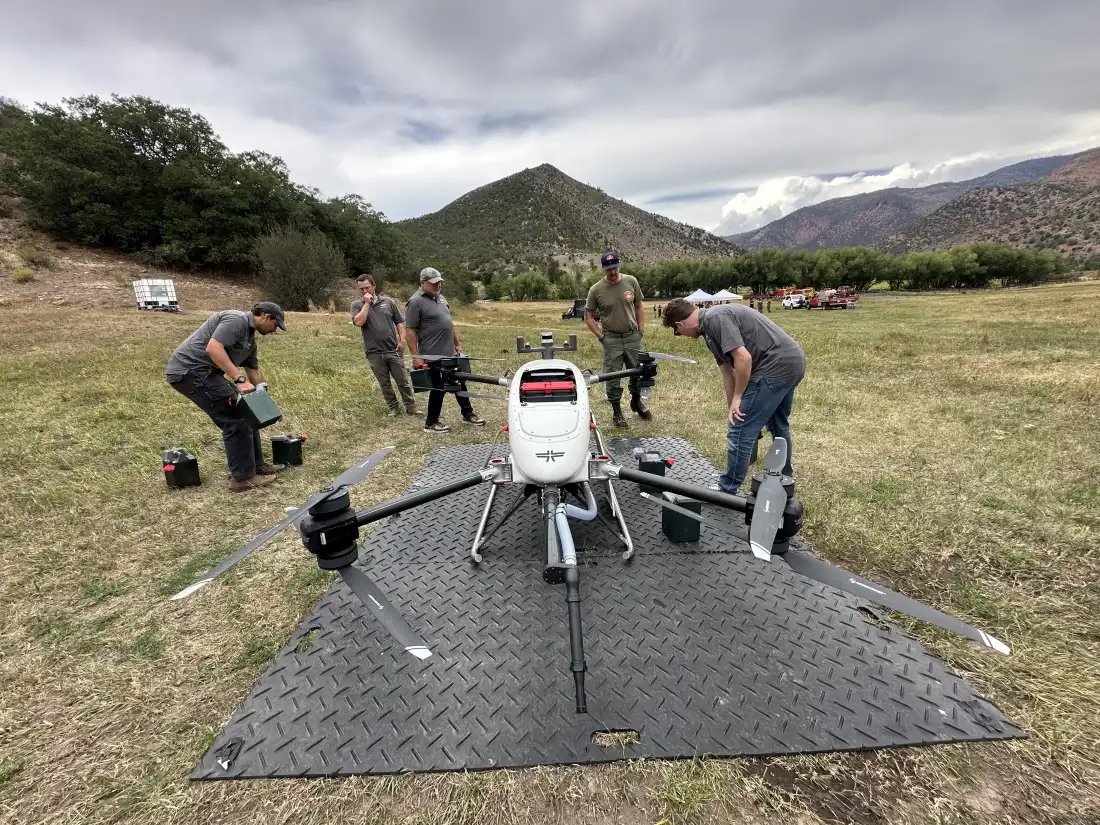
Fire crews in Aspen, Colorado are training to pilot new drones like this one from manufacturer Seneca. They can carry and drop fire-suppressing foam. Halle Zander hide caption
Halle Zander
On a rare overcast day in late summer, red-and-white fire trucks pepper a grassy strip of land in the mountains of western Colorado.
A persistent buzzing rises and falls as several uniformed staff from the Aspen Fire Protection District huddle around an iPad, watching one of their volunteer firefighters control a massive drone.
This first-of-its-kind machine looks like a giant bug. Black and white with propellers attached to four large arms, it's about 10 by 12 feet wide — roughly the size of a small U-Haul trailer.
While firefighters have used drones to monitor wildfires for decades, this new product could use AI to help extinguish fires.
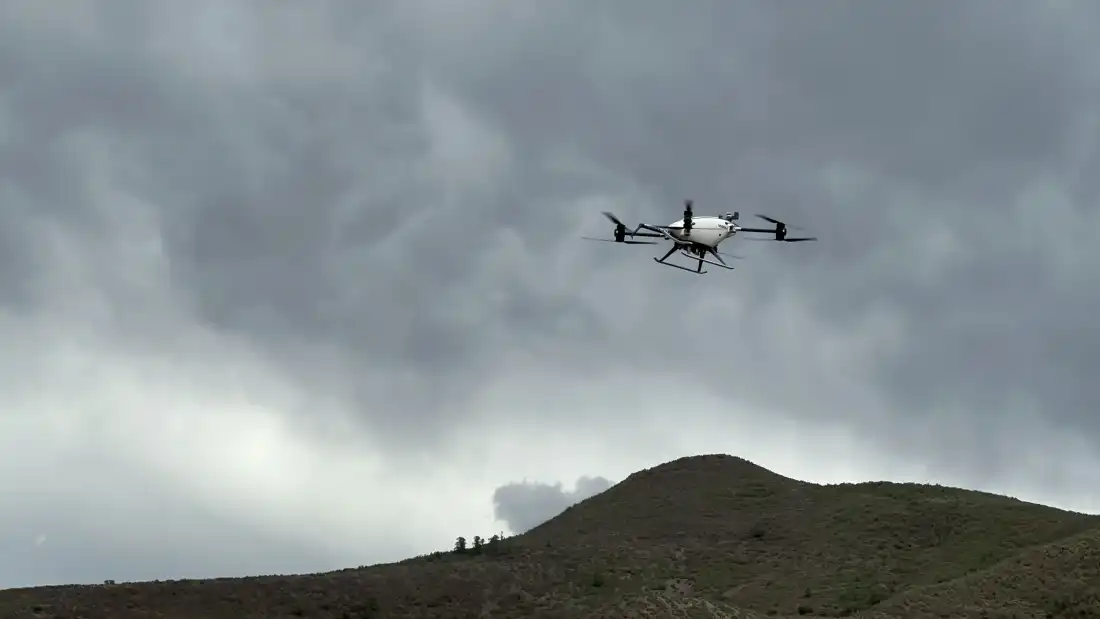
One of Seneca's firefighting drones hovers over private land outside of Aspen, Colo. on Aug. 24, 2026. Once its staff complete the training process, the Aspen Fire Protection District will be the first fire department in the country to operate the drones independently. Halle Zander hide caption
Halle Zander
Eye of the swarm
Developed by the California-based company Seneca, the drones are designed to work in a swarm. Similar to a small fire engine, five of them can carry 500 to 1,000 gallons of finished fire foam, and firefighters in Aspen reported they were easy to operate.
"We were just joking that my 12-year-old could fly these things," said Andy Fisher, deputy chief of Aspen Fire.
When Aspen Fire officially launches its new drone program, as early as next year, it'll be the first fire department in the world to operate the drones independently. So far, they've only been used on prescribed burns in California with support from Seneca's staff.
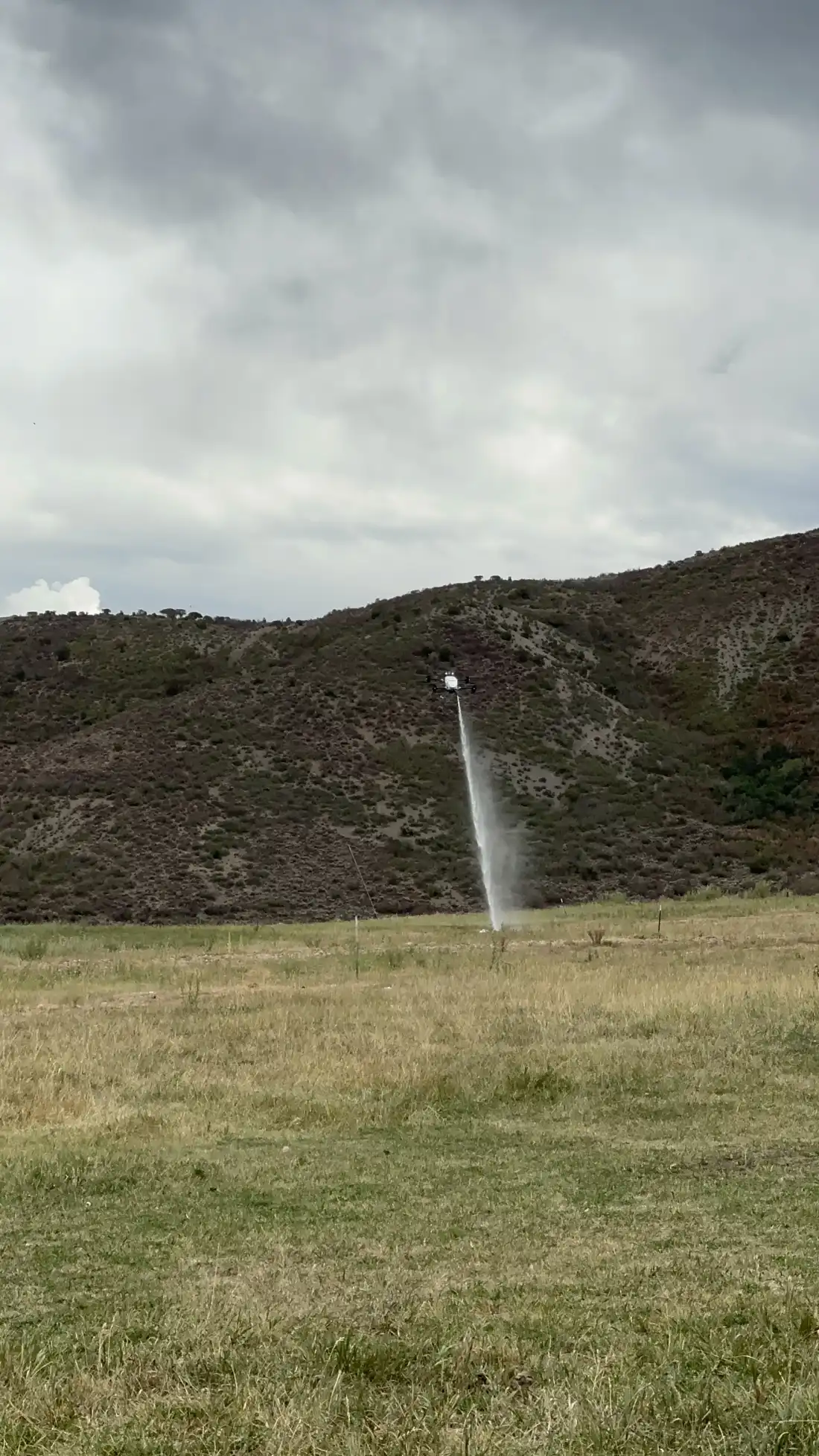
One of Seneca's drones releases a stream of water during a training session outside of Aspen, Colo. on Aug. 24, 2026. Halle Zander hide caption
Halle Zander
Fisher wants to send these drones to hard-to-reach fires, like remote lightning strikes, before firefighters arrive. The city of Aspen, famously home to billions of dollars in real estate, is surrounded by dense forests — like an expensive tinderbox with few evacuation routes for residents and visitors.
"If we could get it quick, keep them small and attack them while they're smoldering instead of waiting for the wind to pick them up, I feel like that's the most ideal use case," Fisher said.
According to Seneca's founder Stuart Landesberg, the drones can bypass steep or otherwise treacherous terrain quickly and have a range of 5 to ten miles — double that if they're empty.
Hovering over a fire, they use an AI-supported "sensor suite," that can calculate distance and wind speed, then release water or retardant at a specific angle and velocity to tamp down flames.
"You can think about it almost like a flying Waymo," he said.
But will they make a difference?
Landesberg said the drones won't replace air tankers on big fires, but they can carry tools, monitor ongoing fires and help extinguish lingering hot spots. Compared to helicopters, they could also make aerial firefighting more affordable.
"We can be the next best thing at two orders of magnitude less cost," he said.
Aspen Fire says it'll pay about $2.5 million over the next five years with private donors footing the bill.
Before other fire departments around the country invest in this experimental technology, many are keeping an eye on Aspen to see how effective the drones can be.
Joe Stutler is a firefighter with nearly 60 years experience, including decades as an incident commander on wildfires. He's not affiliated with Aspen Fire or Seneca, and said he's a "big proponent of technology."
He's excited that the drones could help fight fires overnight when manned aircraft are often grounded, and he hopes they'll reduce risk for firefighters on the ground and in the air.
"You look at how many wildland firefighters that have died this year — some aviation accidents," Stutler said. "We say, 'Gosh, we really want a retardant or water drop here.' … We transfer risk to those people that are flying those helicopters and those air tankers."
But Stutler remains skeptical. Seneca has tested the drones on prescribed burns, not real wildfires yet.
"I haven't seen any results," he said. "It's one thing to make a claim. It's something else to back it up with data."
If he had access, Stutler said he'd definitely try the new drones, but no matter how effective they prove to be, he still has to put firefighters on the ground.
"I've seen very few times that a 3,000-gallon water drop or a 5,000-gallon retardant drop actually put anything out," he said.
The FAA granted Aspen Fire a waiver in late October, and once training is complete, Fisher said the department could start flying the drones up to 200 feet in Pitkin County.
They can't fly the drones over populated areas, and someone has to have eyes on them at all times. Firefighters can't blindly send a drone over a ridgeline without someone perched on top of a mountain or on the other side to watch them and communicate with the pilots.
But if the drones are useful, Aspen Fire hopes to expand the waiver and help fight fires around the state.






















 English (US) ·
 French (CA) ·
 French (FR) ·