

.png) 2 months ago
44
2 months ago
44
PROTECT YOURSELF with Orgo-Life® QUANTUM TECHNOLOGY
Orgo-Life the new way to the future Advertising by AdpathwayBAKU, Azerbaijan, June 15. A newly announced US-Iran peace agreement has triggered significant volatility in global energy markets, with oil prices falling sharply as investors react to easing geopolitical risk in the Middle East and the prospect of increased crude supply.
The agreement, which is expected to be formally signed in Switzerland, reportedly includes the reopening of the Strait of Hormuz to toll-free shipping and the removal of the US naval blockade—measures that, if implemented, would represent one of the most consequential shifts in global energy flows in recent years.
However, despite the announcement, the deal remains politically fragile, with key regional actors outlining sharply divergent positions and significant uncertainty over implementation, sequencing, and enforcement.
Key positions: US, Iran, and Israel outline conflicting interpretations
The United States has presented the agreement as effectively finalized. US President Donald Trump confirmed on Truth Social that the deal with Iran is “now complete,” adding that he had authorized the “toll-free opening of the Strait of Hormuz” and ordered the “immediate removal of the United States naval blockade.”
“The Deal with the Islamic Republic of Iran is now complete. Congratulations to all!” Trump wrote, urging global shipping to resume operations and stating: “Let the oil flow!”
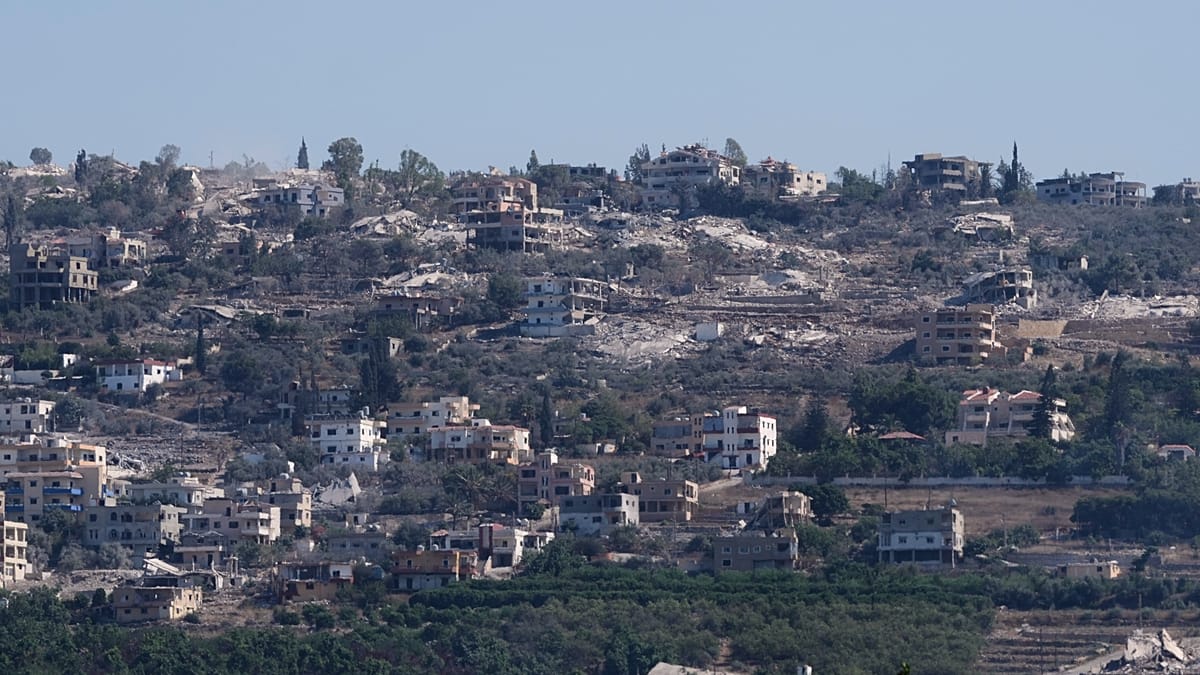
Iran, however, has framed the agreement more cautiously, emphasizing implementation conditions and regional security concerns. Iranian Foreign Minister Seyed Abbas Araghchi stressed that the United States bears responsibility for ensuring proper execution of the agreement, while reiterating Tehran’s demand for a complete halt to what it describes as Israeli military aggression against Lebanon.
Israel, meanwhile, has rejected any implication that the agreement is binding on its security policy. Israeli National Security Minister Itamar Ben-Gvir said on X that the deal “does not bind us,” stressing that Israel remains a sovereign state acting independently in matters of national security.
Oil markets react sharply as supply expectations shift
The dissemination of information regarding the potential agreement has triggered significant volatility across global oil markets, with prices falling sharply on expectations of improved supply conditions and reduced geopolitical risk.
Brent crude futures for August delivery on the ICE exchange fell by $4.09 (4.68%) to $83.24 per barrel as of 10:40 (GMT +4), following a prior decline of $3.05 (3.37%) to $87.33 in the previous session.
West Texas Intermediate (WTI) crude futures on the NYMEX dropped by $4.27 (5.03%) to $80.61 per barrel, after previously declining $2.83 (3.23%) to $84.88.
Analysts say the decline reflects expectations that normalization of US–Iran relations could eventually bring additional Iranian crude back to international markets, increasing global supply. The potential reopening of the Strait of Hormuz has also reduced immediate fears of supply disruption, lowering the geopolitical risk premium embedded in oil prices.
Rystad Energy: “Most workable outcome available,” but deal remains fragile and non-operational
Claudio Galimberti, Chief Economist at Rystad Energy, said the agreement represents a rare alignment of geopolitical and economic incentives across all major stakeholders, giving it unusual credibility compared with previous diplomatic cycles.
“This deal, if it holds, is the most workable outcome available to all parties at the table, which gives it a degree of credibility,” Galimberti said, noting that the United States has an incentive to avoid a spike in gasoline prices, Iran is seeking sanctions relief and higher export revenues, and global markets benefit from stable energy flows through the Strait of Hormuz.
However, he stressed that structural alignment does not guarantee implementation.
“A signed agreement is not a functioning one,” Galimberti warned, pointing to sequencing disputes between Washington and Tehran as a key fault line, with both sides reportedly insisting the other must act first in implementing commitments.
He also highlighted Lebanon as a major regional wildcard that could destabilize the agreement’s trajectory even if broader diplomatic progress continues, describing it as a flashpoint outside full control of either Washington or Tehran.
Galimberti added that markets have repeatedly followed a familiar pattern in similar geopolitical episodes: an initial sharp price reaction on headlines, followed by partial reversal as implementation risks resurface.
“This is a playbook markets have seen before,” he said, warning that sentiment-driven moves should not be confused with durable physical changes in supply and demand.
From a macroeconomic perspective, Rystad Energy said a credible reopening of the Strait of Hormuz would represent one of the most important global economic developments at this stage of the cycle, particularly given persistent inflation pressures across advanced economies.
The firm noted that US inflation remains elevated above 4%, real wages are under pressure for a second consecutive month, and European monetary policy continues tightening into an energy-sensitive environment. In that context, every barrel previously constrained by geopolitical risk represents inflationary pressure that could unwind if supply routes normalize.
However, Rystad cautioned that even in a best-case scenario, oil market normalization would be gradual rather than immediate. Production adjustments, logistics realignment, and the unwinding of risk premiums embedded in pricing would take time, meaning the full impact would emerge in phases.
The firm also noted that broader structural shifts in global supply management, including OPEC+ dynamics, would not be reversed by a single diplomatic breakthrough.
Market sentiment improves, but risks remain elevated
Despite the diplomatic breakthrough and sharp market reaction, analysts warn that sentiment alone does not guarantee physical supply changes.
Oil prices had previously risen on escalating Middle East tensions but reversed sharply as diplomatic momentum between Washington and Tehran accelerated.
While the agreement has eased immediate risk perceptions, uncertainty over implementation, regional instability, and unresolved political sequencing continue to dominate the outlook.
Outlook: fragile breakthrough with high execution risk
The US–Iran agreement is being viewed as a potentially significant geopolitical shift with immediate implications for global energy markets. However, analysts stress that the deal remains fragile, with execution risks still outweighing confirmed policy changes.
Until formal signing and early implementation steps are verified, markets are expected to remain volatile, with price movements driven more by headlines and political signals than by structural changes in supply conditions.
For now, the agreement represents a major step toward de-escalation—but not yet a fully functioning framework capable of sustainably reshaping global energy flows.


















 English (US) ·
  French (CA) ·
  French (FR) ·