

 3 hours ago
6
PROTECT YOURSELF with Orgo-Life® QUANTUM TECHNOLOGY
Orgo-Life the new way to the future Advertising by Adpathway
Migration: Mexico
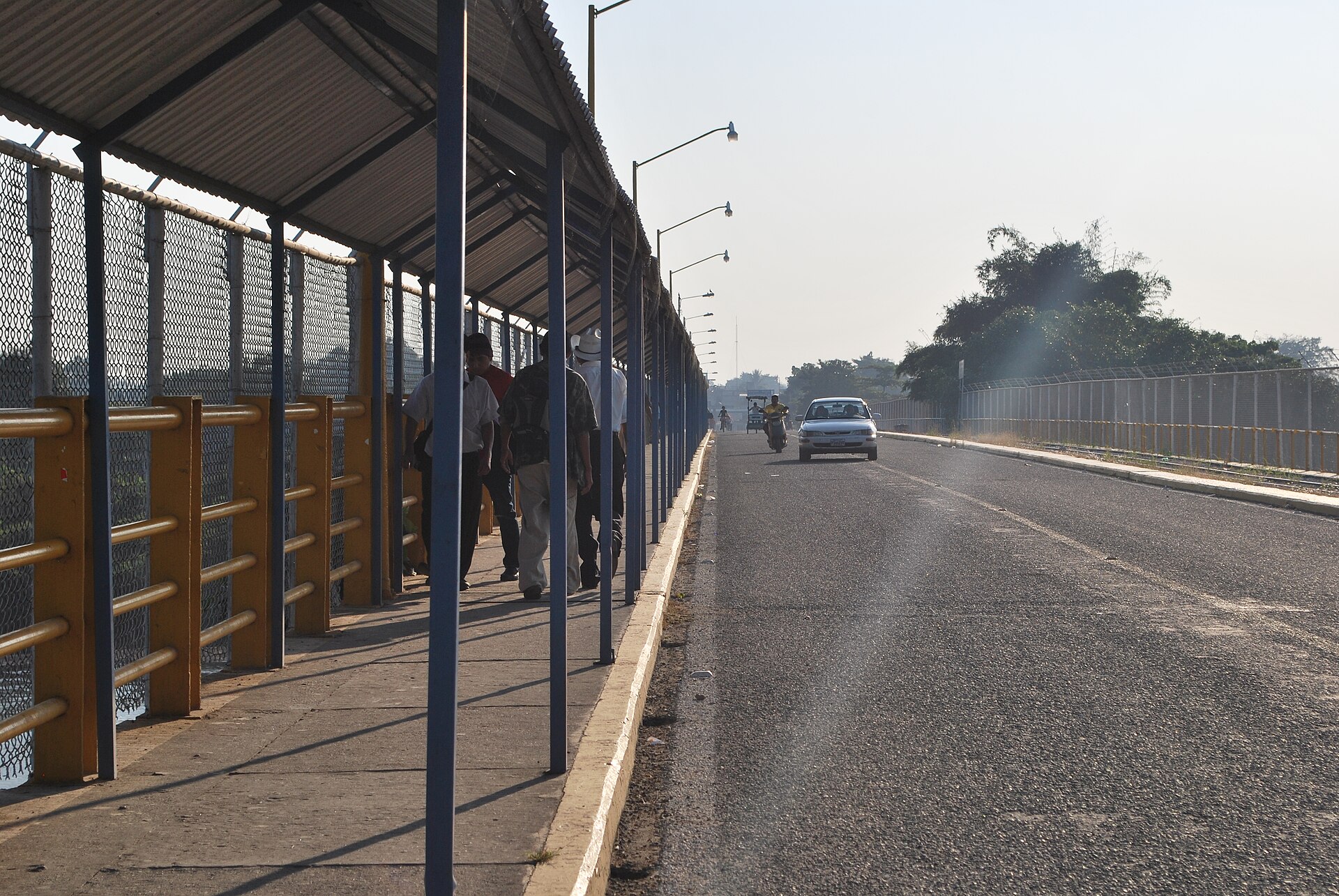
A second migrant caravan entered southern Mexico on Friday 20 November 2026, ten days after a larger group set out from Tapachula, in Chiapas state, bound for the United States. Between 150 and 300 people, depending on the count, reached the city after walking more than 16 hours.
The caravans now sit between two signals from Washington: an election result migrants read as hopeful, and a tariff threat from President Donald Trump. For readers abroad, the open question is whether groups this small can move US border policy or US-Mexico trade talks.
Free daily brief — no card needed
Get every Mexico story in one morning email
We build you a personalized brief around the topics you follow — free for 7 days. Love it? Your first month after that is US$1.
Yes, email me my free daily brief — I can unsubscribe any time.
Key Facts
- Who. Migrants from Honduras, El Salvador, Venezuela, Guatemala and Nicaragua, walking north in a second caravan.
- What. Between 150 and 300 people crossed from Guatemala and reached Tapachula, in Chiapas state, after a 16-hour walk.
- Where-When. Tapachula, southern Mexico, on Friday 20 November 2026; the first caravan left there on 10 November.
- Power Index. Mexico ranks 2nd of 14 in The Rio Times Latin America Power Index, with 70.8 points (November 2026 edition).
- As of. 21 November 2026, 20:00 GMT.
Two caravans have formed in southern Mexico since the US vote, yet Mexico’s president says none has reached the American border since January 2025.
Follow this story
Get an email when there’s news on Tapachula (Mexico)
Caravans are large groups of migrants who walk together for safety towards the United States. The latest wave began on Tuesday 10 November 2026, a week after the US midterm elections, the national vote halfway through a presidential term, held on Tuesday 3 November, when a group calling itself “Dios con Nosotros” (God With Us) left Tapachula.
That group numbered between 1,000 and 2,000 people, depending on the count. Migrants told reporters they hoped the Democratic win, which gave the party control of both chambers of Congress, would ease US enforcement.
That hope is the migrants’ own, not proof that the election caused the departures. On the same day, about 100 Central American migrants crossed the Suchiate River, the border between Guatemala and Mexico, and Mexican authorities stopped the group and detained about 40.
On Thursday 12 November, Trump wrote on Truth Social, his own social network, that “Huge CARAVANS are forming and beginning their illegal march through Mexico.” He added: “MEXICO MUST STOP THEM, NOW, and if they do not do so, the Tariffs on Mexico will be IMMEDIATELY DOUBLED.”
Also on 12 November, Mexican President Claudia Sheinbaum said that no migrant caravan has reached the US border since January 2025. On Friday 13 November she added, citing the Interior Ministry, that 24 caravans have formed since January 2025 and that most were dissolved in Chiapas.
If her statement holds, the caravans usually dissolve inside Mexico long before they test the US border. That makes Mexico the place where the tariff threat bites, because Trump has tied a doubling of duties to Mexican action against the marchers.
The new group calls itself “Dios con Nosotros, Unión y Esperanza” (God With Us, Union and Hope), a name that echoes the first caravan. It crossed from Tecún Umán, a Guatemalan border town, and its members come from Honduras, El Salvador, Venezuela, Guatemala and Nicaragua.
Their numbers are small beside the first caravan. They have taken the same road north.
The Department of Homeland Security (DHS), which oversees US immigration enforcement, said its agency ICE, Immigration and Customs Enforcement, carried out a record 483,200 removals in fiscal 2026, which ended on 30 September. That is the enforcement record migrants must weigh against any hope placed in the midterm result.
In an earlier caravan, Honduran migrants also entered Mexico across the Suchiate River and moved towards Tapachula. Both crossings lead to the same city, which has become the starting point for marches north.
It is not known where the 20 November group is heading next or whether Mexican authorities, including the migration institute (INM), the federal immigration agency, will let it advance. No US official has yet answered this group.
It is also unclear whether the caravans will change the US-Mexico tariff talks, and the exact head-counts remain unsettled. Until the groups move on or break up, the strongest evidence is the pattern Sheinbaum described: caravans leave Tapachula far more often than they arrive at the border.
Frequently Asked Questions
Why do migrants travel in caravans through Mexico?
Walking together gives migrants safety in numbers on a long and risky route. Those in the latest groups say they hope US enforcement will ease after the election.
Do the caravans usually reach the US border?
None has, according to Mexico’s president, Claudia Sheinbaum. She says most groups were dissolved in Chiapas.
Could the caravans affect US-Mexico trade?
President Trump has linked Mexico’s tariffs to its handling of the caravans. Whether that threat is carried out is not yet known.
This article was produced by The Rio Times’ automated AI newsroom. Editorial responsibility: Matthias Camenzind, Publisher and Editor-in-Chief. The Rio Times also runs Ask Rio Times, which answers from 100,000+ of our own articles, the daily Latin America Power Map, and prediction-market odds on elections and markets.. How we use AI · Report an error
Read next
- Mexico 2026 Explained: Population, Politics, US Trade Ties
- Baja Court Chief Urged to Quit Over US Visa
- Telcel Outage Cuts Mexico City Phone Service
- Ex-Guard Convicted of Beating Cuban Detainee
- Mexico Arrests FBI-Wanted Cartel Boss
The Rio Times · Power Map
See who really holds power in Latin America
Click to open the Power Map →












 English (US) ·
 French (CA) ·
 French (FR) ·