

 56 minutes ago
6
An Anthropic employee says he may have used Claude to crack one of mathematics’ most celebrated unsolved problems—just one day after the artificial intelligence company made its stock-market debut.
Levent Alpöge, a member of Anthropic’s technical team, claims the company’s chatbot helped him solve the Riemann hypothesis, a legendary mathematical challenge. He detailed the alleged breakthrough on his website.
The Turkish-American mathematician said he first became interested in the problem as a student and spent years exploring every method he could find. On Sunday evening, he said, Claude helped him make the final breakthrough.
“Claude and I have had a great time together with such breadth in recent months, but this time Claude far outpaced me near the finish line,” he wrote. “No, Claude flew, and danced, and sparkled near that finish line.”
“I guided us to the right situation analogous to that toy setting, and then Claude began to leave me in awe.”
Rather than publish the chatbot’s full response, Alpöge posted the proposed proof in Lean, a formal programming language that enables computers to check mathematical reasoning.
He said Claude’s original output runs to roughly 250,000 pages, leaving independent mathematicians with the daunting task of examining and verifying the work.
“I decided to only present Lean,” he wrote. “It being obviously inappropriate to attempt to post some massive unreadable travesty of ‘slop.’”
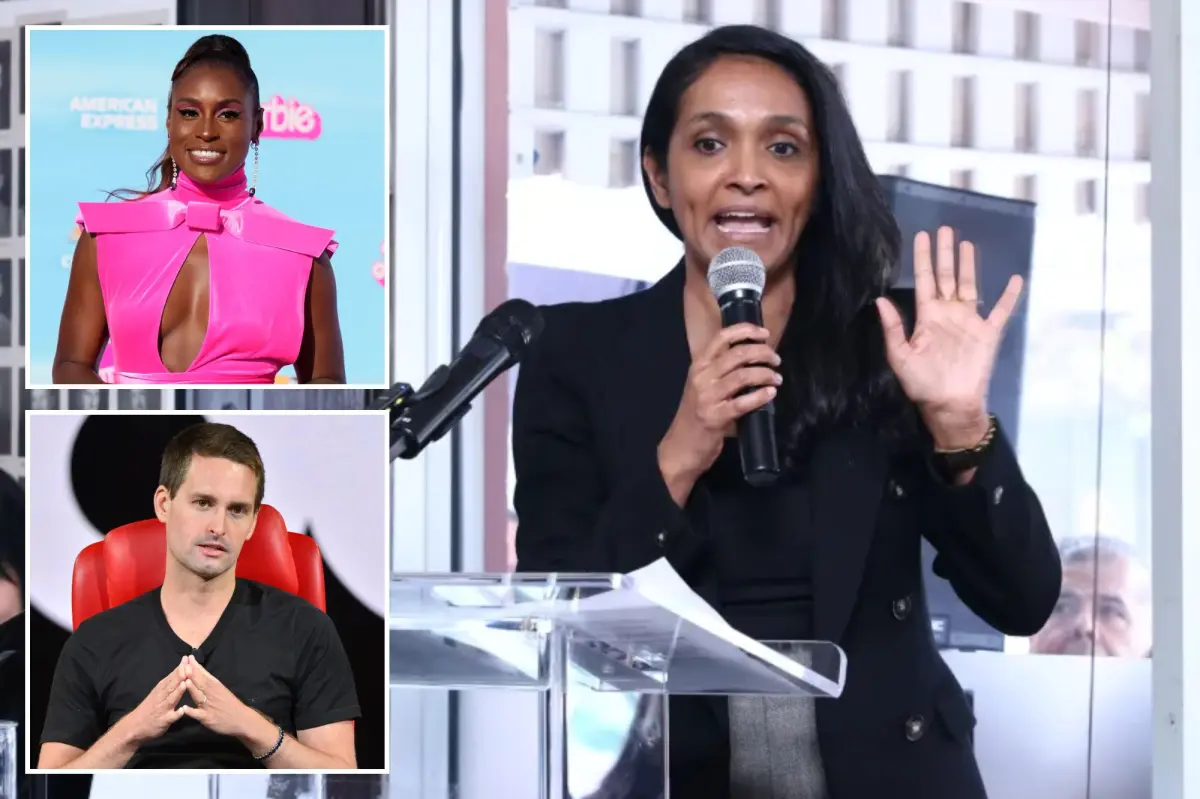
Levent Alpöge, a member of Anthropic’s technical team, claims he used the company’s Claude chatbot to solve the Riemann hypothesis
Alpöge deliberately held back the announcement until after Anthropic completed its public-market debut, an offering that raised an unprecedented $81 billion.
The company sold 908 million shares at $83 each on Wednesday.
Anthropic CEO Dario Amodei marked the occasion by ringing the Nasdaq opening bell at 9:30 a.m., as the company began trading under the ticker symbol ANT.
With Amodei preparing for the milestone, Alpöge said he spoke with the CEO about when it would be appropriate to reveal his own potential career-defining achievement.
“The precise timing is horrible,” Alpöge wrote. “If I could have, I’d have finished this all much earlier.”
He said he told Amodei that he “could not live if I waited even longer,” despite the significance of the company’s stock-market debut.
EXPLORE MORE: King Charles and Queen Camilla Join Stars at Royal Variety Performance
“There is an obvious cynical view to do with the timing, but it is false, and I am pleased that I am in circumstances where it is obviously false,” he wrote.
In his acknowledgments, Alpöge also praised Anthropic’s rival OpenAI, saying he had “benefited from the good taste of the people at OpenAI” involved in “various mathematical results.”
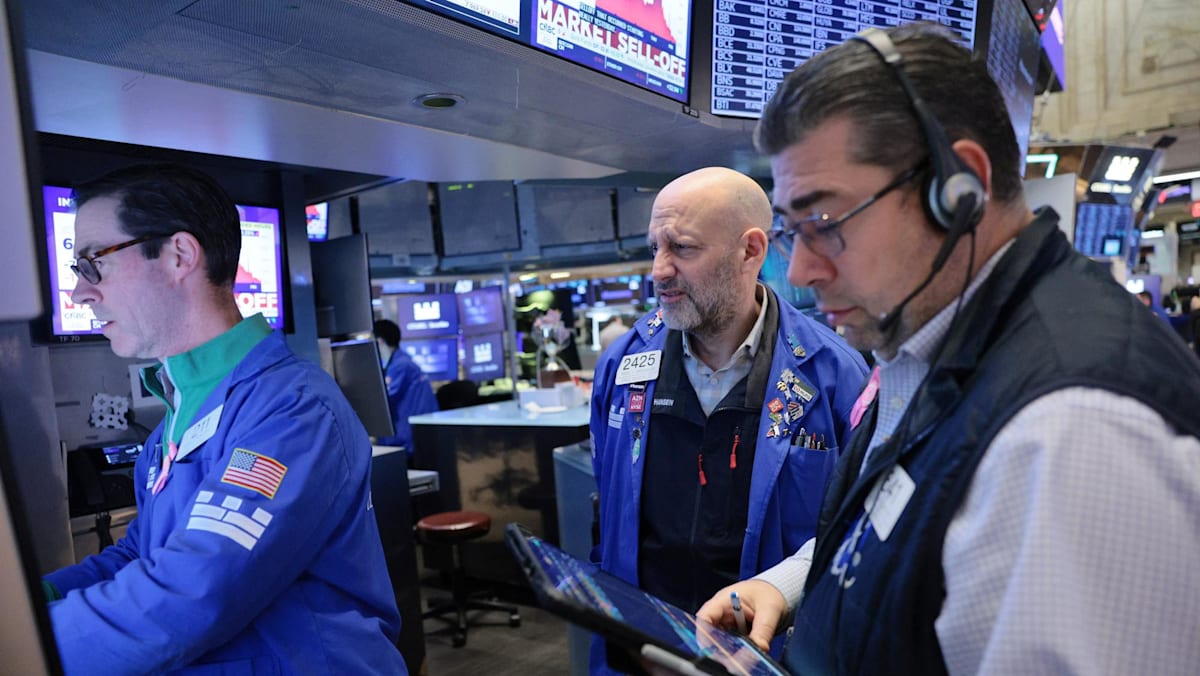
The claim came a day after CEO Dario Amodei (center) took Anthropic public
“So I am quite happy to praise them too,” he added.
First proposed in 1859, the Riemann hypothesis concerns the distribution of prime numbers and their relationship to a complex mathematical function. Despite nearly 170 years of effort, it remains unproven.
The problem was named one of the seven Millennium Prize Problems in 2000, with a $1 million prize offered for each valid solution.
Even as AI systems have grown increasingly powerful, attempts to apply them to the hypothesis had not produced a recognized solution.
If Alpöge’s claim is ultimately confirmed, it would represent a major advance in AI-assisted mathematics and potentially mark the second Millennium Prize Problem solved with help from artificial intelligence.
An OpenAI model was credited with solving one of the problems in September, while human mathematicians have independently resolved another.
OpenAI has said its researchers produced a proof related to the Navier-Stokes equation.
The rapid progress has also prompted warnings from critics who fear artificial intelligence could “destroy the mathematical community.”
Alpöge’s proposed proof spans 250,000 pages, so he released it in Lean, a programming language that allows computers to verify mathematical arguments. “It being obviously inappropriate to attempt to post some massive unreadable travesty of ‘slop,’” he said
Debate intensified within academia after the Sam Altman-led company released its own proposed proof, with mathematicians sharply divided over whether OpenAI handled the development responsibly.
Some researchers, however, have described the release as one of the most important contributions to mathematics in years.
At the time, Alpöge wrote on X: “It’s obviously the most significant moment in mathematical history.”
















 English (US) ·
 French (CA) ·
 French (FR) ·