

 2 months ago
35
2 months ago
35
PROTECT YOURSELF with Orgo-Life® QUANTUM TECHNOLOGY
Orgo-Life the new way to the future Advertising by AdpathwayIt looks nothing like a riverbed. Deep cuts and ridges mark the rocky terrain, framed against distant willow trees and the Pir Panjal mountains. Nearby stands a mound of soil and loose gravel — debris from excavation. A few metres away flows the Sukhnag river, once abundant but now a shadow of its former self.
This is Sail, a village of 2,500 in Kashmir’s Budgam district. Located on the banks of the Sukhnag, the village was once blessed by nature, with gushing river water branching into tiny streams around it and feeding its thriving trout farms and paddy fields. Then, villagers allege, a riverbed mining project changed it beyond recognition.
Last month, a joint panel of the Ministry of Environment, Forest and Climate Change (MoEF&CC), the National Institute of Himalayan Environment (NIHE) and the Jammu and Kashmir Pollution Control Committee (JKPCC) flagged “indiscriminate and unscientific” extraction of minerals from the Sukhnag — a river central to Budgam district. The extraction was undertaken through a series of permits issued by the district administration, which activists allege circumvented environmental clearance requirements.
The report, submitted to the National Green Tribunal on May 6, highlighted the extent of the damage, saying there were indications of excavation “below the active river bed and into the alluvial aquifer zones” to depths of 4.42 metres — nearly 15 feet.
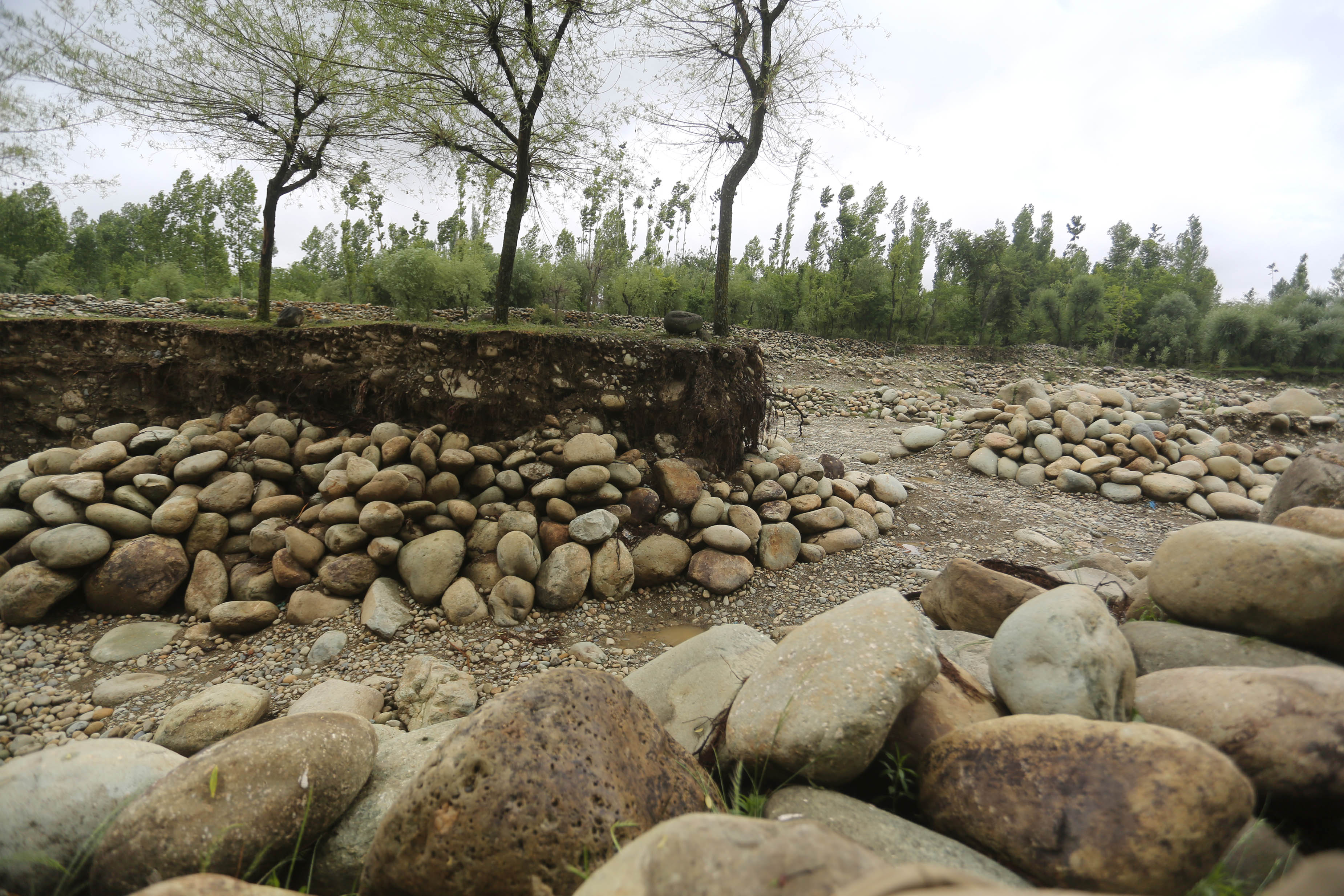 Streams of Sail that now run dry. (Express photo: Shuaib Masoodi)
“When we tried to raise our voice and blocked the road, officials threatened to lodge an FIR against us,” a village resident says.
Although short-term mining projects in Sukhnag were undertaken by several companies, NKC Projects Pvt. Ltd, a prominent infrastructure and civil construction company based in Gurugram, undertook a majority of the extraction.
Calls and emails to NKC Projects seeking a response went unanswered. Attempts to the police also drew no response, while officials from the district administration declined to comment.
Story continues below this ad
The mining has stopped for over a year, but locals cite irreversible damage to the area’s ecosystem: a lowered riverbed, dried-up springs and irrigation channels, and loss of aquatic life.
With no water, Imtiyaz Ali’s 1.25-acre paddy field has also turned barren. “I stopped growing paddy and planted acacia trees,” he says. “Before, the 10 kanals of land would fetch me at least 50 quintals of paddy at the rate of Rs 3,000 per quintal. But now, with acacia, I will have to wait 15 years for the trees to grow, and even then, it will fetch only peanuts.”
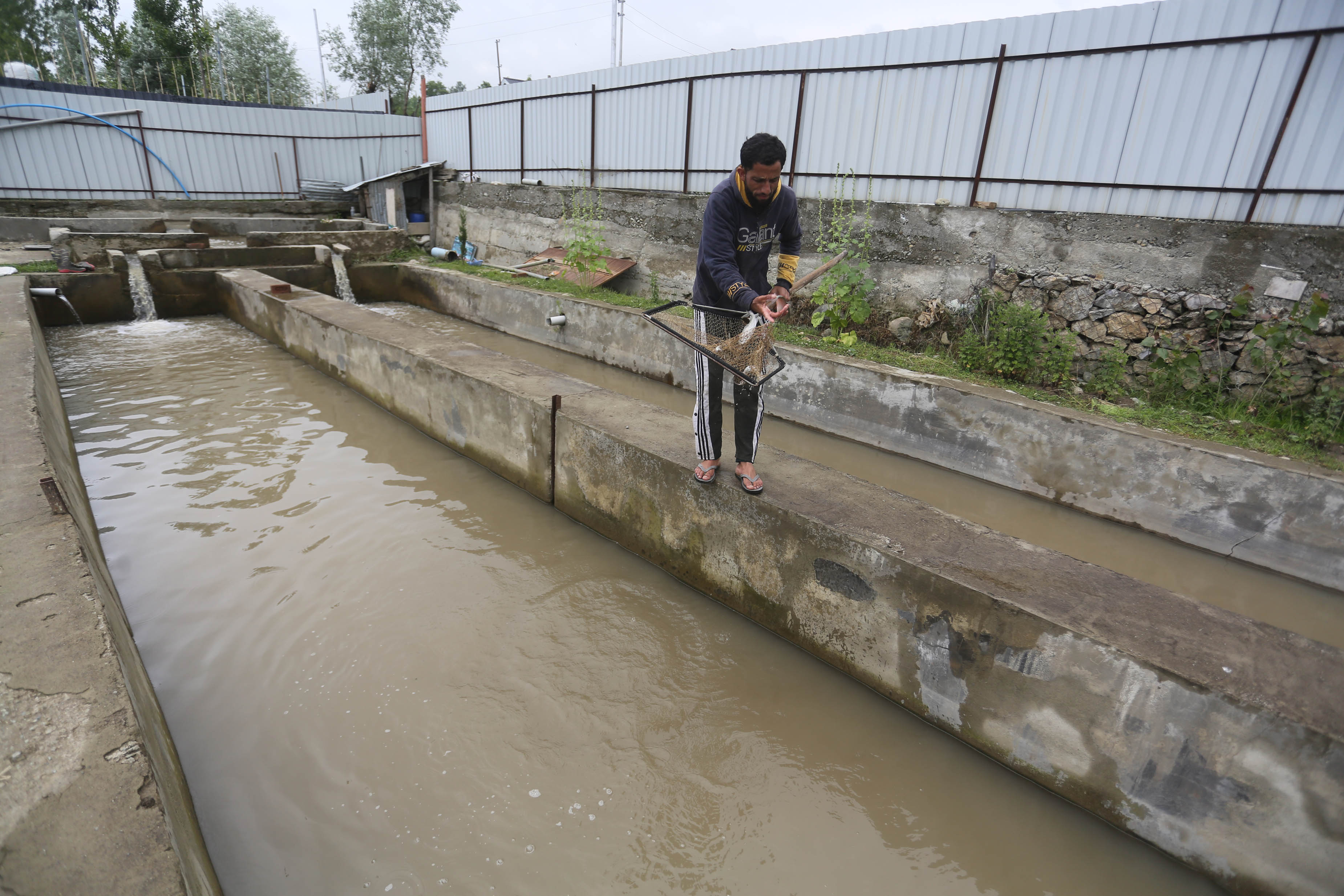 Peerzada Rayees Ahmad, whose fish farm was once fed by the Sukhnag, is among those who bore the brunt. (Express photo: Shuaib Masoodi)
‘Steep’ price of extraction
A 54-km-long tributary of the Jhelum, the Sukhnag is a glacial river that originates near the Tosamaidan meadow in the Pir Panjal and passes through central Kashmir’s Budgam district and is considered a critical source of water for drinking, irrigation and trout fishing.
Story continues below this ad
In Kashmir, designated trout streams such as the Sukhnag, Doodhganga and Shaliganga are subject to stricter regulation, requiring mandatory environmental clearances. But the last few years have seen rampant mining in these fragile river systems, prompting petitions before the National Green Tribunal for these rivers.
In its report before the NGT, the joint panel in the Sukhnag case estimated that 10.6 lakh to 15.3 lakh tonnes of riverbed material may have been extracted from the surveyed stretch of the river, and said it had caused “irreversible hydrogeological damage”. It recommended a “moratorium on all mining activities” until the system is “adequately restored”.
“Even when a conservative depth of 3.86 metres is considered, the estimated extraction remains significantly high at approximately 10.62 lakh tonnes (as measured by G B Pant National Institute of Himalayan Environment),” it said.
Environmental activist Raja Muzaffar Bhat, who filed the petition before the NGT, says the actual figures could be much higher.
Story continues below this ad
“The report only talks about a small area,” he says. “If you look at the figures for two years, they have extracted around 200 dumpers of material from the river.”
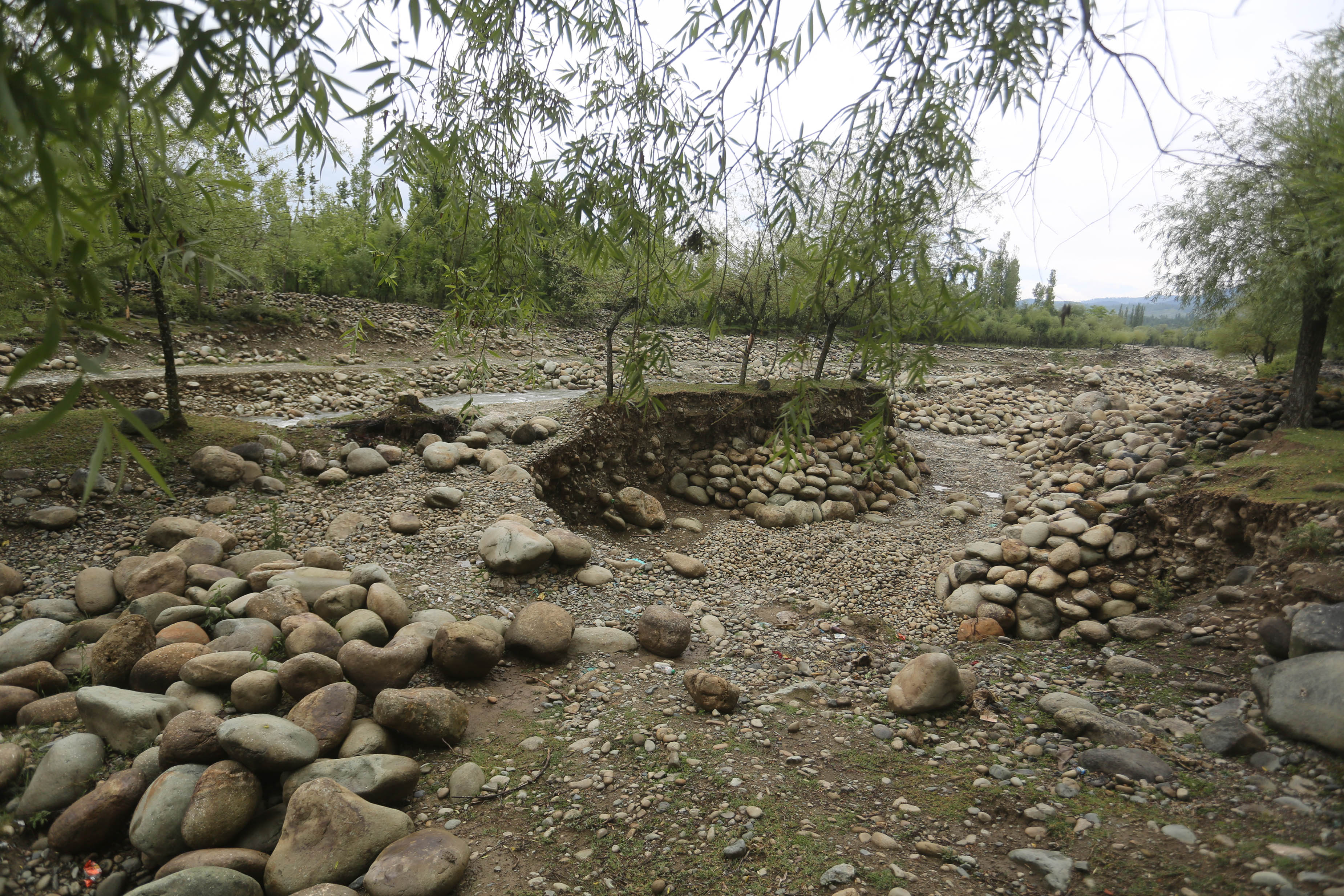 Streams of Sail that now run dry. (Express photo: Shuaib Masoodi)
Bhat alleges that in contravention of Supreme Court guidelines, the local administration had issued short-term permits for mining. A report submitted by the District Minerals Officer, Budgam, to the JKPCC reveals that the office issued 148 short-term permits for the extraction of around 4,37,000 metric tonnes.
Of these, 65 permits for 3,25,000 metric tonnes — almost 75% — were issued to NKC Projects.
“There was no auction since mining is not allowed here. There was no environmental clearance. The NKC projects (mining company) sought short-term permits and continued them for almost two years,” he says, adding: “For this, NKC allegedly paid less than Rs 1 crore for the excavation — not even a fraction of the material extracted”.
Story continues below this ad
For the area, the consequences of these alleged infractions appeared overnight. Peerzada Rayees Ahmad had a trout farm fed by a small stream from the Sukhnag, which was lost.
“One night, the river suddenly dried up. We went to see what had happened and saw that giant excavators had dug deep into the river and the water level had fallen below the riverbed. When we questioned them, they humiliated us and asked us to complain to whomever we wanted,” says Ahmad. He’s still seeking an FIR against the mining company.
Over the next two years, as the activity increased, villagers talked in whispers about the damage caused to the river and their lands, but say their protests were ignored. That changed when the petition prompted the NGT to order a joint panel.
The panel first visited the area in January last year. “When they (the mining company) heard about it, they hid their excavators deep inside the tree-covered embankments and left the next morning,” says another village resident. “They told us they would come back but didn’t. It has been more than a year now, and no mining is taking place here.”
Story continues below this ad
But this is not the first time unchecked mining operations have seen court intervention in Kashmir. Even before this, NKC had faced court action over controversial mining in the Shaliganga river in Chadoora, Budgam. In August 2022, the NGT cancelled the project and directed the J&K Pollution Control Committee to “take appropriate action” against the company. The order, which came after Bhat’s petition, was eventually upheld by the Supreme Court in August 2025.
For Sail, even the cessation of mining activities offers little consolation. “Our village was known as the village of springs. But most of that is now gone. Only a few are still alive,” says village resident Shahjahan Bhat.












 English (US) ·
  French (CA) ·
  French (FR) ·