

PROTECT YOURSELF with Orgo-Life® QUANTUM TECHNOLOGY
Orgo-Life the new way to the future Advertising by AdpathwayStory at-a-glance
- Foam rollers are cylindrical devices that apply pressure to muscles, helping relieve tightness and inflammation while improving flexibility and range of motion
- Research shows foam-rolling modestly improves flexibility immediately after use, but provides minimal improvements in athletic performance like jumping, sprinting, or strength training
- Foam-rolling is theorized to work through three mechanisms — loosening fascia around muscles, improving blood circulation and temperature, and activating nerve receptors that reduce pain perception
- A study of professional basketball players found that adding foam-rolling to their warm-up improved ankle mobility and single-leg balance, suggesting it may also be useful for warming up before exercise
- Four basic foam roller exercises target major muscle groups — hamstrings, back, calves, and quads, each performed for approximately 30 seconds per area
You've likely experienced muscle soreness after intense exercise, commonly called delayed-onset muscle soreness (DOMS). This is characterized by stiffness, tenderness, and reduced range of motion in the affected areas lasting several days. While having a massage will help recovery, not everyone has the time for it. Here's where foam rollers come in. While foam-rolling is rapidly becoming standard practice among athletes and fitness enthusiasts, its benefits are not limited to them. Almost everyone, including you, can benefit from having a foam roller at home.
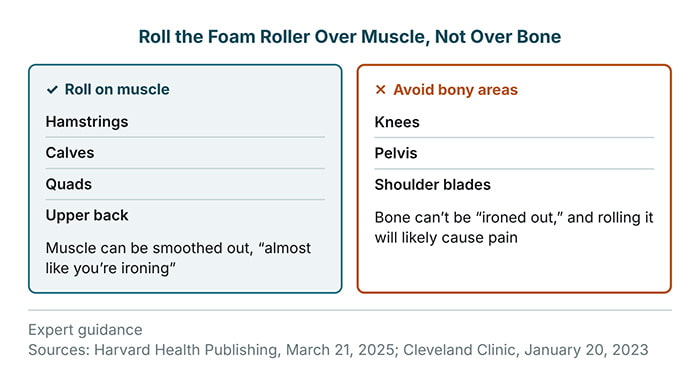
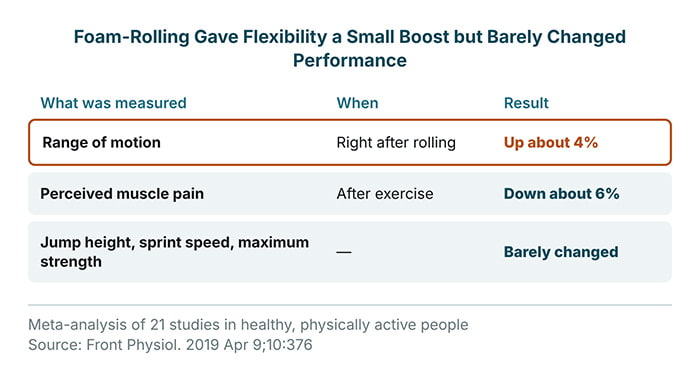
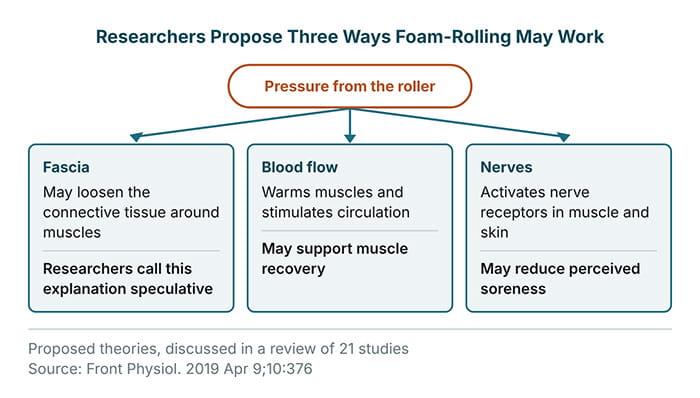
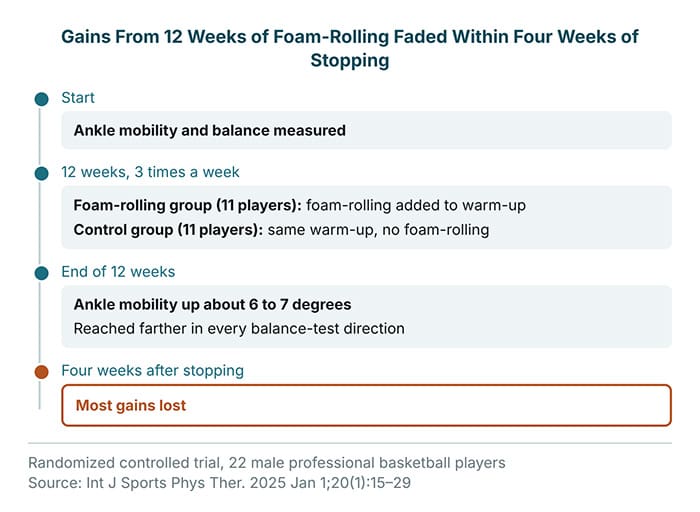
Before diving into the research behind the benefits of foam rollers, what is it exactly? Simply put, it's a cylindrical device designed to be applied on your muscles, "almost like you're ironing or smoothing out those tissues," according to Dr. Marwa Ahmed from Harvard Medical School.1 • Size — Depending on the manufacturer, foam rollers are often 6 inches in diameter and 1 to 2 feet long. • Surface — Most foam rollers sold on the market have a smooth surface. However, there are some with textured surfaces that create deeper pressure. • Intensity — According to Benjamin Kuharik, an exercise specialist from the Cleveland Clinic, foam rollers come in different intensities. Soft foam, for example, is ideal for beginners. Meanwhile, athletes and marathon runners typically gravitate towards firmer products.2 • Different applications — Foam rollers are generally used to relieve muscle tightness and inflammation, which is why they're commonly used after exercise. However, Kuharik explains that "foam-rolling primes the muscles and gets your neuromuscular activation going," which means that they're also great for warming up.3 Foam rollers are generally safe to use, but they should only be applied on your muscles. According to Dr. Ahmed, don't use them on bony areas of your skin, such as knees, pelvis, and shoulder blades, as these can't be "ironed out" unlike muscle tissues and will likely cause pain.4 That said, research shows that there are clear benefits to these devices when used correctly. Figure 1. Foam rollers belong on muscles such as the hamstrings, calves, quads, and upper back, never on bony areas like the knees, pelvis, and shoulder blades. In a meta-analysis published in Frontiers in Physiology, researchers examined data from 21 studies to see how foam rollers affect various aspects of athletic performance and recovery. Specifically, they wanted to determine how foam-rolling impacts flexibility, muscle soreness, and athletic capabilities such as jumping, sprinting, and strength training.5 Participants were healthy, physically active individuals, ranging from untrained and recreationally active people to elite athletes. Each included study compared foam-rolling against a control condition. • Flexibility improved — Researchers observed a small but measurable increase in range of motion (about 4%) immediately after participants used a foam roller. If you're an athlete, this may help you stretch further and move with greater ease during play. • Physical improvements were minuscule — Jump height, sprint speed, and maximum strength were barely enhanced after foam-rolling. To put it plainly, if your primary goal is to be better at your chosen sport, foam-rolling alone won't get you the results you're aiming for. This distinction is crucial because many people mistakenly believe foam-rolling dramatically enhances these aspects of fitness. Going deeper into the analysis, the rate at which improvements occurred varied between measured outcomes. The flexibility benefits appeared immediately after a short foam-rolling session, meaning that even just a few minutes can positively affect your workout readiness. On the other hand, changes in performance metrics like jump and sprint capabilities were negligible. • Foam-rolling plays a supporting role — Overall, the researchers concluded that foam-rolling's effects on performance are “rather minor and partly negligible, but can be relevant in some cases,” indicating that foam-rolling serves a more complementary role rather than a primary performance enhancer. • Foam-rolling provides slight relief from soreness — When used after exercise, foam-rolling reduced perceived muscle pain by about 6%. By comparison, its effect on muscular performance was small. Specifically, the magnitude of soreness relief was modest, meaning foam-rolling may ease muscle pain, but it doesn't completely eliminate post-exercise discomfort. Figure 2. Across 21 studies, foam-rolling raised range of motion by about 4% and lowered perceived muscle pain by about 6%, while jump, sprint, and strength barely changed. • How foam-rolling benefits your muscles — The study posits three theories on how foam rollers improve muscle flexibility. One mechanism suggested involves the fascia, the tough connective tissue surrounding muscles. Foam-rolling applies gentle pressure that may loosen fascia and allow more range of motion. This may help muscles glide smoother over one another, enhancing overall flexibility and reducing stiffness. However, the researchers consider this explanation speculative. • Pressure subsequently improves blood circulation — Another theory involves blood flow and temperature changes within the muscle tissues. Foam-rolling generates localized pressure and friction, which warms muscles and stimulates circulation. Better blood flow means muscles receive a higher supply of oxygen and nutrients, which may support muscle recovery and reduce fatigue. Warm muscles also stretch and move more readily, offering immediate gains in flexibility. • The nervous system is activated — The third theory involves the nervous system's response to pressure stimuli. The sensation produced during foam-rolling activates certain nerve receptors within the muscle and skin. These receptors may then signal the brain to release natural pain-relieving chemicals, including endorphins and oxytocin, which may reduce your perception of muscle soreness and pain. This may allow for a more comfortable return to physical activity. Figure 3. Researchers offer three theories for how foam-roller pressure may work: on the fascia, on blood flow, and on nerve receptors. In a study published in the International Journal of Sports Physical Therapy (IJSPT), researchers investigated whether foam rollers could meaningfully enhance the performance of athletes before a game.6 The randomized controlled trial involved 22 healthy male professional basketball players, split evenly between a foam-rolling group and a control group. Three times a week for 12 weeks, the foam-rolling group added foam-rolling to their standard pre-training warm-up, targeting the calves, hamstrings, quads, glutes, and iliotibial band (the band of tissue along the outer thigh), while the control group did the same warm-up without it. To compare results, researchers measured the athletes' ankle mobility and single-leg balance at the start, at the end of the 12 weeks, and again four weeks after the players stopped foam-rolling. • The rate of improvement was notable — After 12 weeks of foam-rolling, players experienced substantial gains in ankle mobility. Specifically, ankle dorsiflexion improved by approximately 6 to 7 degrees. For context, dorsiflexion is your ability to flex your ankle upwards toward your shin, and better ankle flexibility has been linked to enhanced performance, especially in sports requiring rapid movements, jumping, or quick directional changes. • Single-leg stance stability was better — Using the Y-Balance Test — an assessment where you balance on one leg and reach as far as possible in three different directions (forward and two backward diagonals) — players in the foam-rolling group reached farther distances in every tested direction. Better single-leg balance may support athletic performance and help players make sharp, controlled movements with greater confidence. The researchers also noted that balance is linked to lower-limb injury risk, although this study didn't track injuries. • Timing is also important — The gains in both mobility and balance were measured at the end of the 12-week program, while players were still foam-rolling regularly as part of their warm-up. However, the benefits were temporary. When participants stopped using foam-rolling regularly, most of their gains were lost within four weeks. Based on this finding, maintaining the benefits likely requires consistent incorporation into your regular warm-up regimen rather than using the device sporadically. Figure 4. In a 12-week trial of professional basketball players, foam-rolling before practice improved ankle mobility and balance, but most gains were lost four weeks after stopping. • Mobility improvements were slightly more pronounced than those in balance — However, both areas benefited in this study. • Theories on how foam rollers benefit muscles — Just like the Frontiers in Physiology study, the researchers of the IJSPT study can't pinpoint the exact mechanisms of a foam roller's effect on muscles, but there are theories. One, the effectiveness of foam-rolling in enhancing mobility and balance likely arises from several interconnected mechanisms — the physical pressure of foam-rolling appears to increase muscle temperature, which naturally boosts muscle elasticity and joint range of motion. This warming effect mimics traditional warm-up exercises but with the added benefit of directly targeting deep muscle layers, enhancing tissue pliability, and reducing stiffness. • Foam-rolling's pressure activates specific nerve receptors — In this theory, foam rollers produce signals that reduce muscle tightness and enhance proprioception, which is the body's ability to sense its own position and movements in space. Better proprioception may support balance and coordination on the court, helping you execute precise movements with greater agility. • The rhythmic and sustained pressure of foam-rolling enhances blood circulation in targeted muscles — The last theory explores the rapid supply of oxygen and nutrients while removing fatigue-causing metabolic byproducts. Enhanced circulation may help muscle tissues function well during activity, which may have contributed to the improvements in balance and mobility observed in this study. Now that you know how foam rollers work on your fitness, how can you harness its benefits? At the very start, I recommend selecting a foam roller that suits your needs by consulting a licensed expert. Once you have your own foam roller, practice these four exercises as detailed by Kuharik. Again, foam rollers can be used as a warm-up or cooldown, so feel free to choose when they work best for you:7 • Hamstrings: • Back: • Calves: • Quads: While you can use a foam roller any time, Kuharik recommends exercising with it in the morning. If you hit a sore area, that means the muscles are contracted, and applying pressure via the foam roller will help release tension.8 Q: What is foam-rolling, and how does it work? A: Foam-rolling involves using a cylindrical device to apply gentle pressure to muscles to smooth them out. It may help loosen fascia (the connective tissue around muscles), improve blood flow, and trigger the nervous system to release natural pain-relieving chemicals, which may boost flexibility and ease muscle soreness. Q: Does foam-rolling enhance flexibility? A: Yes. Research shows foam-rolling produces a small, short-term increase in flexibility. Participants in studies experienced better range of motion right after a short session, making it a useful addition to a warm-up. Q: Can foam-rolling improve sports performance like jumping and sprinting? A: Foam-rolling has very limited effects on sports performance metrics such as jump height, sprint speed, and strength. While beneficial for flexibility and recovery, it doesn't meaningfully enhance these aspects of athletic performance. Q: How long do foam-rolling benefits last? A: Foam-rolling's benefits, particularly improved flexibility and reduced muscle soreness, appear immediately but are temporary. Regular, consistent use is required to maintain these advantages. Q: Is foam-rolling safe for everyone? A: Foam-rolling is generally safe for most people but should only be applied to muscles. Avoid rolling directly over bony areas like knees, pelvis, and shoulder blades, as these areas don't benefit from pressure and rolling there can cause pain. This article is for informational purposes only and does not constitute medical advice. Consult a qualified healthcare provider before making changes to your health regimen.What Is a Foam Roller?
Foam Rollers Boost Your Flexibility
Foam Rollers Are Also Useful for Warming Up
4 Foam Roller Exercises You Can Try
Frequently Asked Questions (FAQs) About Foam Rollers




















 English (US) ·
 French (CA) ·
 French (FR) ·