

 5 days ago
3
PROTECT YOURSELF with Orgo-Life® QUANTUM TECHNOLOGY
Orgo-Life the new way to the future Advertising by AdpathwayTechnologies that sound like science fiction are no longer confined to novels and films. A person with paralysis can turn brain activity into speech at home. Passengers can pay for a taxi ride with nobody in the driver’s seat. Scientists have even transported antimatter in a truck.
You can open Table of Contents show
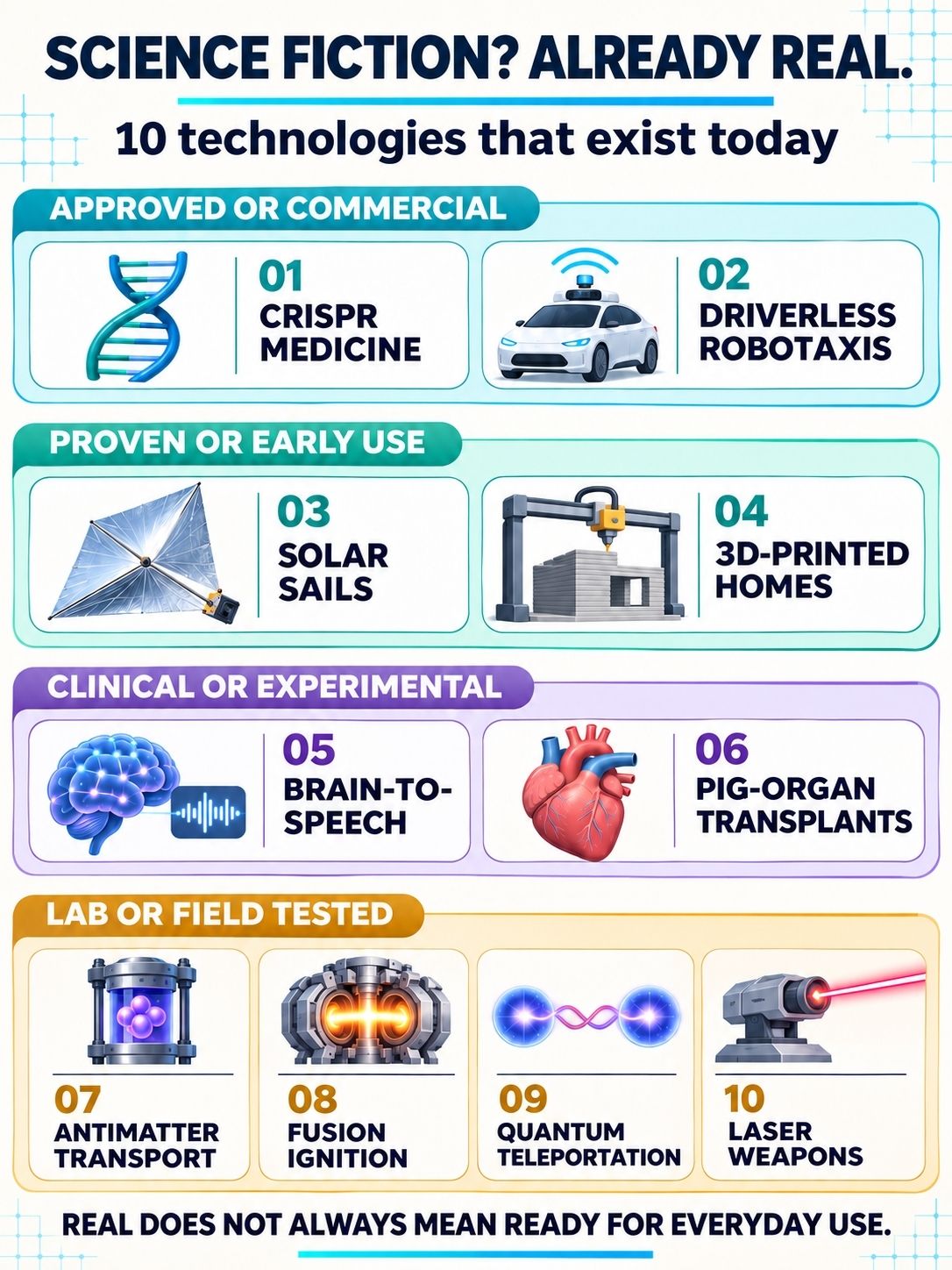
However, “already exists” does not always mean widely available. Some of these technologies are approved treatments or commercial services. Others work only in clinical trials, military tests, or controlled laboratories. Every entry below has been used, operated, approved for a real purpose, or demonstrated successfully. Concept art and promised launches do not count.
How Close Are These Technologies to Everyday Use?
Their maturity varies widely. The table separates technologies people can use now from systems that remain experimental.
| Brain-to-speech interfaces | Implanted systems translating attempted speech into words | Human clinical research |
| CRISPR medicine | Approved treatment using edited blood stem cells | Regulated medical use |
| Pig-organ transplants | Gene-edited pig kidneys transplanted into living people | Clinical trials |
| Driverless robotaxis | Paid rides without a human driver in front | Commercial in selected areas |
| Portable antimatter | Antiprotons stored and moved in a mobile trap | Research demonstration |
| Fusion ignition | Repeated reactions achieving target energy gain | Laboratory research |
| Quantum teleportation | Quantum states transferred across fiber networks | Research demonstration |
| Laser weapons | High-energy systems tested against real targets | Field testing and limited installation |
| Solar sails | Spacecraft using sunlight for propulsion | Proven space technology |
| 3D-printed homes | Occupied buildings with printed wall systems | Early commercial construction |
10 Technologies That Sound Like Science Fiction
These technologies have moved beyond fictional stories and futuristic predictions. Some are already available commercially, while others are being used in medicine, clinical trials, scientific laboratories, or controlled field tests. Their maturity varies, but each one exists in the real world today.
1. Brain-to-Speech Interfaces
Brain-computer interfaces can record activity from regions involved in attempted speech, decode the patterns, and convert them into text or a synthesized voice.
In 2026, an NIH-funded team reported that a man with ALS had used an implanted system at home for more than 3,800 hours. His caregivers learned to set it up, allowing him to use it for conversations, video calls, emails, and text messages. The result moved the system beyond a short laboratory demonstration, although it still involved one participant in an ongoing clinical study.
This technology does not read every private thought. It interprets specific neural activity when a trained participant attempts to speak or control a device. The journey from early human brain implant trials to practical communication still requires surgery, calibration, external computing, and medical supervision.
2. CRISPR Treatments That Edit a Patient’s Cells
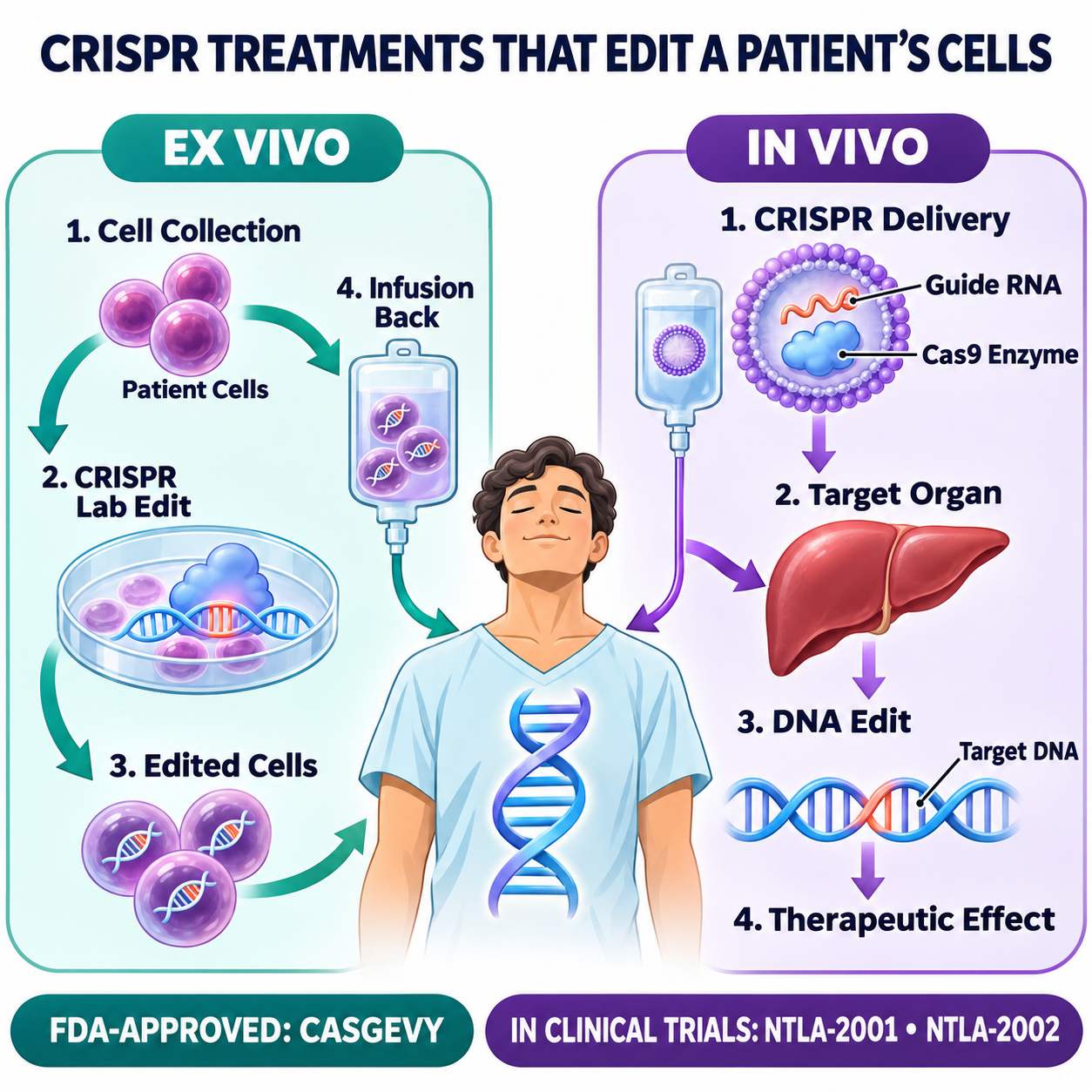
Editing human DNA is now part of regulated medicine. Casgevy uses CRISPR-Cas9 to modify a patient’s blood-forming stem cells outside the body. Clinicians then return those cells through a stem-cell transplant procedure.
The FDA’s Casgevy record lists approved uses for sickle cell disease and transfusion-dependent beta thalassemia. In 2026, the US indication expanded to eligible children aged two and older.
This is not a simple injection. Treatment involves cell collection, intensive conditioning, reinfusion, and specialist follow-up. Researchers are also exploring more precise approaches. Early human prime-editing data document a newer method designed to rewrite selected DNA sequences. Prime editing remains experimental, but CRISPR-based treatment has entered approved clinical use.
3. Gene-Edited Pig Organs Transplanted Into Humans
Xenotransplantation uses organs or tissues from one species in another. The idea has been studied for decades, but gene editing has made pigs more promising donors by reducing some biological triggers of rejection.
In March 2024, Massachusetts General Hospital performed the first transplant of a gene-edited pig kidney into a living person. By late 2025, the first formal US clinical trial of gene-edited pig kidney transplants had begun, moving the field beyond individual compassionate-use procedures.
Pig organs are not yet a standard alternative to human donation. Recipients need strong immune-suppressing treatment, while researchers must track rejection, organ durability, and possible infection. Still, real pig kidneys have functioned inside living recipients. The question is no longer whether the operation is physically possible, but whether it can become safe, durable, and repeatable.
4. Robotaxis With Nobody Behind the Wheel
In selected cities, passengers can book a car that arrives without a human driver. Waymo operates fully autonomous ride-hailing vehicles, while other companies are entering markets through transport-platform partnerships and local permits.
The vehicles combine cameras, radar, lidar, detailed maps, and onboard computing. Their freedom remains limited. Most commercial robotaxis stay within mapped service areas and operate under defined road, weather, and traffic conditions.
That places them in Level 4 automation rather than universal self-driving. Current autonomous driving levels explain why a vehicle can be genuinely driverless inside one operating domain but unable to work everywhere. The growth of robotaxi services across cities proves the business is real. Level 5 vehicles that can handle essentially any road or condition are not.
5. Antimatter That Can Travel by Truck
Antimatter annihilates when it touches ordinary matter, making it extremely difficult to store. Moving it in a road vehicle sounds even less plausible.
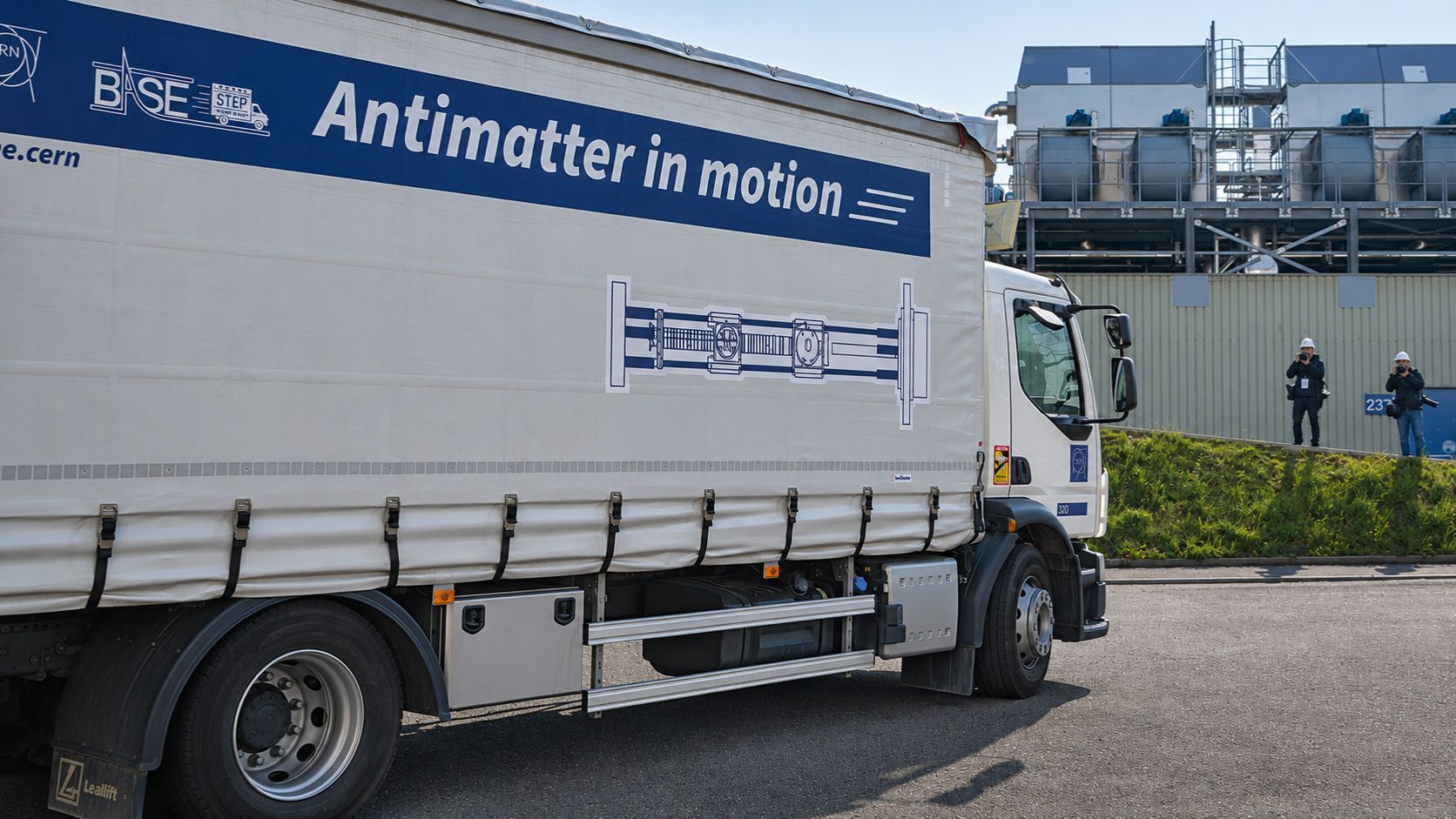
On March 24, 2026, CERN’s BASE experiment transported 92 antiprotons across its main site in a truck. Electric and magnetic fields held the particles inside a portable cryogenic Penning trap, supported by an extreme vacuum and superconducting equipment.
The truck was not carrying a science-fiction weapon. Ninety-two antiprotons are a minuscule quantity, while the transport system itself weighs about a ton. Its purpose is precision research. If scientists can move antiprotons to quieter laboratories, they can compare matter and antimatter more accurately and investigate why the observable universe contains far more matter.
6. Fusion Ignition in a Laboratory
Fusion joins light atomic nuclei and releases energy, the same basic process that powers stars. The US National Ignition Facility first achieved fusion ignition in December 2022. Its fuel capsule produced more fusion energy than the laser energy delivered directly to the target.
By June 2026, the facility had recorded ignition for an eleventh time. That experiment produced 7.9 megajoules of fusion yield and a target gain of about 3.8.
Those figures do not mean a fusion plant generated net electricity. The complete laser facility consumes much more energy than reaches its tiny target. A commercial reactor would need efficient, frequent, durable, and economical reactions. Recent nuclear fusion breakthroughs confirm that controlled ignition works. Supplying affordable electricity to the grid remains a separate engineering challenge.
7. Quantum Teleportation Across Real Networks
Quantum teleportation transfers the state of a quantum system. It does not beam people or physical objects between locations.
A Fermilab-led collaboration demonstrated sustained teleportation of photonic qubits across 44 kilometers of fiber with fidelity above 90 percent. The original state is not copied like a digital file. Measurement changes it at the sending point, while entanglement and ordinary communication allow the state to be reconstructed elsewhere.
Because the receiver still needs information through a conventional channel, quantum teleportation cannot provide faster-than-light messaging. Its value lies in future quantum networks, distributed sensing, and connections between quantum processors. Readers new to qubits and entanglement can begin with how quantum computing works. The demonstrated technology transports information, not matter.
8. Laser Weapons That Can Disable Targets
High-energy lasers have tracked and damaged real targets during military trials. Some systems have also been installed on naval vessels.
The UK’s DragonFire completed a high-power firing against aerial targets at the Hebrides Range in 2024. The US Navy has equipped the USS Preble with HELIOS, a system built for surveillance, sensor dazzling, and defense against threats such as drones.
These weapons focus intense light on a target long enough to damage sensors or materials. They act at the speed of light and do not require conventional ammunition for every shot. Yet they have practical limits. Clouds, atmospheric disturbance, line of sight, beam control, cooling, and electrical power can all affect performance. They are specialized defensive systems, not limitless rays that can cut through anything at any distance.
9. Spacecraft Propelled by Sunlight
Solar sails use the slight pressure created when photons strike a large reflective surface. Each push is tiny, but it continues without consuming onboard propellant.
Japan’s IKAROS and The Planetary Society’s LightSail 2 demonstrated controlled solar sailing. NASA’s Advanced Composite Solar Sail System later deployed an 80-square-meter sail in orbit in August 2024, completing the mission’s primary technology objective. Its sail and lightweight booms had been packed into a CubeSat roughly the size of a microwave.
Solar sails cannot launch spacecraft from Earth, and they do not create the sudden acceleration seen in films. Their strength is gradual, continuous propulsion. That could support space-weather monitoring, asteroid reconnaissance, and long missions where carrying large amounts of fuel would be impractical.
10. Homes Built With Giant 3D Printers
Large robotic printers now build wall systems by depositing concrete or other printable material layer by layer. People live in these homes, and developers have completed multi-building projects rather than only display prototypes.
The name can be misleading. A 3D printer usually creates the interior and exterior wall shells. Human crews still build the foundation and roof, install doors and windows, and complete the plumbing, wiring, insulation, and finishes. Claims that an entire home was printed in a day often refer only to the wall-printing phase.
The method can reduce formwork, support curved designs, and place material precisely. It may also shorten part of the construction schedule. However, the economics depend on the full project. The analysis of 3D-printed homes in 2026 shows why labor, permits, material mix, land, and conventional finishing work still matter.
The Future Has Arrived in Pieces
These technologies that sound like science fiction have crossed the line from idea to reality, but not in the same way. Robotaxis and gene-edited treatments already serve customers or patients under strict rules. Solar sails and 3D-printed homes have moved beyond isolated prototypes. Antimatter transport, quantum teleportation, and fusion ignition remain controlled demonstrations with much larger ambitions.
That difference is worth keeping. A technology does not need to be cheap, common, or finished to be real. It only needs to work under clearly stated conditions. The next challenge is turning today’s narrow successes into systems that are safer, more reliable, and useful at scale.












 English (US) ·
 French (CA) ·
 French (FR) ·