

 23 hours ago
2
23 hours ago
2
PROTECT YOURSELF with Orgo-Life® QUANTUM TECHNOLOGY
Orgo-Life the new way to the future Advertising by AdpathwayLaw professor on SCOTUS decision to allow Trump to continue ballroom project
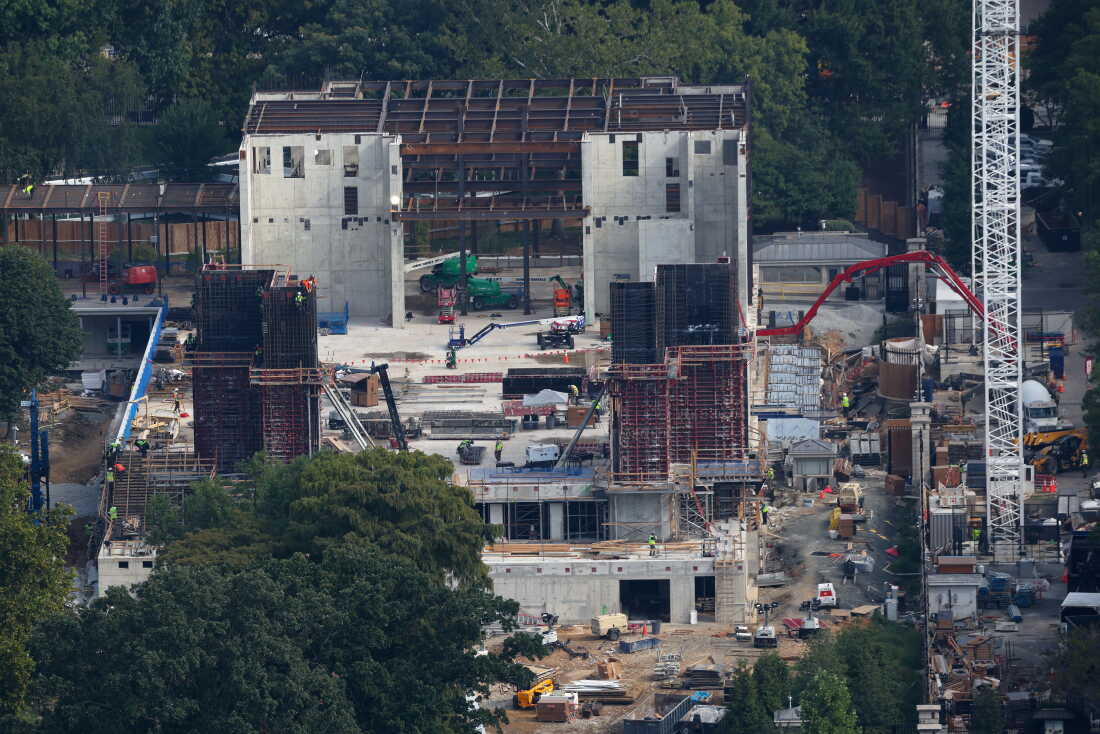
Construction of the new ballroom continues at the White House on Sept. 1 in Washington. A divided U.S. Supreme Court allowed construction of the project to continue in a ruling issued Monday. Win McNamee/Getty Images hide caption
toggle caption
Win McNamee/Getty Images

The Supreme Court's decision allowing President Trump's White House ballroom construction to continue could have consequences beyond the project, Georgetown Law professor Stephen Vladeck says.
"I think, unfortunately, it sets a bigger precedent," Vladeck told Morning Edition. He said the administration has repeatedly tried to spend money Congress has not appropriated, while the Supreme Court has made it harder to challenge that spending.
Vladeck said that matters because the separation of powers is supposed to be a "two-way street." When presidents spend money Congress has not appropriated, he said, they are not simply expanding executive power but taking away one of Congress' central constitutional powers.
The court majority found that the National Trust for Historic Preservation, which was challenging the project, lacked standing — the legal right to sue — because they had not shown a concrete injury.
Vladeck said it was "not necessarily the result" of the case that surprised him, but the court's rationale. He said this ruling will make it harder for plaintiffs to rely on "esthetic injuries," even though the Supreme Court recognized such claims in a 1992 opinion by Justice Antonin Scalia.
The case "comes down to an appropriations dispute that only Congress can litigate," Vladeck said. With the current Congress unwilling to challenge the administration over its spending authority, such disputes could effectively only be litigated during periods of divided government in Washington.
Meanwhile, the administration says crews are working 20 hours a day, seven days a week.
For Vladeck, the flaw is in the Supreme Court's handling of emergency cases. Although the justices describe such rulings as temporary, they can determine what happens on the ground before the underlying legal questions are resolved.
Listen to the full interview by clicking the play button above. The digital version was edited by Suzanne Nuyen.




















 English (US) ·
  French (CA) ·
  French (FR) ·