

 6 days ago
6
6 days ago
6
PROTECT YOURSELF with Orgo-Life® QUANTUM TECHNOLOGY
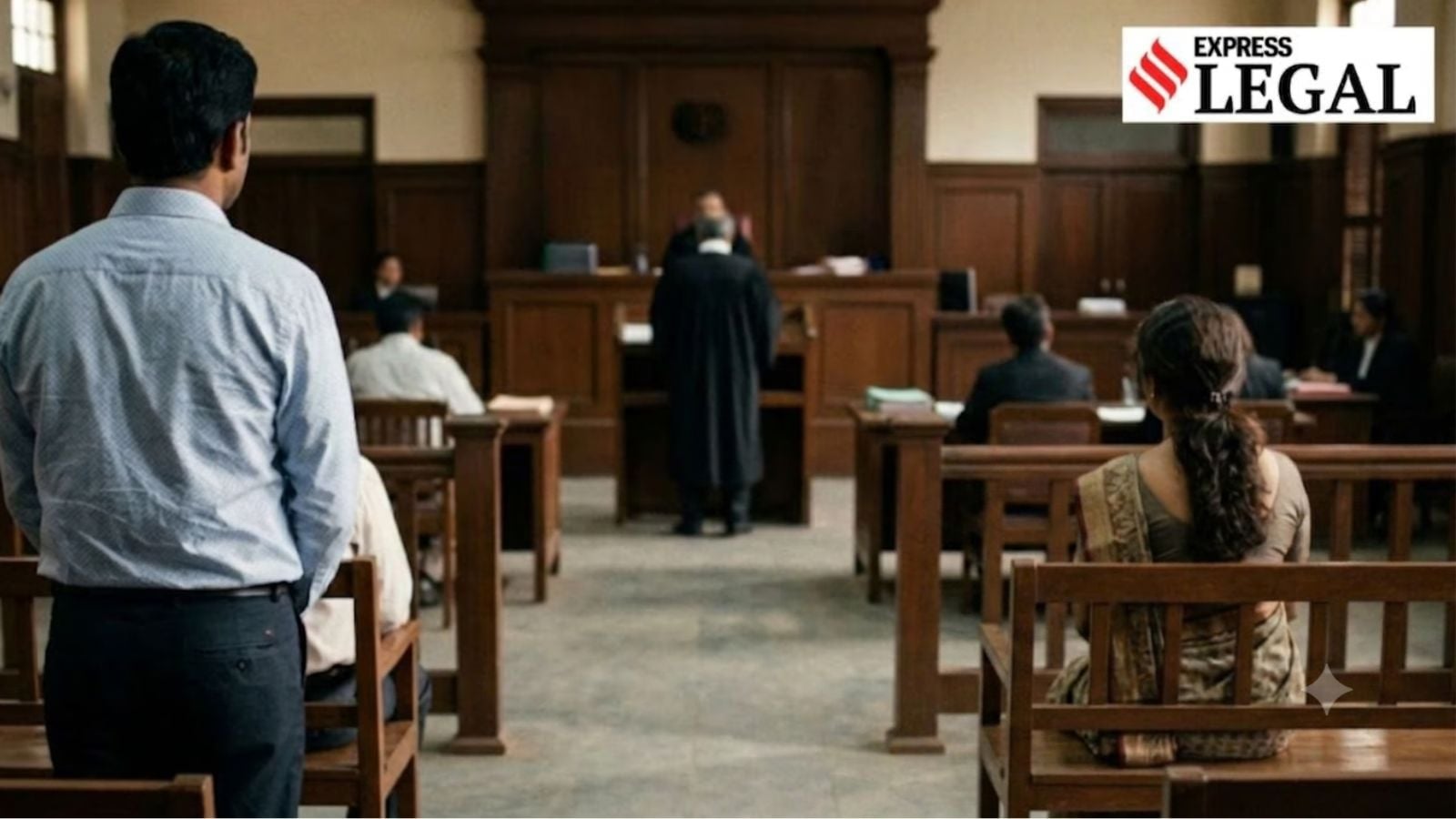
Orgo-Life the new way to the future Advertising by AdpathwayDemocracy demands strict adherence to electoral discipline, but criminal law cannot be stretched to prosecute every election-time disagreement lacking the basic ingredients of an offence, the Madras High Court has said, quashing criminal proceedings against six men accused of canvassing near a polling booth during the 2021 Tamil Nadu Assembly elections.
The court cautioned that while electoral rules must be respected, courts are equally duty-bound to prevent the misuse of criminal process in the backdrop of political rivalry and election-related tensions.
Justice L Victoria Gowri was hearing a petition filed by six accused persons seeking to quash criminal proceedings pending before the judicial magistrate court, Pattukottai, arising out of a police case registered during the 2021 Assembly polls.
 Justice L Victoria Gowri said courts must remain alert to attempts to misuse criminal law.
“Democracy undoubtedly demands strict adherence to electoral discipline. Yet, criminal law cannot be stretched to convert every election-time disagreement into a full-fledged criminal prosecution bereft of statutory ingredients. Courts are guardians not only against crime but equally against misuse of criminal process,” the judge said on June 1, allowing the plea.
The petition challenged the continuation of prosecution in a case alleging election-related violations and obstruction of a police officer on duty.
Criminal law not political retaliation tool
The court stressed that while political rivalry alone cannot justify quashing criminal proceedings, courts must remain alert to attempts to misuse criminal law.
“Courts must remain vigilant against criminal law being employed as a weapon of political retaliation,” Justice Gowri said.
Story continues below this ad
The judge further noted that the allegations, even if accepted in their entirety, appeared to disclose at best a minor election-time commotion occurring in the heat of political activity without any actual disruption of polling.
Case stemmed from 2021 Assembly poll duty
- The case arose from an incident that allegedly occurred on April 6, 2021, during polling for the Tamil Nadu Legislative Assembly elections.
- According to the prosecution, the de facto complainant, a sub-inspector of police attached to Vattathikkottai Police Station, had been deputed for election security duty near Kadhar Mohideen Boys School in Athiramapattinam, Thanjavur district.
- The police alleged that around 6 pm, the six accused entered the prohibited 100-metre radius around the polling booth and canvassed voters.
- When the officer directed them to move outside the restricted zone, they allegedly threatened him with dire consequences and obstructed him from discharging his official duties.
- Based on the complaint, Athiramapattinam police registered a case in 2021 under Sections 147 (rioting), 294(b)(obscene acts, songs), 353 (assault or criminal force to deter public servant from discharge of duty) and 506(i) (criminal intimidation) of the Indian Penal Code (IPC), along with sections 130 (prohibition of canvassing in or near polling stations) and 132 (misconduct at the polling station) of the Representation of the People Act, 1951.
- After the investigation, a final report was filed before the judicial magistrate, Pattukottai.
Accused alleged political motivation
The petitioners contended that they had been falsely implicated because of their association with an opposition political party and that the prosecution was politically motivated.
Their counsel argued that despite the incident allegedly taking place in a crowded polling environment, the prosecution had failed to cite a single independent witness.
No voter, polling official or presiding officer had lodged any complaint regarding disruption of polling, obstruction of voters or intimidation.
Story continues below this ad
The defence also pointed out that the observation mahazar did not disclose how the alleged 100-metre prohibited zone had been measured or from which point the measurement was taken.
Court finds no case of rioting
- Examining the allegations, Justice Gowri held that the essential ingredients of rioting under
IPC Section 147 were absent. - The court noted that the prosecution had merely alleged that the accused were canvassing voters near the polling booth and had not accused them of using force, violence or engaging in any destructive conduct.
- Mere presence of multiple individuals at the place of occurrence cannot automatically transform the gathering into an unlawful assembly, the court said.
- The judge added that political canvassing, even if carried out within a restricted electoral zone, would not automatically amount to rioting unless accompanied by force or violence.
No obscene words specified
- The court also found the charge under Section 294(b) IPC unsustainable.
- Justice Gowri noted that neither the FIR nor the final report specified the allegedly obscene words used by the accused.
- Further, there was no allegation that any member of the public was annoyed by the alleged utterances.
- The court observed that the prosecution had not cited even a single independent voter as a witness to the alleged incident.
Verbal altercation inadequate to invoke IPC Section 353
- The court next examined the allegation of obstructing a public servant under Section 353 IPC.
- Referring to the Supreme Court’s decision in Manik Taneja v State of Karnataka, Justice Gowri held that the offence requires assault or use of criminal force against a public servant.
- In the present case, the prosecution did not allege any physical contact, assault, pushing or manhandling of the police officer. At best, the allegations indicated verbal resistance or protest.
- Such allegations fall woefully short of the statutory threshold required under Section 353 IPC, the court held.
Criminal intimidation charge falls
- The high court similarly found no substance in the allegation of criminal intimidation.
- The FIR merely alleged that the accused threatened the police officer with “dire consequences” without specifying the exact words used or showing that the threat was intended to cause alarm.
- The allegations, the court held, were vague and lacked the particulars necessary to constitute an offence under Section 506(i) IPC.
Serious investigative deficiencies
The court identified several shortcomings in the investigation. These included the absence of independent witnesses, failure to examine the presiding officer or polling officials, lack of evidence proving the existence and measurement of the 100-metre restricted zone, and failure to establish the essential ingredients of the offences alleged.
Justice Gowri also noted that no voter had complained of intimidation or obstruction and that no video footage or contemporaneous election records had been produced to support the prosecution’s claims. “The entire prosecution therefore rests solely upon interested police witnesses without independent corroboration,” the court said.
Proceedings quashed
Holding that the case fell within the principles laid down by the Supreme Court in State of Haryana v Bhajan Lal, the court concluded that allowing the prosecution to continue would amount to an abuse of process and unnecessary harassment.
Story continues below this ad
The high court accordingly allowed the petition and quashed the proceedings in the case.




















 English (US) ·
  French (CA) ·
  French (FR) ·