

.png) 1 week ago
7
1 week ago
7
PROTECT YOURSELF with Orgo-Life® QUANTUM TECHNOLOGY
Orgo-Life the new way to the future Advertising by AdpathwayThe ongoing West Asia crisis has more than doubled freight costs, severely hurting the competitiveness of Indian steel companies, according to V R Sharma, the newly appointed managing director (MD) of Jindal Steel Ltd (JSL). Speaking to Saket Kumar in New Delhi, Sharma shares how the ₹54,000 crore steel giant is aggressively expanding its export footprint and shifting focus towards value-added products. Edited excerpts:
What are your top priorities in the second stint as MD of Jindal Steel?
Our priority is volume growth by utilising our existing 15.6 million tonnes (mt) of crude steel capacity. We aim to increase production from 9 mt to 12-12.5 mt by 2027-28 (FY28). We are also focused on profitability through value-added and engineered steel rather than commodity products. We don’t want to add to the commodity glut or enter a race for capacity expansion. We want to increase exports, particularly to markets where India has free trade agreements (FTAs). We are also strengthening human resources to improve organisational capabilities.
Which export markets are you targeting?
The UK, Oman and the UAE are on our radar. The European Union (EU) is also important, though there is a quota-related caveat. We are also looking at Iran and Ukraine, where post-war reconstruction could generate demand. We are targeting at least 1.5 mt of exports annually, or 10-12 per cent of sales, potentially rising to 15 per cent under favourable market conditions.
How do you view the ongoing debate around the provisions of the Mines and Minerals Development and Regulation (Amendment) Act?
It is a very good step. Parliament has understood the industry's problem and addressed a situation that could have resulted in significant losses. Businesses had already completed the relevant year's operations and closed their books. Avoiding a retrospective financial burden provides relief.
What is the biggest disadvantage Indian steel faces globally?
High sea freight is the biggest disadvantage. Red Sea, Houthi and Hormuz-related disruptions have increased vessel and insurance costs. Freight to Europe has risen from $40-45 to $80-90 a tonne, and sometimes $100. Other routes have risen from around $60 to $100-120. This has made Indian steel uncompetitive and is preventing us from exporting goods to the rest of the world. China does not face the same disadvantage because of its strong shipping network. India needs a stronger shipping fleet. Domestic freight is also an issue.
What are the challenges related to domestic freight?
Transporting steel to the Northeast is difficult. Once India-Bangladesh relations normalise, both countries should develop a high-speed corridor through Bangladesh connecting West Bengal with the Northeast. This would substantially reduce freight costs and help develop the seven northeastern states. Indian Railways should provide a heavy freight subsidy to the extent of 50% for goods going to the Northeast by rail.
Why is there a strategic shift towards value-added products?
The industry is discussing 300 mt of steel capacity, but the question is where it will be sold. Global markets are becoming more difficult due to CBAM, reduced quotas and greater protection in markets such as the US. Commodity steel will be difficult to export. India will continue consuming steel through infrastructure, but government spending has limitations. The industry should not race to produce more crude steel. Declining iron ore grades will also require more beneficiation and enrichment. More than 60 per cent of our production (7 mt out of 12-12.5 mt) should eventually be value-added.
What is your strategy for securing iron ore and coking coal? Are you looking at new mines domestically or overseas?
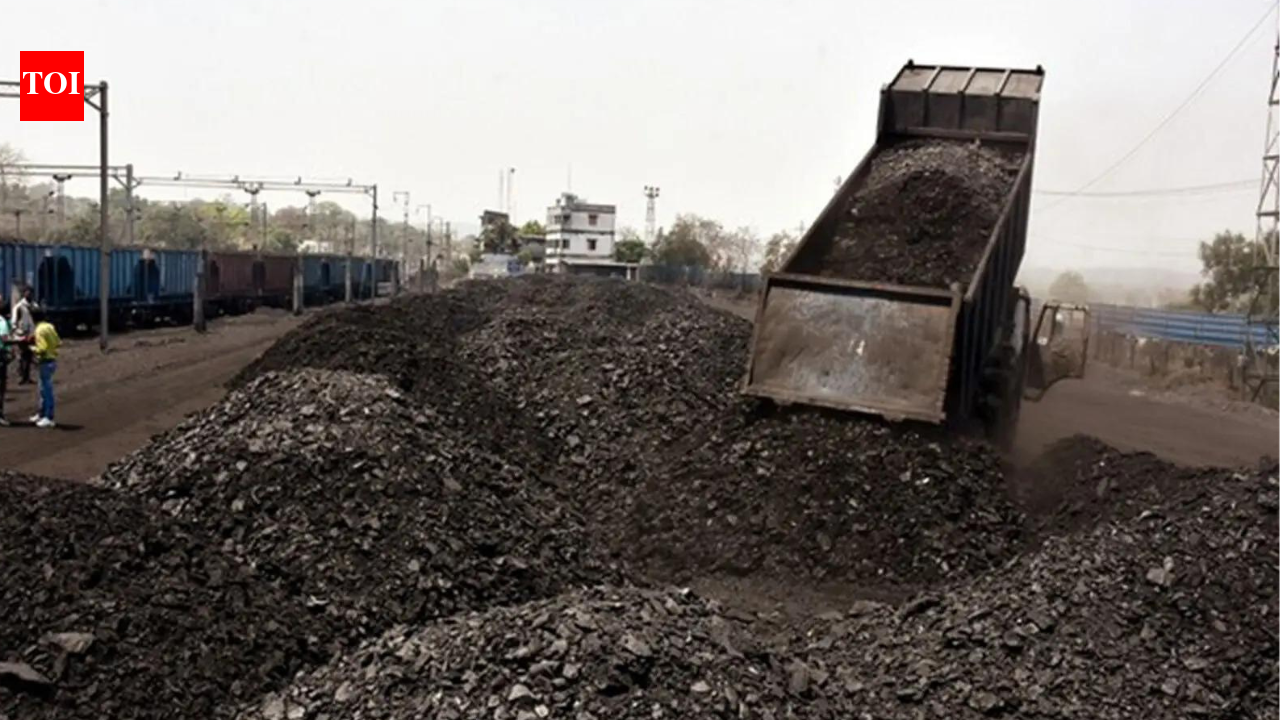
Coking coal is all imported, and we are increasing sourcing from Odisha Mining Corporation (OMC) and NMDC. We are not looking to acquire iron ore assets currently, but will participate in auctions. Our group has coking coal mines in Mozambique and is not looking at overseas mines as we expect Russian coking coal supplies to rise significantly after the Russia-Ukraine war.
Do you see Russia emerging as a major coking coal supplier for India?
Yes. Australia’s coking coal supply is declining. Russia could become a major source. American coking coal is high in sulphur, while Russia’s has different characteristics. Blending them can produce good-quality coal. The government has also been encouraging greater exploration of Russian coking coal. Once the war ends, Russia could export coking coal to India in a big way.
Q.Are existing measures against Chinese steel dumping, including safeguard duties and Quality Control Orders, sufficient?
The government needs to address imports under advance licences. Under this system, an exporter can import steel duty-free against an export order. This creates a situation where cheaper duty-free steel enters the domestic market or is used for domestic production, while other material is subsequently used for the export order. The government could instead introduce an export-promotion scheme with a fixed cash incentive for using Indian steel to discourage such imports.













 English (US) ·
  French (CA) ·
  French (FR) ·