

PROTECT YOURSELF with Orgo-Life® QUANTUM TECHNOLOGY
Orgo-Life the new way to the future Advertising by Adpathway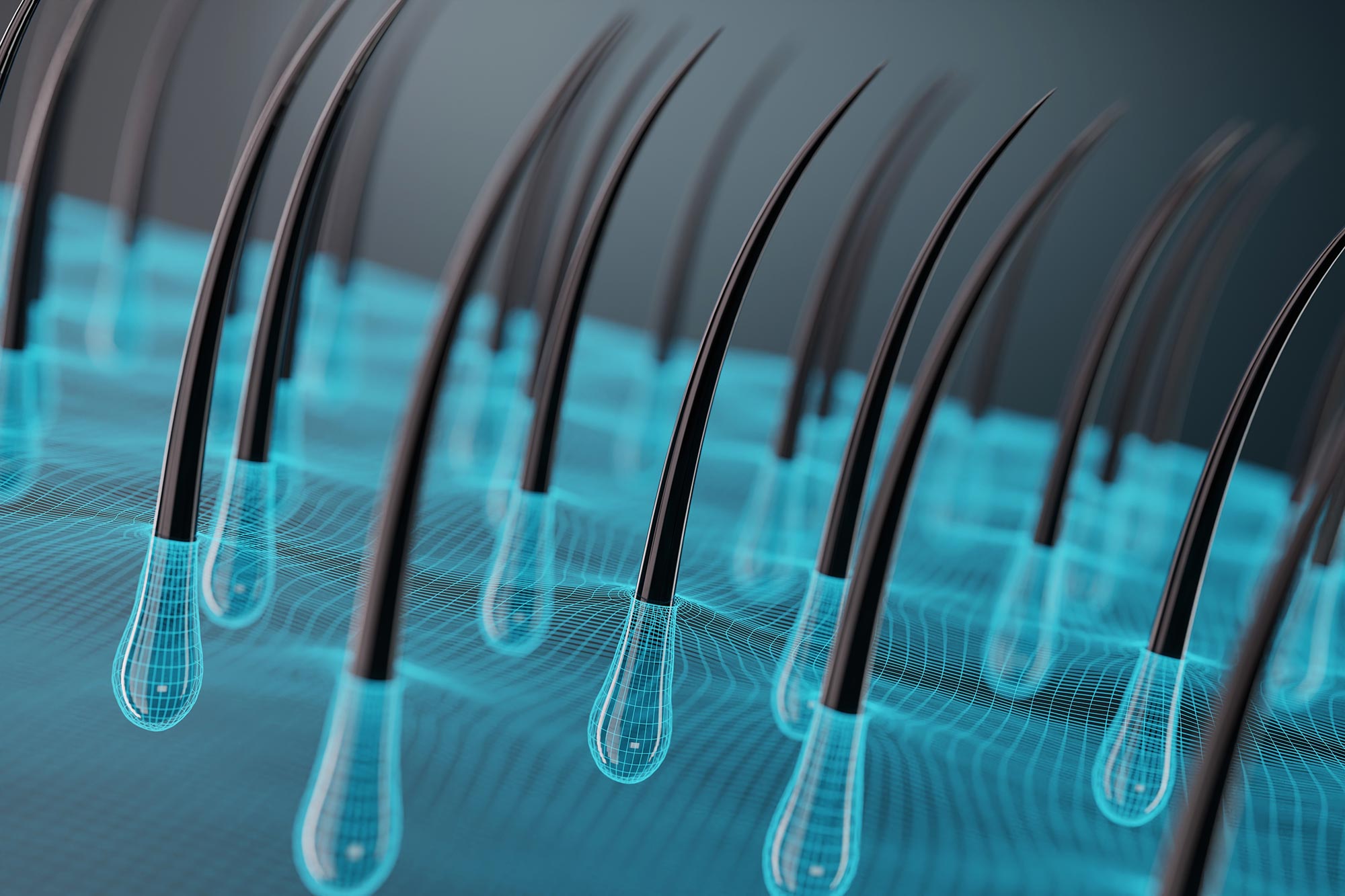 Scientists have uncovered a surprisingly simple mechanism that may explain how hair follicles arrange themselves into distinct patterns across mammalian species. Credit: Shutterstock
A new study reveals how subtle interactions between cells and chemical signals may shape the intricate patterns of mammalian hair.
The precise arrangement of hair follicles across an animal’s skin may arise from a surprisingly simple process. Researchers at the University of Geneva (UNIGE) have developed a mathematical model showing how cells responding to chemical signals can generate distinct hair patterns in two mammalian species, without requiring a complex system to determine where each follicle forms.
Published in PNAS, the research challenges a long-standing explanation for hair follicle development and suggests that variations in the same underlying cellular process could produce different patterns across species.
How Hair Follicles Find Their Positions
Hair follicles begin forming before birth in specialized embryonic structures called placodes. These structures also give rise to feathers and most types of scales. Their arrangement varies between species, but scientists have long debated how developing tissues establish such organized patterns.
For laboratory mice (Mus musculus), the prevailing explanation has been the expansion-induction model. According to this theory, each newly formed placode releases an inhibitory molecule that temporarily prevents others from developing nearby. As the skin expands, new areas move beyond the molecule’s influence, allowing additional placodes to form in the spaces between existing ones.
Although this model can account for the developmental patterns observed in laboratory mice, researchers have not experimentally established that it explains hair follicle organization more broadly across mammals.
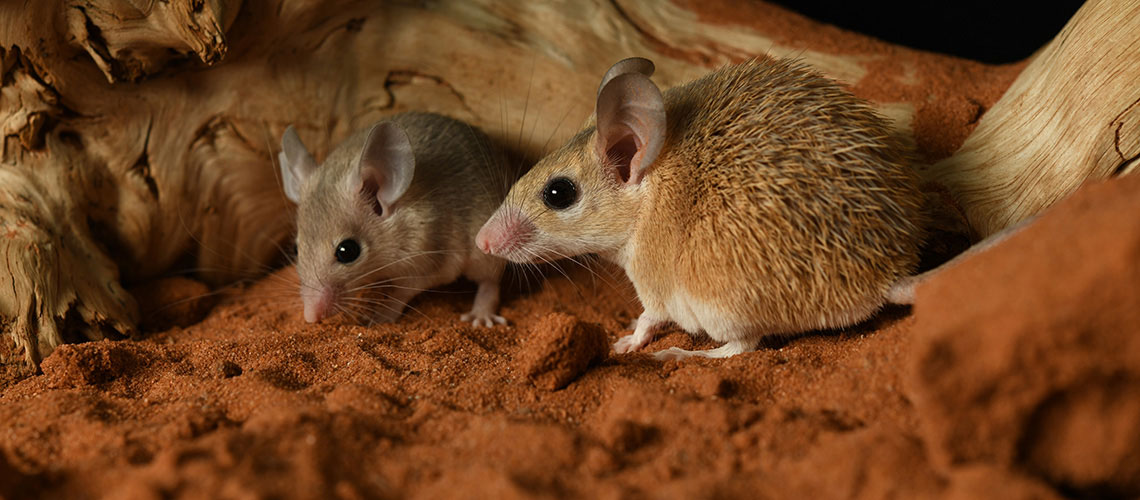 Spiny mice (Acomys dimidiatus), a species used to study how hair patterns are organized during embryonic development. Credit: A. Debry & F. Montange
A Simpler Mechanism Driven by Chemical Signals
A research team co-led by Athanasia Tzika, Senior Lecturer, and Michel Milinkovitch, Professor in UNIGE’s Department of Genetics and Evolution, investigated a different mechanism called chemotaxis. This process allows cells to move in response to chemical gradients. It also helps white blood cells navigate toward areas of inflammation.
The researchers created a mathematical model in which mobile cells in the dermis respond to an attractive chemical signal produced by the epidermis, the skin’s outer layer. As the simulated embryonic skin grows, these interactions spontaneously produce placodes in patterns that closely match the developmental sequence observed in laboratory mice.
“Our findings show that the observed patterns do not require a complex system telling each placode where to form,” explain Muhamet Ibrahimi and Ebrahim Jahanbakhsh, researchers in the Department of Genetics and Evolution. “Instead, placodes emerge spontaneously from local interactions between cells and chemical signals.”
Testing the Model in a Different Mammal
The researchers next examined the spiny mouse (Acomys dimidiatus), a rodent whose hair follicles form a highly regular, directionally organized pattern. Unlike the arrangement found in laboratory mice, this distinctive configuration cannot be explained by the traditional expansion-induction model.
Using experimental data obtained through three-dimensional imaging of embryonic skin, the team adapted its mathematical model to reflect the spiny mouse’s particular biochemical characteristics and skin growth patterns. The same chemotactic mechanism successfully reproduced the species’ characteristic follicle arrangement.
These simulations suggest that different mammalian hair patterns could emerge from a shared process governed by cell movement and chemical signaling, with species-specific differences in how those interactions unfold. The results provide a potential alternative to the conventional model, although mathematical agreement with observed patterns does not establish that chemotaxis is the mechanism operating in living skin.
“Our work suggests that simple cellular interactions can generate the remarkable diversity of tissue architectures observed throughout evolution,” concludes Athanasia Tzika. “The differences observed between species therefore result from the same self-organization process, but with variations in the interactions between cells and chemical signals.”
Reference: “Chemotactic self-organization captures the dynamics of mammalian hair follicle patterning” by Muhamet Ibrahimi, Ebrahim Jahanbakhsh, Athanasia C. Tzika and Michel C. Milinkovitch, 2 July 2026, Proceedings of the National Academy of Sciences.
DOI: 10.1073/pnas.2530407123
Never miss a breakthrough: Join the SciTechDaily newsletter.
Follow us on Google and Google News.



















 English (US) ·
 French (CA) ·
 French (FR) ·