

PROTECT YOURSELF with Orgo-Life® QUANTUM TECHNOLOGY
Orgo-Life the new way to the future Advertising by Adpathway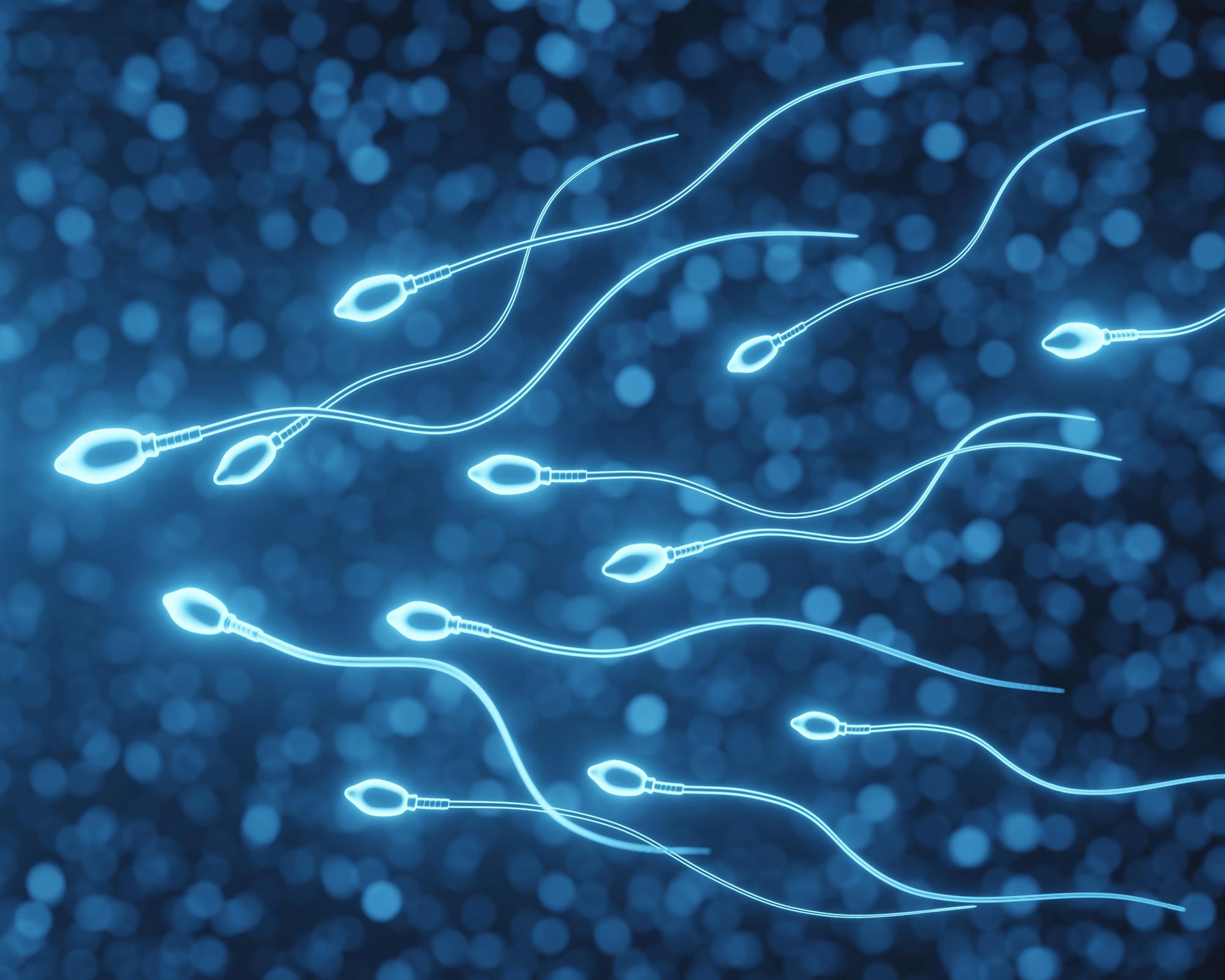 The sperm race may be more of a team sport, with evolution repeatedly favoring microscopic cooperation. Credit: Stock
A new study by Syracuse University biologists examines how cooperation among sperm has evolved over the past 500 million years.
In sperm conjugation, sperm cells work together like a crew of rowers, forming coordinated groups that may improve their chances of reaching and fertilizing an egg. A new study suggests this cooperation is widespread among arthropods, the animal group that includes insects, spiders, crabs, and centipedes.
Scientists first described sperm conjugation more than a century ago, yet long considered it rare. Now, evolutionary biologists from Syracuse University, the University of Siena in Italy, and the University of Szeged in Hungary have traced a history of sperm cooperation stretching back hundreds of millions of years. Their findings, published in Nature Communications, indicate that even the ancestor of all insects had conjugated sperm.
“What makes this pattern so fascinating is that evolution keeps arriving at similar cooperative solutions in very different groups and across vast expanses of time,” says Steve Dorus, a study co-author and professor of biology at Syracuse University’s College of Arts and Sciences. “These examples remind us that cooperation can be just as important as competition in shaping biological success.”
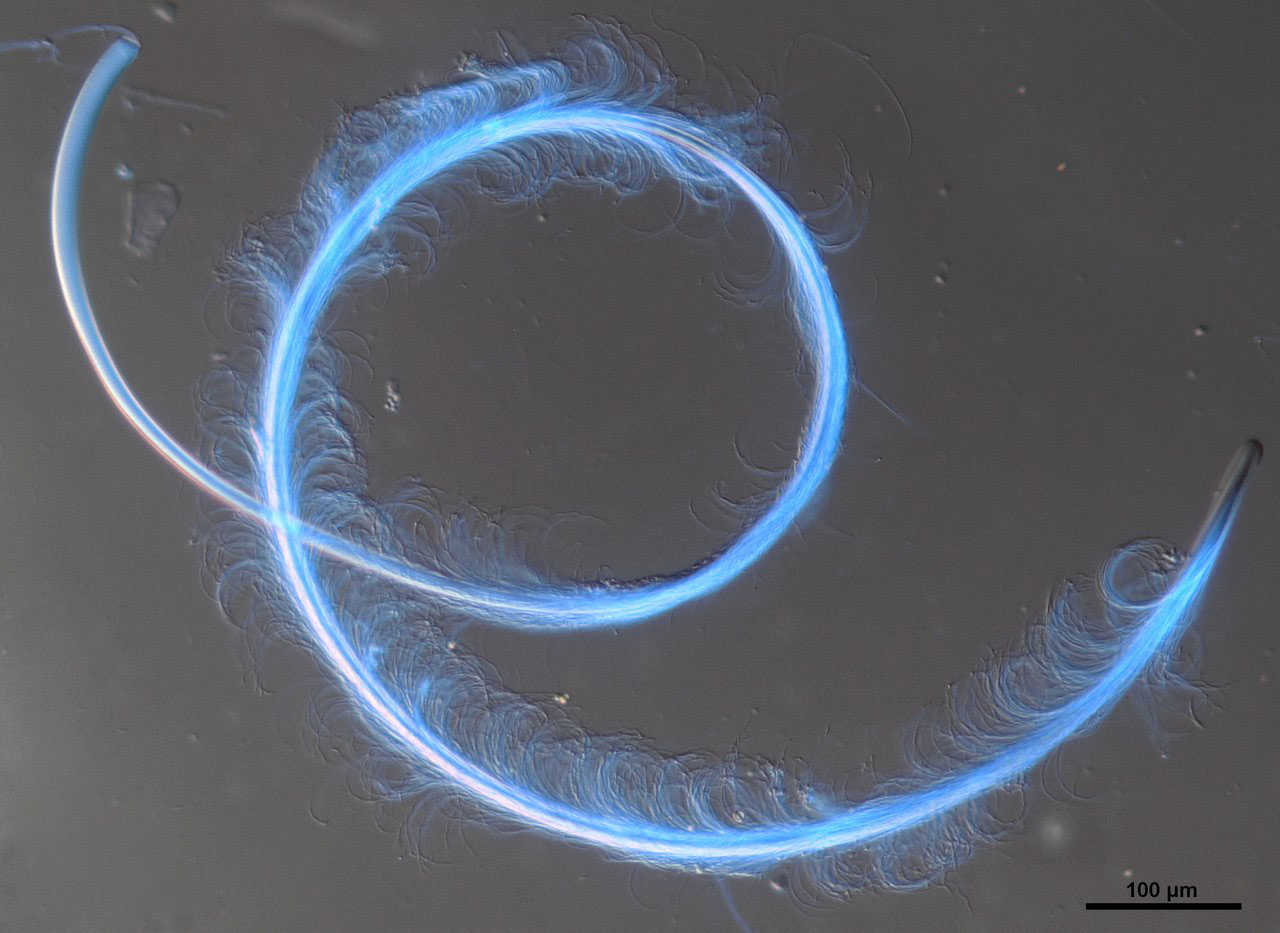 Microscopic view of sperm cells joined together in a cooperative group, illustrating how teamwork can shape reproductive success. Credit: Romano Dallai, Department of Life Sciences, University of Siena, Siena, Italy
Sperm cooperation evolves, disappears, and returns
To reconstruct that history, the researchers drew on decades of published studies describing sperm form across hundreds of arthropod species. They mapped those traits onto an evolutionary family tree to estimate when different forms of cooperation emerged, disappeared, and arose again. The resulting timeline spans the past 600 million years and shows repeated gains and losses across major arthropod groups.
“Evolution has effectively run the same experiment over and over again across different groups of arthropods,” says lead author R. Antonio Gomez, a postdoctoral scholar in the college’s Department of Biology. “That allows us to see not only when sperm cooperation emerges, but also when it disappears and reappears under different evolutionary conditions.”
The team also tracked sperm-associated material, or SAM, a membrane-bound substance that can bind sperm together or form external structures that organize them into groups. In numerous species, this material helps hold the cooperative arrangement together. The researchers suspect SAM initially evolved to package or protect sperm and may subsequently have played a key role in the origin of conjugation.
“Sperm are the most rapidly evolving cell type,” says Scott Pitnick, the study’s senior author and Weeden Professor of Biology at Syracuse University’s College of Arts and Sciences. “They are shaped by the unique challenge of operating outside the body in the complex environment of the female reproductive tract.”
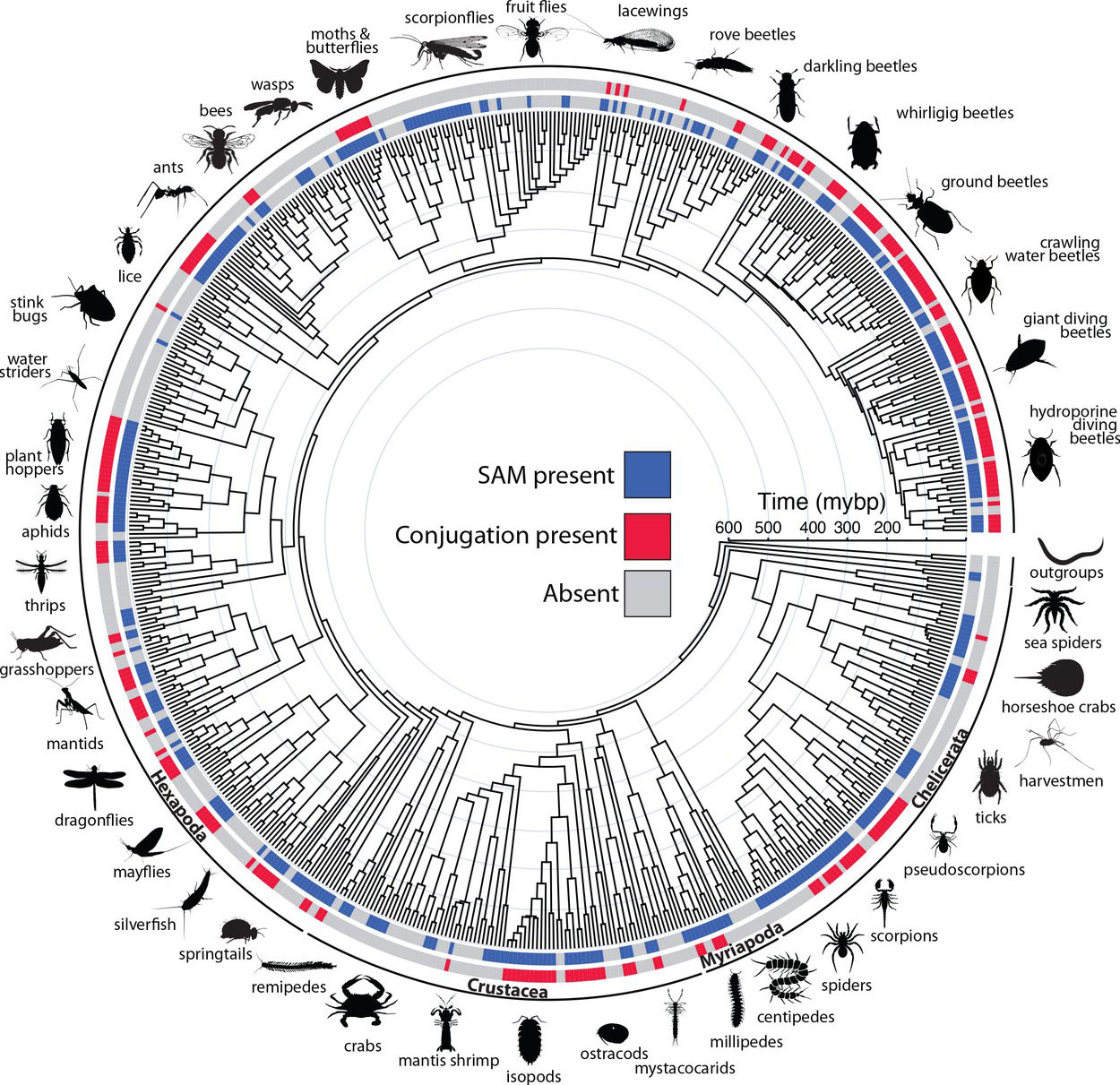 This evolutionary timeline shows how sperm conjugation and sperm-associated material (SAM) have appeared across major animal groups over the past 600 million years, revealing a pattern of repeated innovation and loss. Credit: Syracuse University
Sperm behave differently inside the body
Pitnick describes fertilization as an obstacle course involving complex interactions between sperm and the female reproductive tract. Researchers propose that grouping could improve sperm movement or coordination, or help deliver important molecules to particular locations along that route. Establishing which advantages favor the evolution of cooperation requires observing what the cells actually do within reproductive systems.
That is difficult because sperm behave differently on glass slides, where scientists can easily observe them, than they do inside the female body. Future research will examine how sperm groups function in that environment and identify the benefits and trade-offs of working together.
“Fertilization is often viewed as a competition among individual sperm, but in many species we see cells working together in ways that can influence reproductive success,” Dorus says.
The findings encourage researchers studying animal fertility to consider collective behavior alongside the performance of individual sperm. The authors suggest that understanding how cells cooperate and use shared structures could eventually inform new approaches to human reproductive challenges.
Could sperm coatings help control lanternflies?
Researchers are also exploring whether sperm conjugation and SAM could offer ways to disrupt reproduction in harmful species. One potential target is the spotted lanternfly, an invasive insect that poses a growing agricultural threat in New York and other eastern states.
Lanternfly sperm do not form cooperative groups. Each sperm cell is instead encased in a thick coating of SAM, giving researchers a different reproductive arrangement to investigate.
“Their sperm are highly unusual,” Pitnick says. “They do not have conjugation, but each individual sperm is completely embedded in this material, and we do not even know how they are motile.”
How these coated sperm function remains unresolved. If SAM proves essential to lanternfly reproduction, disrupting it could provide a highly targeted control strategy.
Reference: “Pervasive convergent evolution of sperm conjugation across the Arthropoda tree of life” by R. Antonio Gomez, Romano Dallai, David Mercati, Rita Sinka, Steve Dorus and Scott Pitnick, 3 June 2026, Nature Communications.
DOI: 10.1038/s41467-026-73950-z
This research was funded by the National Science Foundation (DEB-2011045 to RAG) and a generous gift from Mike and Jane Weeden to Syracuse University.
Never miss a breakthrough: Join the SciTechDaily newsletter.
Follow us on Google and Google News.

















 English (US) ·
  French (CA) ·
  French (FR) ·