

SpaceX sent yet another batch of its Starlink internet satellites skyward today (Aug. 11).
A Falcon 9 rocket lifted off from Florida's Cape Canaveral Space Force Station today at 11:58 a.m. EDT (1558 GMT), carrying 29 of the broadband spacecraft toward low Earth orbit (LEO).
About 8.5 minutes later, the rocket's first stage made a pinpoint landing in the Atlantic Ocean atop the SpaceX droneship "A Shortfall of Gravitas." It was the 18th flight for this particular booster, which is designated B1085.
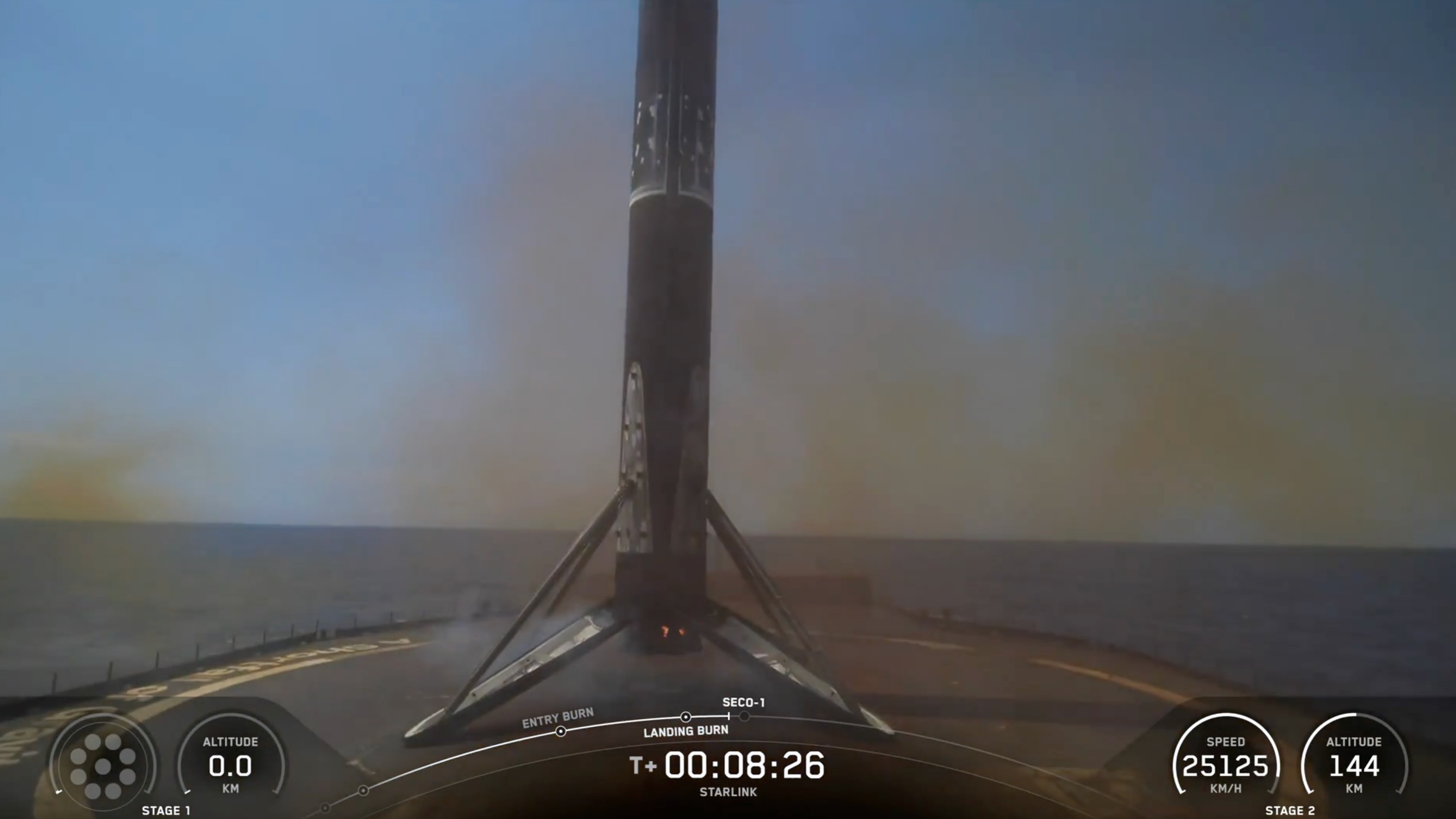
Though more than half its liftoffs have been Starlink flights, B1085 also has some astronaut missions under its belt. The booster lofted SpaceX's Crew-9 flight to the International Space Station in September 2024, and it launched the Fram2 mission around Earth's poles six months later.
The Falcon 9's upper stage, meanwhile, continued hauling the 29 Starlink satellites to LEO today. They'll be deployed there 64 minutes after liftoff, if all goes to plan.
Previous Booster B1085 launches
Today's liftoff was the 93rd Falcon 9 launch of the year already. Seventy-two of those missions have been devoted to building out Starlink, the largest satellite constellation ever assembled.
Starlink currently consists of more than 10,900 active satellites, according to astrophysicist Jonathan McDowell. But SpaceX has even bigger megaconstellations in mind: Eventually, the company wants to operate 100,000 of its bigger, more capable Starlink V3 satellites, and Elon Musk has stated an ambition to launch a million AI data center satellites to Earth orbit as well.














 English (US) ·
  French (CA) ·
  French (FR) ·