

 12 hours ago
6
12 hours ago
6
PROTECT YOURSELF with Orgo-Life® QUANTUM TECHNOLOGY
Orgo-Life the new way to the future Advertising by AdpathwaySOUTH AFRICA · ENERGY
Key Facts
- —The headline Net profit after tax reached R30.3 billion (US$1.88 billion), against R14 billion (US$867 million) a year earlier. Revenue rose 4.1% to R354.7 billion (US$21.95 billion).
- —The operating picture Earnings before interest, tax, depreciation and amortisation climbed 10.9% to R108.6 billion (US$6.72 billion). Net debt fell R45.3 billion (US$2.80 billion) to R313.3 billion (US$19.39 billion).
- —Fewer units sold Electricity sales fell to 178TWh from 189.7TWh, a decline of 6.2% in one year. Eskom cited smelter curtailments, mining shutdowns, weak demand recovery and solar installations across many sectors.
- —Where the money came from Nersa granted an average tariff increase of 12.74% from 1 April 2025, and underlying fuel costs fell 7% once a one-off fuel-levy refund is stripped out. Net fair value and foreign exchange movements swung R9.3 billion (US$576 million) in Eskom’s favour.
- —Plant performance The energy availability factor rose to 65.16% from 60.6%, and load-shedding fell to four days and 26 hours. The accumulated loss shrank from R40.9 billion (US$2.53 billion) to R12.1 billion (US$749 million).
- —The municipal problem Gross municipal arrear debt rose 17.9%, or R17 billion, to R111.6 billion (US$6.91 billion). Eskom wrote off R3.6 billion (US$223 million) and will write off R4 billion (US$248 million) more in 2027 across 21 municipalities.
- —The audit qualification Deloitte issued a qualified opinion, finding Eskom did not fully record irregular expenditure as the Public Finance Management Act requires. Disclosed irregular expenditure was R4.9 billion (US$303 million), down from R10.9 billion (US$675 million) restated.
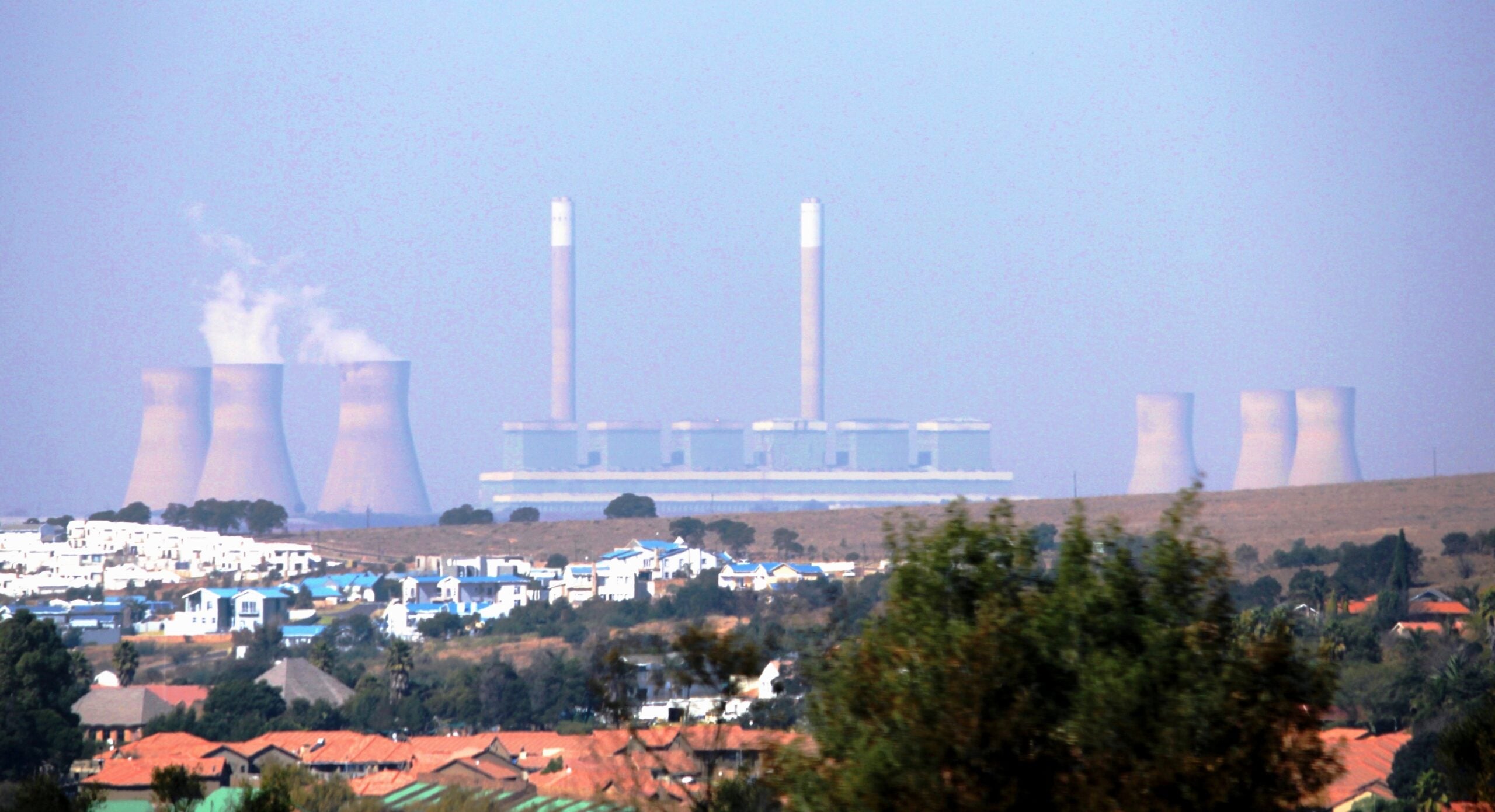
Eskom annual profit more than doubled to R30.3 billion (US$1.88 billion) after tax in the year to 31 March 2026, from R14 billion (US$867 million). The utility reported on Monday 31 August.
Rand figures are converted at 16.1558 to the US dollar, the rate of 1 September 2026. It is a second consecutive profit after eight years of losses, and almost none of it came from selling more electricity.
One-stop reference
Company Intelligence
Every listed company in Latin America — financials, ownership and structure for 1,450+ companies across 26 exchanges, in one place.
How the Eskom annual profit was actually earned
The result is real, and the composition matters. Operating earnings came from a 12.74% average tariff increase granted by the energy regulator Nersa from 1 April 2025.
Reported fuel costs actually rose 1% to R151.9 billion (US$9.40 billion).
They fell 7%, or R11.5 billion (US$712 million), only after stripping out a one-off R14.2 billion fuel-levy refund booked in 2025.
The rest sits further down the income statement. Net fair value and foreign exchange movements cost the utility R10.4 billion (US$644 million) in 2025 but only R1.1 billion (US$68 million) this year.
That R9.3 billion (US$576 million) swing accounts for 53% of the R17.5 billion (US$1.08 billion) improvement in profit before tax.
Depreciation rose R4.6 billion (US$285 million) and offset part of that gain. Diesel helped too: spending on the open-cycle gas turbines more than halved, saving R10.6 billion (US$656 million) across Eskom’s own plants and independent producers.
Eskom Holdings on its own, stripping out its subsidiaries including the National Transmission Company of South Africa, moved from a R14.3 billion (US$885 million) loss to a R14.1 billion (US$873 million) profit.
The demand problem underneath the number
Sales fell 6.2% in a single year, to 178TWh from 189.7TWh. That is not a rounding error in a utility that supplies roughly 85% of South Africa’s electricity.
Eskom attributed the decline to smelter curtailments, unplanned shutdowns and shaft closures in mining, a weaker-than-expected demand recovery, and, in its own words, solar installations across many sectors. The last of those is the structural one.
Higher prices with fewer units is a pattern utilities elsewhere have found hard to escape. Each tariff increase gives customers a stronger reason to leave the grid, which shrinks the base over which the next increase must be spread.
Board chairman Mteto Nyati acknowledged the constraint at the results presentation, saying tariff increases alone are not the strategy and cannot carry municipal debt, declining sales, an ageing fleet and the capital the energy transition needs.
Hunting for new demand
Eskom’s answer is to go looking for load rather than price. It has agreed concessionary pricing of 62 cents a kilowatt-hour, about US$0.038, with the Samancor Chrome and Glencore-Merafe ferrochrome smelters, approved by Nersa on 29 May and running from 1 June, and a separate two-year arrangement with Manganese Metal Company.
It is also expanding wheeling arrangements, which let independent generators move power across its network to their own customers. And it says it is preparing for potential demand growth from the data-centre sector.
That last line is the one investors will note. Data centres are the only large new industrial load anywhere on the continent that is growing rather than shrinking.
Municipal arrears and a qualified audit
Gross municipal arrear debt rose R17 billion, or 17.9%, to R111.6 billion. Eskom wrote off R3.6 billion during the year and will write off another R4 billion in 2027 across 21 municipalities on national treasury instruction.
The City of Johannesburg breached its payment arrangement on 13 April, making the whole debt immediately due, and Eskom gave formal notice in May that it intended to interrupt supply to certain bulk supply points. The city settled its arrears in full on 21 August and the process was withdrawn.
The financial statements describe municipal arrear debt as a matter that should be resolved before the distribution business is legally separated. Deloitte issued a qualified opinion, saying Eskom did not fully record irregular expenditure as the law requires and that the auditors could not determine the full extent of the misstatement.
The statements also carry a material uncertainty related to going concern. The board concluded Eskom can continue as a going concern while flagging inadequate tariffs, falling volumes, debt service costs, municipal debt and losses from illegal connections.
The balance sheet and the break-up
The financing picture improved. The finance minister approved converting an R80 billion (US$4.95 billion) shareholder loan into equity on 9 August.
Share capital had already risen R64 billion (US$3.96 billion) during the year to R381.6 billion (US$23.62 billion), and R329 billion (US$20.37 billion) of government guarantees remain in place.
Gross debt closed the year at R356 billion (US$22.03 billion) and fell to about R320 billion by 30 June. The R38 billion (US$2.35 billion) ES26 bond matured and was settled on 2 April.
Fitch upgraded Eskom’s local currency rating to B+ in June and Moody’s affirmed its ratings in May, both with stable outlooks.
President Cyril Ramaphosa endorsed the restructuring task team’s first report on 31 July. The report proposes an independent, state-owned transmission system operator that would take ownership of the transmission grid, now held by the National Transmission Company of South Africa.
Eskom says it cannot yet assess the full impact of that on its financial statements.
What to watch
Nersa has already granted 8.76% from 1 April 2026, with municipalities passing on 9.01% from 1 July. It has also allowed Eskom to claw back R54.7 billion (US$3.39 billion) after a court review of the current price control.
So the shrinking sales base is still being funded through price. Nyati’s three-year term as chairman ends at the end of October, and neither he nor the shareholder has said whether he will serve again.
For investors across the region, the signal is that South African industrial demand is contracting while the grid is being restructured around it. That is a different investment case from the one the load-shedding years produced.
Frequently Asked Questions
How much did Eskom earn in the 2026 financial year?
Eskom reported net profit after tax of R30.3 billion for the year to 31 March 2026, against R14 billion the year before. Revenue rose 4.1% to R354.7 billion.
Why did profit rise while sales fell?
Earnings came from a 12.74% average tariff increase granted by Nersa and lower underlying fuel costs, not higher volumes. Reported fuel costs actually rose 1%; they fell 7% only after stripping out a one-off refund booked in 2025, and a R9.3 billion swing in fair value and foreign exchange movements accounted for 53% of the improvement in profit before tax.
How much did electricity sales fall?
Sales dropped to 178TWh from 189.7TWh, a decline of 6.2% in a single year. Eskom cited smelter curtailments, mining shutdowns, weak demand recovery and solar installations across many sectors.
What is happening with municipal debt?
Gross municipal arrear debt rose 17.9% to R111.6 billion. Eskom wrote off R3.6 billion in the year and will write off a further R4 billion in 2027 across 21 municipalities on national treasury instruction.
Did the auditors sign off cleanly?
No. Deloitte issued a qualified opinion because Eskom did not fully record irregular expenditure as the Public Finance Management Act requires, and said it could not determine the full extent of the misstatement.
This article was produced by The Rio Times’ automated newsroom system. How we use AI · Report an error
LatAm Markets: Live Signals → — real-time movers, turnover leaders and FX across Latin America.
The Rio Times · Power Map
See who really holds power in Latin America
Click to open the Power Map →















 English (US) ·
  French (CA) ·
  French (FR) ·