

 13 hours ago
1
PROTECT YOURSELF with Orgo-Life® QUANTUM TECHNOLOGY
Orgo-Life the new way to the future Advertising by AdpathwayOrbiter data suggests hydrogen chloride could be seeping from magma beneath Alba Mons volcano, a study says
Mars may still have volcanic activity beneath its surface despite the absence of observed eruptions, a new Russian-led study suggests. Areas where volcanic gases continue to seep from underground could be promising locations to search for signs of life.
The Red Planet bears extensive evidence of ancient volcanism dating back more than 3 billion years, when Olympus Mons, the largest known volcano in the solar system, began forming. Seismometers have also detected slight tremors known as ‘marsquakes’, but sulfur dioxide, a telltale sign of volcanic activity, has never been detected in the Martian atmosphere.
An international team of researchers has linked unusual concentrations of another common volcanic gas, hydrogen chloride (HCl), detected by a Mars orbiter, to possible magmatic activity deep beneath the surface. HCl can indicate the presence of active magma chambers, although it can also be produced by chemical reactions in the atmosphere.
The study, published in Science Advances on Wednesday, examines repeated HCl detections concentrated near Alba Mons, another ancient Martian volcano. The researchers suggest that gas escaping from underground magma could become trapped beneath ice during colder months before being released as temperatures rise in early summer.
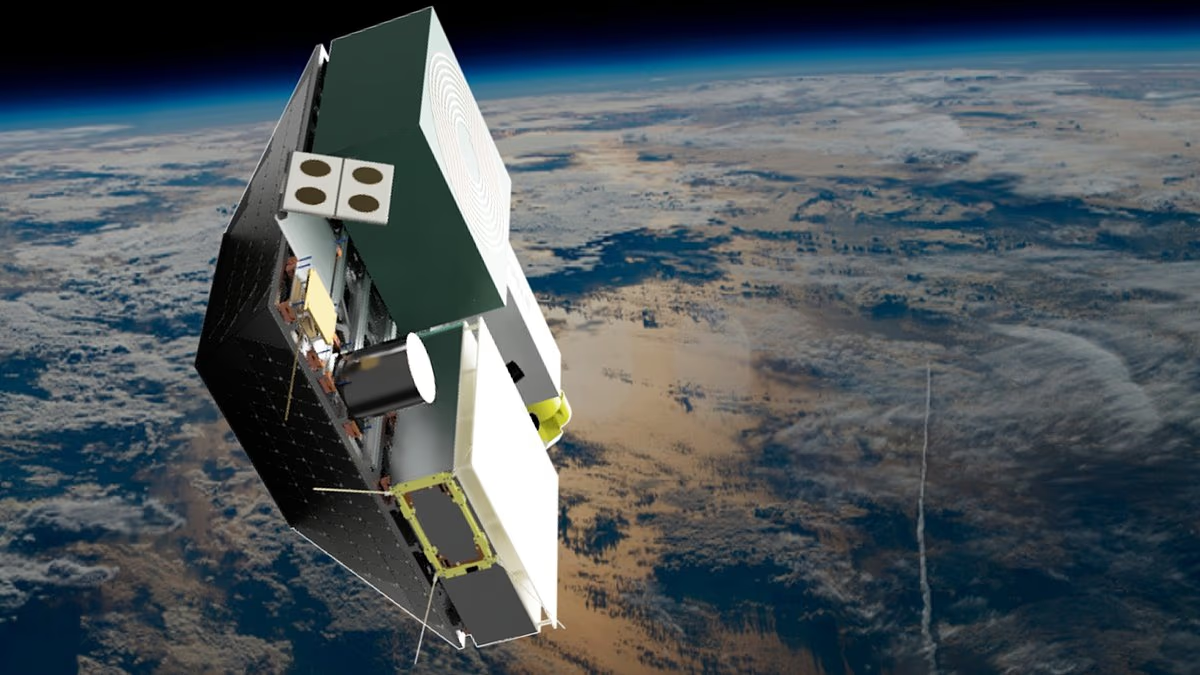
The gas was detected by the ExoMars Trace Gas Orbiter (TGO), a spacecraft developed jointly by the European Space Agency and Russia’s Roscosmos.
The research team, co-led by Aleksandr Trokhimovsky of the Space Research Institute of the Russian Academy of Sciences and Daniel Mege of the Polish Academy of Sciences, also identified apparently recent, narrow fractures in the area, some less than a meter wide. The scientists believe these fissures could provide pathways for volcanic gases to escape into the atmosphere.
The researchers suggest that the volcanic activity was likely more pronounced in the past. Greater underground heat, combined with a denser atmosphere and potentially more abundant liquid water, could have created more favorable conditions for microbial life on Mars.


















 English (US) ·
 French (CA) ·
 French (FR) ·