

 3 hours ago
7
PROTECT YOURSELF with Orgo-Life® QUANTUM TECHNOLOGY
Orgo-Life the new way to the future Advertising by Adpathway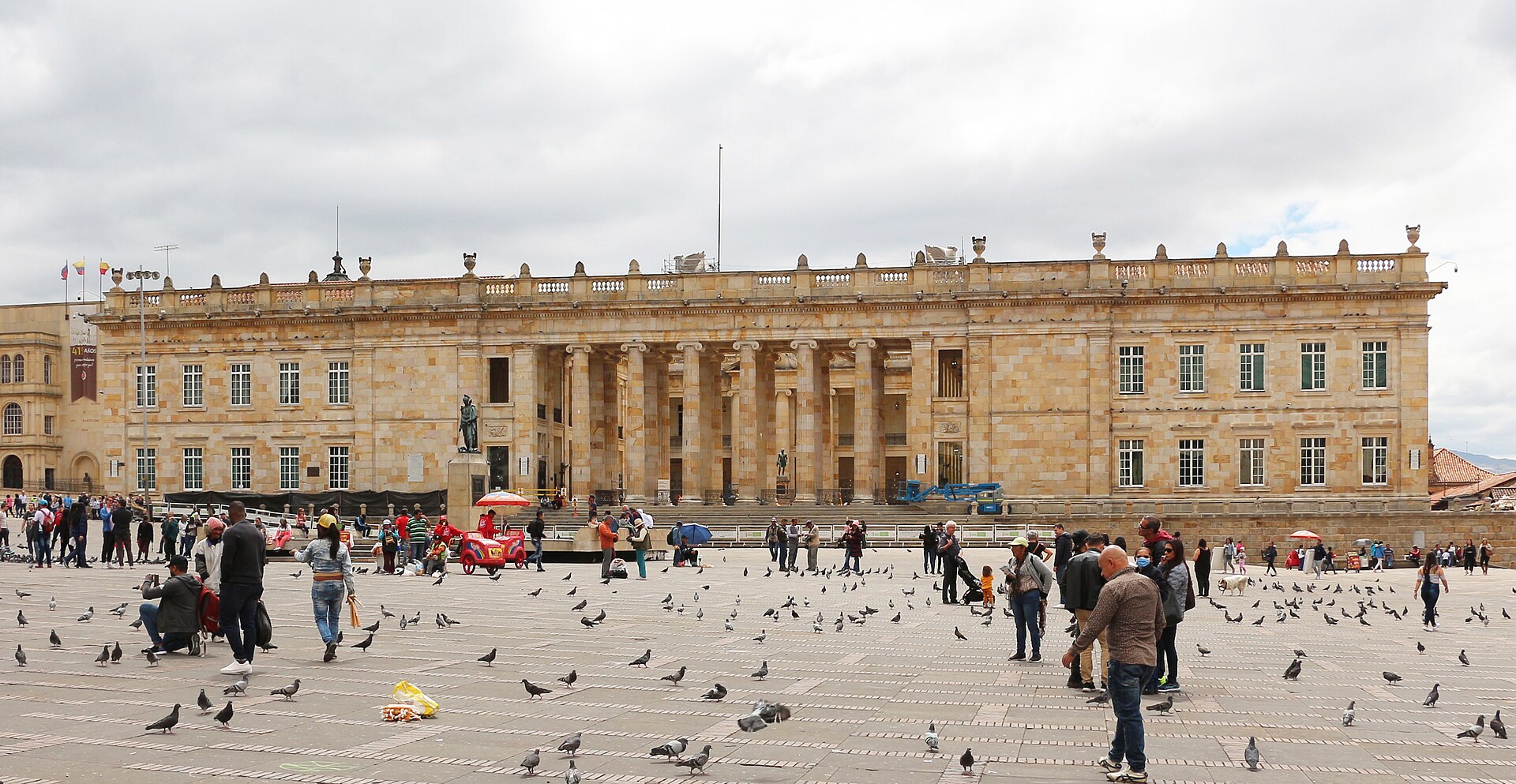
Politics: Colombia
A group of prison inmates walked into the main debating chamber of Colombia’s Congress on Tuesday 17 November 2026, in the middle of a debate about the country’s overcrowded jails. Senator Gustavo Moreno, who helped convene the debate, had authorised their entry as part of a prison work programme.
Colombian media called the episode controversial, and it pushed a technical argument about prison capacity into the headlines. For readers abroad, it is a rare close look at how strained Colombia’s prison system is and how the new government of President Abelardo de la Espriella says it will respond.
Free daily brief — no card needed
Get every Colombia story in one morning email
We build you a personalized brief around the topics you follow — free for 7 days. Love it? Your first month after that is US$1.
Yes, email me my free daily brief — I can unsubscribe any time.
Key Facts
- Who. Senator Gustavo Moreno (Alianza Social Independiente) authorised it; Justice Minister Iván Cancino was summoned.
- What. Inmates from the Cárceles Productivas prison work programme entered Congress on Tuesday 17 November 2026.
- Numbers. Colombian prisons hold 101,543 people for 80,992 places, a shortfall of 20,551.
- Power Index. Colombia ranks 6th of 14 in The Rio Times Latin America Power Index, with 51.1 points (November 2026 edition).
- As of. 18 November 2026, 20:00 GMT.
Colombia’s prisons hold about a quarter more people than they were built for, and the sight of inmates inside the Capitolio Nacional put that crisis in front of lawmakers.
What Happened in the Chamber
The session was a political-control debate, a formal hearing in which Colombian lawmakers question a minister about his portfolio. Senators Gustavo Moreno and Isabel Zuleta, from the Alianza Social Independiente (ASI) party and from Pacto Histórico, the party of former president Gustavo Petro, respectively, summoned Justice Minister Iván Cancino to answer for prison conditions.
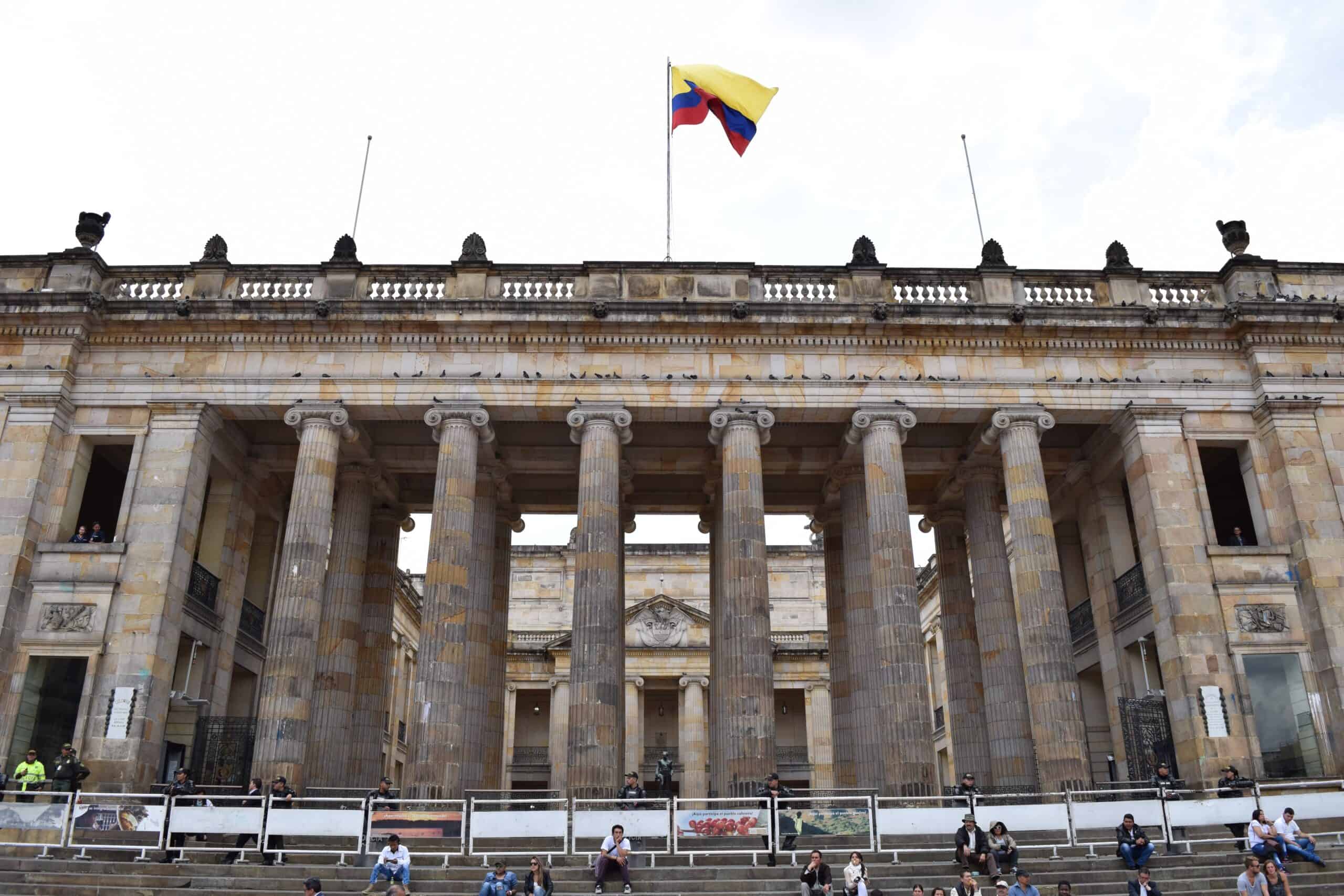
Moreno authorised the inmates’ entry, and the group took part as members of Cárceles Productivas, a programme whose name translates as Productive Prisons. The Capitolio Nacional, on Bogotá’s Plaza de Bolívar, is the seat of Congress.
Neither the number of inmates nor the prison they came from has been published. The accounts we found do not name the people who entered.
The Numbers Behind the Debate
On 17 November Moreno cited figures from INPEC, Colombia’s national prison authority: 101,543 people deprived of liberty against a system capacity of 80,992 places. That is a shortfall of 20,551 places, so the system holds about 25% more people than it was designed for.
Moreno also said that about 65,000 people serve their sentences under house detention while INPEC has only 5,000 electronic bracelets. On those figures, roughly one in 13 people under house detention could be fitted with a monitor.
He added that some convicted people have spent years in police stations and temporary detention centres instead of prisons.
What the Justice Minister Said
Cancino told the debate on 17 November that it is an incontrovertible fact that the prisons have long been in an “unconstitutional state of affairs”, and that a solution is needed. That phrase is a formal finding by Colombia’s Constitutional Court, the country’s top rights court, that rights are violated across a whole system, and the court first applied it to the prisons in 1998 (ruling T-153).
Cancino also contested the higher reoffending figures raised by speakers in the debate. He said the rate his ministry handles is 25.4%, never 70% or 80%, and added that reoffending should not exceed single digits.
For capacity, he said the government is finishing prisons in the northern city of Riohacha and in Sabanas de Ángel. On extortion run from inside jails, he said the authorities are blocking phone lines tied to such crimes and are pursuing initiatives to install signal inhibitors in prisons.
He said lines tied to extortion were once identified monthly, now every 15 days, with a goal of every eight. We found no reported answer from him on the inmates’ entry itself.
In Plain English
- INPEC: Colombia’s national prison and penitentiary institute, which runs the jails and guards inmates.
- Cárceles Productivas: a programme under which people in custody do productive work.
- House detention: serving a sentence at home, tracked by an electronic bracelet.
- Political-control debate: a hearing where lawmakers question a minister in public.
What Is Not Known
It is not known how many inmates entered, who they were, or which prison they came from. No public statement from Congress or from INPEC explaining who approved the entry and under what rules had surfaced by Wednesday 18 November.
Accounts differ on whether the session was a full Congress plenary or the Senate floor, and on whether Moreno is styled senator or representative; most name him a senator. We also found no announced inquiry and no scheduled date for a follow-up hearing.
What It Means for You
For investors, travellers and companies with staff in Colombia, the minister’s focus on blocking phone lines tied to extortion shows where the government is acting first. A shortfall of 20,551 places also means that new prison construction, not only policy, decides how fast the strain eases.
The minister’s own list of measures shows where the pressure sits: phone extortion, reoffending and a lack of cells. The next signal will be whether Congress or INPEC explains the authorisation.
Frequently Asked Questions
What happened in Colombia’s Congress on 17 November?
A group of prison inmates entered the main chamber of Congress during a debate on the prison crisis. Senator Gustavo Moreno authorised the entry, and the inmates were part of the Cárceles Productivas programme.
How overcrowded are Colombia’s prisons?
Moreno cited INPEC figures of 101,543 inmates for 80,992 places on 17 November. That is a shortfall of 20,551 places, or about 25% above capacity.
What did Justice Minister Iván Cancino say?
He acknowledged an unconstitutional state of affairs in the prisons and put reoffending at 25.4%, not 70% or 80%. He said the government is finishing prisons in Riohacha and Sabanas de Ángel and blocking extortion phone lines.
Why does house detention matter in the debate?
Moreno said about 65,000 people serve house detention but INPEC has only 5,000 electronic bracelets. That gap means most people at home cannot be tracked electronically.
This article was produced by The Rio Times’ automated AI newsroom. Editorial responsibility: Matthias Camenzind, Publisher and Editor-in-Chief. The Rio Times also runs Ask Rio Times, which answers from 100,000+ of our own articles, the daily Latin America Power Map, and prediction-market odds on elections and markets.. How we use AI · Report an error
The Rio Times · Power Map
See who really holds power in Latin America
Click to open the Power Map →





















 English (US) ·
 French (CA) ·
 French (FR) ·