

PROTECT YOURSELF with Orgo-Life® QUANTUM TECHNOLOGY
Orgo-Life the new way to the future Advertising by Adpathway
Offering a corrective view, the author contends that Satrapi “left us a body of work that, read honestly, from beginning to end, tells a far richer and more demanding story than the one currently circulating in the comments sections” on social media since her death.
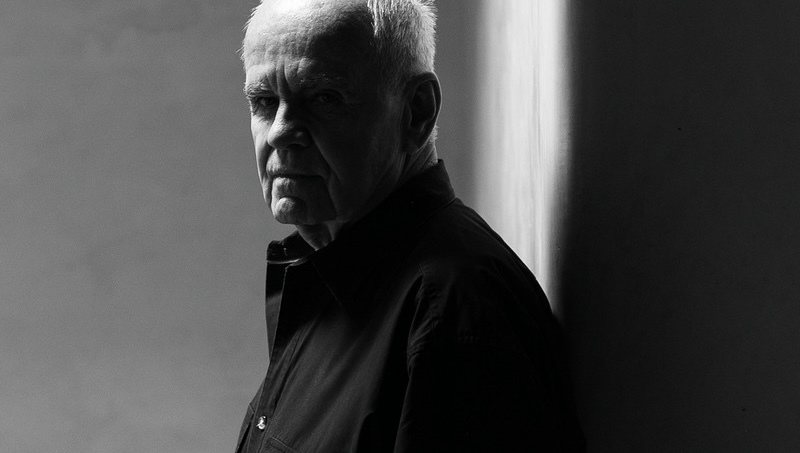
 Marjane Satrapi. Photo by Mattias Ripa
Courtesy of Penguin Random House
Marjane Satrapi died on June 4, 2026. Her family said she died of sadness, a little over a year after losing her husband and lifelong collaborator, Mattias Ripa. She was fifty-six. Emmanuel Macron issued a statement from the Élysée Palace. Margaret Atwood paid tribute. Narges Mohammadi, the Nobel laureate still imprisoned in Tehran, found words across the prison walls. And on Persian-language social media, a different conversation was taking shape, one that had been fermenting since February 28, when the United States and Israel launched joint strikes on Iran under Operation Epic Fury, targeting military infrastructure, nuclear sites, and the Iranian leadership itself. In those comments sections, the argument ran something like this: Artists like Satrapi, who translated Iran’s pain into graphic narratives for Western consumption, had helped build the cultural infrastructure that made foreign intervention thinkable, even righteous. She had given the West its story. And now Iran was burning.
I have spent several years working on Satrapi’s full body of work, not only Persepolis, the graphic memoir that made her globally famous, but the less-examined books that followed: Broderies (2003; Eng. Embroideries, 2005), Poulet aux prunes (2004; Eng. Chicken with Plums, 2006), and the collective anthology she coordinated in solidarity with the Woman, Life, Freedom uprising, Woman, Life, Freedom (2023). I have presented this research at academic conferences. There is a journal article currently under review. And I want to say something here, plainly, outside the footnotes: The people condemning Satrapi in the comments sections have not read her last book. They have not read it. They are arguing about it anyway. And that absence is not incidental. It is the point.
The people condemning Satrapi in the comments sections have not read her last book.
The Orientalism charge against Satrapi is not new, and it is not baseless. Persepolis is the book through which most Western readers encounter Iran: a memoir in stark black-and-white, charming and harrowing, following a precocious girl from a liberal, Marxist-sympathizing Tehran family who is sent to Vienna and eventually settles in Paris. It is, unmistakably, narrated from a class position. Satrapi’s family had maids. Her world included record collections and political dinners and access to literature that most Iranians could not touch. The 1979 revolution arrives in Persepolis primarily as something that happens to her family, not as a structural transformation in which her family is also implicated.
One of the most revealing moments involves Mehri, the family maid, who falls in love with a neighbor and asks Satrapi to write her letters because Mehri cannot write herself. When the neighbor discovers that his correspondent is a maid rather than the daughter of the house, he drops her. Class operates here as a wall that the revolutionary moment does not dissolve. Satrapi shows this clearly: the structure is visible. What the memoir cannot quite do is give Mehri a sustained interiority, a perspective that operates independently of the family’s narrative gravity. The book is drawn in a visual style with debts to German expressionism and Persian miniature: dense black fields, flat silhouettes, figures that read as iconic rather than individuated. That visual grammar performs the class position. Satrapi and her parents are legible subjects; Mehri is a silhouette. The form and the narrative say the same thing: some people in the story can be seen, but not heard.
Scholars have pressed on this. Hamid Dabashi described the posture of the “native informer,” the diasporic intellectual who translates Iran for Western audiences on Western terms, producing a version of Iran already legible to those disposed to receive it. Fatemeh Keshavarz identified a “New Orientalism” in which the veil functions as shorthand for everything, a reductive visual grammar that flattens Iranian women’s lives into a single legible image for Western consumption. Critics working in feminist graphic narrative scholarship noted how the confessional memoir form, autobiographical, addressed to an implied Western reader, shapes what can be said and by whom. These are serious arguments. They deserve serious engagement.
But here is what the criticism misses, and what the comment sections miss even more badly: Satrapi did not stay in Persepolis.
Embroideries is the book that most people skip, and it is the book that changes everything. Rather than following a single narrator through a revolutionary decade, it gathers a group of Iranian women around a Tehran living-room table on a Friday afternoon, talking without editorial filter about sex, marriage, desire, obligation, survival, and the intimate arithmetic of life under a regime that has no interest in their pleasure. There is no address to a Western reader in these conversations. There is no frame character explaining Iranian customs to an imagined outsider. The women speak among themselves about things that do not translate cleanly into the language of human-rights reports or documentary testimony: the black humor of a bad marriage, the tactical intelligence required of a woman who survives by knowing exactly how much to show and how much to conceal, the solidarity forged in rooms the regime cannot enter. What the living-room setting produces is something the political memoir cannot: a space of women’s knowledge that exists prior to and independent of the revolution, that the regime interrupted but did not create, and that it cannot erase. The women in these pages know things the regime does not know they know. They have developed, across generations, an entire grammar of survival that operates beneath official discourse. The formal shift is the argument. Instead of one woman’s story told upward to the West, Embroideries offers a horizontal conversation, plural and only partially translatable, that does not position itself as evidence for anyone’s foreign-policy thesis.
The women in Embroideries have developed, across generations, an entire grammar of survival that operates beneath official discourse.
Chicken with Plums deepened this shift in a different register. The book follows Nasser Ali Khan, a musician who decides to die after his wife smashes his tar in an argument, and traces his final days through memory, hallucination, and family history. What emerges is a portrait of a class formation under pressure: artistic ambition and masculine pride and intimate disappointment braided into something neither tragic nor comic but unbearably human. The gendered labor surrounding Nasser Ali is everywhere in the book. The wife who smashes the instrument has also managed his household, raised his children, and absorbed his silences for years. Her rage is not an interruption of the story. It is the story. Satrapi was learning, across these two books, to read the margins of her own earlier narrative.
Then came September 2022 and the death of Mahsa Jina Amini in morality police custody. The uprising that followed, naming itself Woman, Life, Freedom, was not a protest movement in the familiar sense. It was a collective refusal of audibility on the regime’s terms, an insistence that the categories the state used to organize women’s bodies and voices were no longer operative. Satrapi did not respond by writing another memoir. She could have. She had the platform and publishers waiting. Instead, she convened: she gathered artists from across the Iranian diaspora and inside Iran and coordinated a graphic anthology in which multiple styles, registers, and political positions are held in tension, none given editorial priority over the others.
This formal decision is not incidental. A collective anthology is a different political claim than a single memoir. It refuses the logic of the representative voice, the one Iranian who speaks for the rest, the single story that Western publishers and Western readers have historically been most comfortable receiving. Woman, Life, Freedom does not offer a representative. It offers a chorus. Some contributors drew in minimalist black-and-white, echoing Persepolis. Others used dense color, expressionist line, abstract geometry. The visual disagreement is part of the point. There is no single way to draw this uprising because there is no single way to experience it. The anthology form turns that multiplicity from a liability into a politics: what it looks like, formally, to refuse the demand for a single face.
Woman, Life, Freedom does not offer a representative. It offers a chorus.
At the center of this multiplicity is a song. “Baraye” (2022), written by Shervin Hajipour from lines gathered directly from protesters’ social media posts, names what people want with devastating specificity. Not abstract freedom. Not regime change in the geopolitical sense. Specific things: to dance in the streets without fear, to give one’s children names no authority can prohibit, to breathe without asking permission. The song went viral within hours. Iranian authorities arrested Hajipour and demanded he take it down. It had already spread beyond removal. The detail that matters here is the method: Hajipour did not author the song in the conventional sense. He assembled it. He gathered what people were already saying, in fragments and posts that were themselves a form of noise, the accumulated static of millions of people talking about their lives rather than performing their politics, and he gave the static a melody. This is precisely what the anthology does at the formal level: it takes the voices already there, already generating noise without a platform, and holds them in relation to one another without resolving them into a single statement. “Baraye” won the Grammy for Best Song for Social Change in 2023, an irony that would not have been lost on Satrapi: the West was giving a prize to a song it had not produced, could not contain, and had no particular claim to.
This is the movement that defines Satrapi’s career. Persepolis made the subaltern visible. Woman, Life, Freedom made the subaltern audible. Those are not the same achievement, and the distance between them represents twenty years of hard artistic growth that the comments sections are choosing to ignore.
Persepolis made the subaltern visible. Woman, Life, Freedom made the subaltern audible.
I was presenting some of this research recently at a conference. Someone asked me afterward whether Satrapi’s work had ultimately served Western interests. It is a fair question about Persepolis. It is the wrong question about Woman, Life, Freedom. An artist who responds to an uprising by convening a collective rather than writing another memoir, who refuses a single narrator in favor of a chorus of unmanageable voices, who gives the microphone to noise rather than to a story the West already knows how to receive: that is not someone providing cultural cover for anything. I said: Read the last book.
Now comes the harder part.
The people on Persian-language social media blaming Satrapi for the bombs that fell on Tehran are freezing her in 2003 and arguing as though she never moved. They are reducing a twenty-year arc to a cover image: a little girl in a headscarf, legible and purchasable in a Western bookshop. They are doing, precisely, what they accuse Satrapi of doing: collapsing a complex cultural production into a single image, serviceable for a single polemic, legible from a single position. The irony would be almost darkly funny if the stakes were not what they are. There is also something worth naming about the specific form this scapegoating takes. It targets diaspora artists: people who have, by necessity, produced work that crosses cultural contexts, that is legible to multiple audiences, that translates. This is not an accident. Diaspora artists are structurally the easiest target. They have Western audiences, Western publishers, Western platforms, which makes it possible to argue they are serving Western interests regardless of what their work actually does. Carried to its conclusion, this argument would mean that no Iranian artist in exile could produce politically legitimate work, which is precisely the conclusion the Islamic Republic has always wanted the world to reach.
The argument also collapses a distinction that urgently needs to hold. The charge is not simply that Satrapi’s work was read in the West; all translated literature is read in the West. The charge is that her work made Iran legible in a way that served interventionist politics, that the sympathetic, unveiled, francophone Iranian woman became a face that military planners could point to. This is worth taking seriously about Persepolis. It is much harder to sustain about Woman, Life, Freedom, which refuses the single sympathetic face entirely, which produces noise rather than a usable narrative, which cannot be easily recruited into any argument because it does not make a single argument. And blaming Satrapi for how states chose to use the cultural atmosphere around the Iranian diaspora leaves the actual decision-makers, in Washington and Tel Aviv, entirely untouched by the analysis that should be aimed at them.
Blaming Satrapi for how states chose to use the cultural atmosphere around the Iranian diaspora leaves the actual decision-makers, in Washington and Tel Aviv, entirely untouched by the analysis that should be aimed at them.
Here it is worth recalling what Satrapi herself did in January 2025, the year before she died. She refused France’s Légion d’Honneur, the country’s highest state honor, in an open letter to the minister of culture citing what she called France’s hypocrisy toward Iranian dissidents: the double standard that welcomed the children of Iranian oligarchs while making it nearly impossible for young political dissidents to obtain tourist visas. She was not an uncritical vehicle for Western power. She was a woman who loved two countries, neither of which was entirely willing to receive her, and who refused the decorations of both.
She died of sadness, her family said. She had lost the love of her life, and she could not recover. She was buried at Père Lachaise Cemetery on June 19, 2026, in a public funeral attended by Catherine Deneuve and Golshifteh Farahani, among thousands of others, laid to rest among the poets and radicals and people who made things that outlasted the regimes that tried to suppress them. There is something unbearable about a woman whose life’s work traced the cost of loving things that are taken from you, dying exactly that way. Iran was always the country she could not return to. Her husband was always the person she could not stop returning to.
She left us a body of work that, read honestly, from beginning to end, tells a far richer and more demanding story than the one currently circulating in the comments sections. Not a story about East and West. A story about who gets to be heard, and what it costs to insist on being heard in a register that does not fit the available frequencies, and what it looks like when an artist learns, over twenty years and four major works, to stop asking for inclusion and start making noise instead.
Read the whole arc. Read the last book. Listen to the noise.
Conestoga College





















 English (US) ·
  French (CA) ·
  French (FR) ·