

 14 hours ago
13
14 hours ago
13
PROTECT YOURSELF with Orgo-Life® QUANTUM TECHNOLOGY
Orgo-Life the new way to the future Advertising by AdpathwayOn September 15, Mongolia’s parliament, the State Great Khural, began its autumn session – and it started full throttle. The incumbent government headed by Prime Minister Uchral Nyam-Osor has an ambitious agenda that saw it propose one of the largest state budgets. Among its goals: establishing a sovereign wealth fund, securing energy from China, and building data centers. Parliament will likely scrutinize many of these big initiatives.
The State Great Khural has much to decide, but it is operating within a highly politically divided environment. Mongolia is still wrangling with government instability that began with the ousting of Oyun-Erdene Luvsannamsrai’s administration in June 2025. Uchral’s government only took office on March 31 of this year – less than six months ago.
When parliament convened on September 15, the new government revealed one of the largest state budget proposals in Mongolia’s history, asking for 41.3 trillion tugrik, with a deficit of 2.3 trillion tugrik. Economists and skeptics worry that, with inflation standing at 12.5 percent, such a large deficit will only increase Mongolia’s debt, forcing the government to increase taxes on businesses and individuals. The state budget proposal has already faced massive scrutiny within the parliamentary committees. In a warning sign for Uchral’s government, parliament failed to reach the required quorum last week.
One of the major issues with the 2027 state budget proposal is the 2.3 trillion tugrik deficit. One of the solutions the Uchral government proposed is to utilize the increased Oyu Tolgoi dividend.
On September 11, Mongolia and Rio Tinto agreed to amend the Oyu Tolgoi contract, the Shareholder’s Agreement that was first established 17 years ago. The amendment will allow Mongolia to receive 13 trillion tugrik, approximately $3.6 billion. Uchral also announced that Rio Tinto agreed to reduce operational costs by approximately 30 trillion tugrik, an equivalent of $8.4 billion.
While the Mongolian parliament has to review another state budget amid the constant changes of government, a second issue that will face major scrutiny is the establishment of Mongolia’s Sovereign Wealth Fund. Under the Oyun-Erdene administration, in 2024, the Parliament of Mongolia passed new laws on a Sovereign Wealth Fund. In February 2026, just before it was forced from office, the Zandanshatar Gombojav government signed a preliminary agreement with companies to allocate 60 percent of the benefits from Mongolia’s strategic deposits to the Sovereign Wealth Fund as a new profit-sharing mechanism meant to benefit the public.
The current trajectory and the goal of the Sovereign Wealth Fund, however, may have pivoted from Mongolia’s welfare system, which would have directly benefited the public. The fund is now leaning more toward a corporate governance structure.
The initiative is now part of a larger reform in Mongolia’s state-owned companies. To support this reform, on September 10, Mongolia signed a Memorandum of Understanding (MoU) with the U.S.-based BlackRock Financial Markets Advisory. BlackRock and the Mongolian government outlined a general framework that looks to explore selling shares in state-owned enterprises in both domestic and international capital markets.
After the MoU was signed, critics asked whether BlackRock’s corporate model – the restructuring of Mongolia’s state-owned enterprises – aligns with the country’s semi-welfare system. The government will need to have access to those funds to provide public assistance to the elderly, the disabled, children, the poor, and for public education and health. These welfare systems are indeed at the heart of Mongolian society today.
In 2025, Mongolia experienced intermittent protests and strikes from educators and medical workers, demanding a pay raise. If the Uchral government fails to deliver these promises, this wealth fund policy and priority changes will have a great impact on the Mongolian people who depend on these funds.
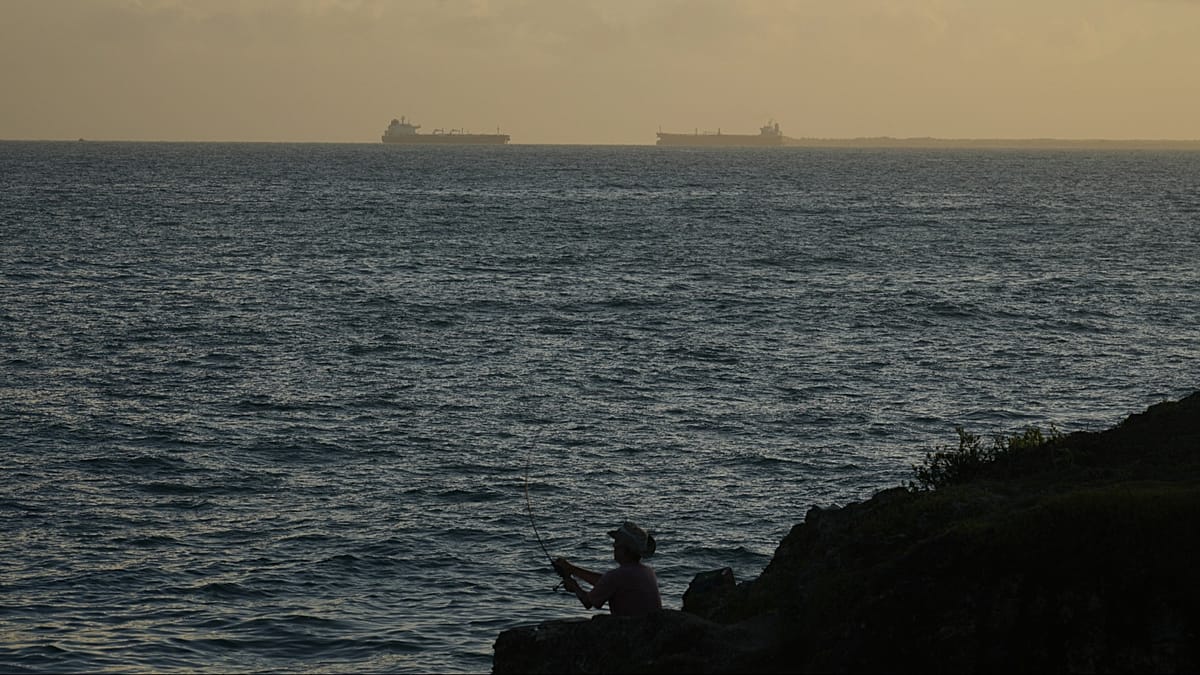
Beyond the financial wrangling, the issue of energy security looms over Mongolia. The Iran-U.S. war has roiled global energy markets, as have repeated Ukrainian attacks on Russian energy infrastructure. Mongolia is uniquely dependent on Russia for fuel, importing over 95 percent of refined petroleum products from its northern neighbor. When Russian supply dwindled, Mongolia felt the pinch. In the summer and fall of 2026, nationwide fuel shortages highlighted the country’s vulnerability and pushed policymakers to seek an additional source: China. In September, delegates from the Ministry of Industry and Mineral Resources held bilateral meetings with China National Petroleum Corporation (CNPC) to discuss importing 10,000 tonnes of refined petroleum, 4,000 tonnes of jet fuel, and 3,000 tonnes of diesel.
Moreover, China is currently financing one of Mongolia’s first hydropower plants, Erdeneburen Project in Khovd province. With a Chinese soft loan line of approximately $288 million, the construction contract was awarded to Engineering, Procurement, and Construction (EPC) and PowerChina in 2023.
In mid-September, Mongolian President Khurelsukh Ukhnaa and officials inspected the progress on the construction of the Erdeneburen Hydropower Plant. The Office of the President announced that the project is now 40 percent complete. When finished, the plant will have the capacity to supply reliable electricity to five provinces, including Khovd, Bayan-Ulgii, Uvs, Zavkhan, and Govi Altai.
Considering Mongolia’s energy infrastructure, combined with the landlocked challenges, full energy independence may not be in the cards as a short or medium term goal. That said, managing fuel shortages by reaching out to diverse global partners is in the national interest. Even prior to Russia’s invasion of Ukraine in 2022, Mongolia experienced intermittent energy shortages, which motivated the government to seek third-neighbor investments and diversify energy sources.
In August, Mongolia’s Deputy Prime Minister Dorjkhand Togmid announced Mongolia’s interest in building data centers in connection with accelerating Mongolia’s renewable energy sources. While the initiative is an attempt to kill two birds with one stone, even before discussing investment opportunities, Mongolia will need to decide how to handle data centers’ demand not only for energy, but for water.
According to the Brookings Institution, “A typical data center uses 300,000 gallons of water each day… but large data centers can use an estimated 5 million gallons of water each day.” The study warned: “Building a new facility and pledging economic impact mean little without sustainably incorporating water resources into ongoing operations.”
In 2025, an OECD study on water resources highlighted Mongolia’s water scarcity. Mongolia’s geographic disparities as well as surface water distribution make constructing – let alone maintaining – data centers a highly questionable endeavor.
The Uchral government is viewing China’s data centers in Inner Mongolia as a template and following the global trend. However, despite the similarities in wind and solar capacity and the cold climate, the water issue is one of the most important areas that needs to be scrutinized before Mongolia moves forward.
The State Great Khural has entered another highly politicized season with much to resolve. Unfortunately, the internal feud within the Mongolian People’s Party (MPP) will continue to weaken the parliament’s function. The MPP, the nominal ruling party with 68 total seats, is now effectively divided into two blocs of 30 and 38 legislators.
The Uchral government’s proposals are supposed to bring Mongolia economic prosperity and development, but without truly addressing the long-standing challenges of corruption, air pollution, water shortages, and energy security, the people’s confidence in governance remains extremely fragile. What the Mongolian people need is lawmakers and a government that prioritize the well-being of its citizens – not political vendettas.











 English (US) ·
  French (CA) ·
  French (FR) ·