

PROTECT YOURSELF with Orgo-Life® QUANTUM TECHNOLOGY
Orgo-Life the new way to the future Advertising by AdpathwayMultigenre writer Jennifer Maritza McCauley, a co-host of the show, moves to the guest seat for this episode to discuss her forthcoming short story collection Recognition with V.V. Ganeshananthan and Whitney Terrell. McCauley talks about writing about family history and turning nonfiction into fiction; how Jacques Lacan’s concept of the mirror stage shapes the collection; how the book connects to an earlier volume, When Trying to Return Home; and the experience of publishing with an academic press and undergoing peer review. She also reflects on writing about race and pop culture. McCauley reads excerpts from her short stories “Home Ghosts” and “Black Planet.”
To hear the full episode, subscribe through iTunes, Google Play, Stitcher, Spotify, or your favorite podcast app (include the forward slashes when searching). You can also listen by streaming from the player below. Check out video versions of our interviews on the Fiction/Non/Fiction Instagram account, the Fiction/Non/Fiction YouTube Channel, and our show website: https://www.fnfpodcast.net/ This podcast is produced by V.V. Ganeshananthan, Whitney Terrell, AJ Abernathy, Sienna Hoopingarner, and Grace Workman.
Jennifer Maritza McCauley
Recognition • When Trying to Return Home • Scar On / Scar Off • Neon Steel • “Recognition” | Wigleaf
Others
Jacques Lacan, The Mirror-Phase as Formative of the Function of the I, NLR I/51, September–October 1968 • Four Cycles By Jorge Luis Borges • Erasure by Percival Everett • Fiction/Non/Fiction Season 10, Episode 2: Ten Years of Fiction/Non/Fiction: An Anniversary Episode • Fiction/Non/Fiction Season 8, Episode 6: Jennifer Maritza McCauley on Puerto Ricans, Trump, and the Election • Kurt Vonnegut, Shape of Stories (YouTube) • Fear of a Black Planet by Public Enemy (Wikipedia) • The Art of Fiction by John Gardner
EXCERPT FROM A CONVERSATION WITH JENNIFER MARITZA McCAULEY
V.V. Ganeshananthan: So Aya’s family is knitting the stories together, and there are those moments of mirror recognition in stories involving her family, but there’s also other moments where characters look and see themselves represented or not represented in culture or try to see themselves represented in culture, and often we’re looking at the film industry and race. So in one of my probably two favorite stories, “Black Planet,” which is also just hysterically funny, a Black and Puerto Rican screenwriter, Marcus, or Malcolm as someone in the story calls him, interviews with a white or at least white-presenting producer named Galvin or Gal who claims that he is part Black and Indigenous. I wonder if you could read to us from that story.
Jennifer Maritza McCauley: Yeah, absolutely. This story, like you said, is taking jabs at a lot of folks, including journalists. It jabs a lot of folks, but it’s also meant to take a realistic look at some of the practices of the Hollywood industry. I’m going to bring up this piece right here. This part is where Galvin and Marcus have had an extensive conversation about race and putting on this show that Galvin wants to showrun about Orishas with Samurai swords, and that is not hitting well with Marcus, so the energy’s going badly, and then Galvin is just trying to get it over with. So this is what he says:
Galvin transitioned back into his most pleasing self. “Do you have anything else you’d like to ask me? I mean, look, I’ll be honest. For real. I don’t really need you to write anything. I just need ideas and for you to kind of, just. Be there. And if we come under fire, I can say we have a Black Latino staff. So you don’t really have to do any writing, you’re just there with me to shoot the shit. Like any writer’s room.”
And be in the photo shoot, Marcus thought, but that wasn’t always the practice of any writers’ room. Marcus had degrees in this shit, he’d written for projects before depression hit him, and he knew how to write. He knew he could. Marcus would just be a Black Latino face with the requisite Blackness for the project. Marcus looked around Gal’s office and saw the African statues and the picture of him awkwardly flexing with Ice Cube in a photo. Then he became angry. Marcus suddenly thought about the full staff of Black faces Galvin would hire and have them happily giving up their stories so Galvin would be called a genius, so this guy who said all this bullshit behind the scenes would get credit as he scoured their lives for interesting stories, so this guy could get a new house. Marcus felt used, regardless of whether or not this guy was technically Black or not. He’d made himself into a coon for a fucking short-lived job.
“I got an idea for a movie,” Marcus said. “I’ve never told anyone. It’s real top secret. It’s called Black Planet.”
“I have 10 minutes left,” Galvin said. “So it was… what?” He took the notebook back out.
Marcus watched him fall into his trap.
Galvin peered up. “Black what?”
“It’s called Black Planet,” Marcus riffed, keeping his fury contained. “It’s nothing special. It’s about a fucking Black planet.”
Scritch, scratch.
“What’s your pitch?”
“There isn’t one. It’s just a fucking Black Planet. All the Black people live there and everyone’s happy, because they’re themselves in all of their variegated glory and shittiness, and nobody is fucking with them. Everyone Black is invited no matter how little or how Black you are. The whole idea is nobody is doing stupid shit and nobody is shucking and jiving. There is no plot; it’s just Black people living their lives with other Black people on their own planet.”
Whitney Terrell: Thank you very much. That is a very funny scene, and although it is totally believable to me that producers would say to somebody, “I just need your face in the picture, I don’t even need you to write,” which is an incredibly insulting thing to say. Yet the story’s also really pretty complicated in the way that it’s thinking about representation and what people want to write and what people can write. Galvin ends up stealing the idea for Black Planet, which becomes a hit itself, and Marcus goes on to have success as a writer, but he’s writing for shows like Family Rules, American SongStar, and GlitterGirl, which you call “an American bastardization of a Japanese senshi anime.” If I’m saying that correctly, my Japanese may not be perfect.
Then there’s this passage when, discussing his authorship of the Black Planet idea, Marcus’s Puerto Rican girlfriend says to him, “Wait, isn’t that from Public Enemy’s Fear of a Black Planet? It can’t be your idea. Plus, if you didn’t write the script yourself, is anything anyone’s idea? It’s all about who wrote it.” So what are you saying about identity and art in this story?
JMM: Well, in this whole collection, I ask a lot of questions, and I don’t want to have one answer for all of them, but I will say I’m joking about authorship for sure. The whole piece is meant to be tongue-in-cheek. In that text, Marcus technically comes up with the idea of Black Planet, but as Thalia flippantly says, “Aren’t all stories basically the same?”
That’s essentially what I wanted her to say, and I’m thinking this is an idea that has been around for such a long time in literature. Borges said in The Four Cycles, “For the rest of time, we will continue to tell stories transformed.” Then, I think of Vonnegut who had…it was in the video where Vonnegut breaks down all the story shapes. It’s amazing. He thinks that we all go along with the same emotional arcs as writers. So there’s the Boy Meets Girl, for example, that we all write. Then Gardner, who I’m a fan of, pinpointed that idea of “The Stranger Comes to Town.” I know Tolstoy said the same thing, but they’re both trying to come back to the same thing about “The Stranger Comes to Town” as a familiar plot.
I think the idea was more about how art itself is interpreted, passed down and imitated, and also how opportunism can rise from that. That’s what I was gesturing at without giving one thing to say.
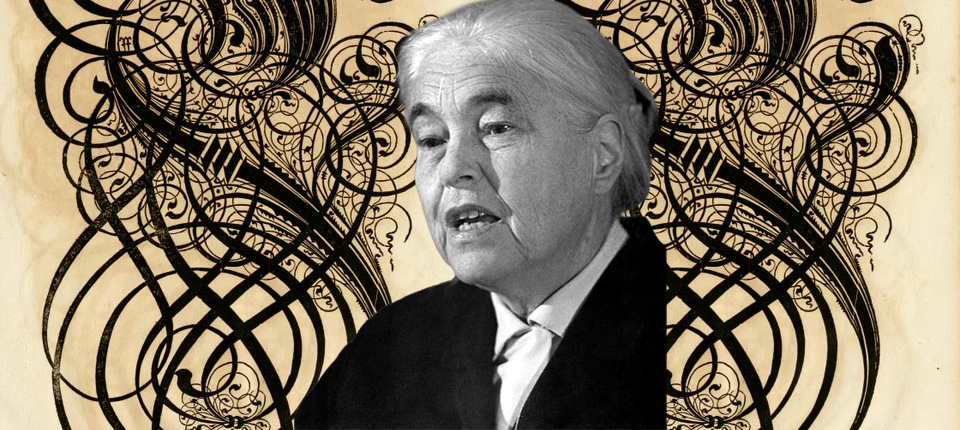
Transcribed by Rev. Condensed and edited by AJ Abernathy, Sienna Hoopingarner, and Grace Workman. Photograph of Jennifer Maritza McCauley by Jesse Biehn.

















 English (US) ·
 French (CA) ·
 French (FR) ·