

PROTECT YOURSELF with Orgo-Life® QUANTUM TECHNOLOGY
Orgo-Life the new way to the future Advertising by AdpathwayWelcome back to Power Play! Each week, senior writer Molly Taft tackles a topic around this midterm season’s biggest issue: data centers. If you’ve got a question or thought for the column, feel free to shoot Molly an email at [email protected] or reach them securely on Signal at mollytaft.76.
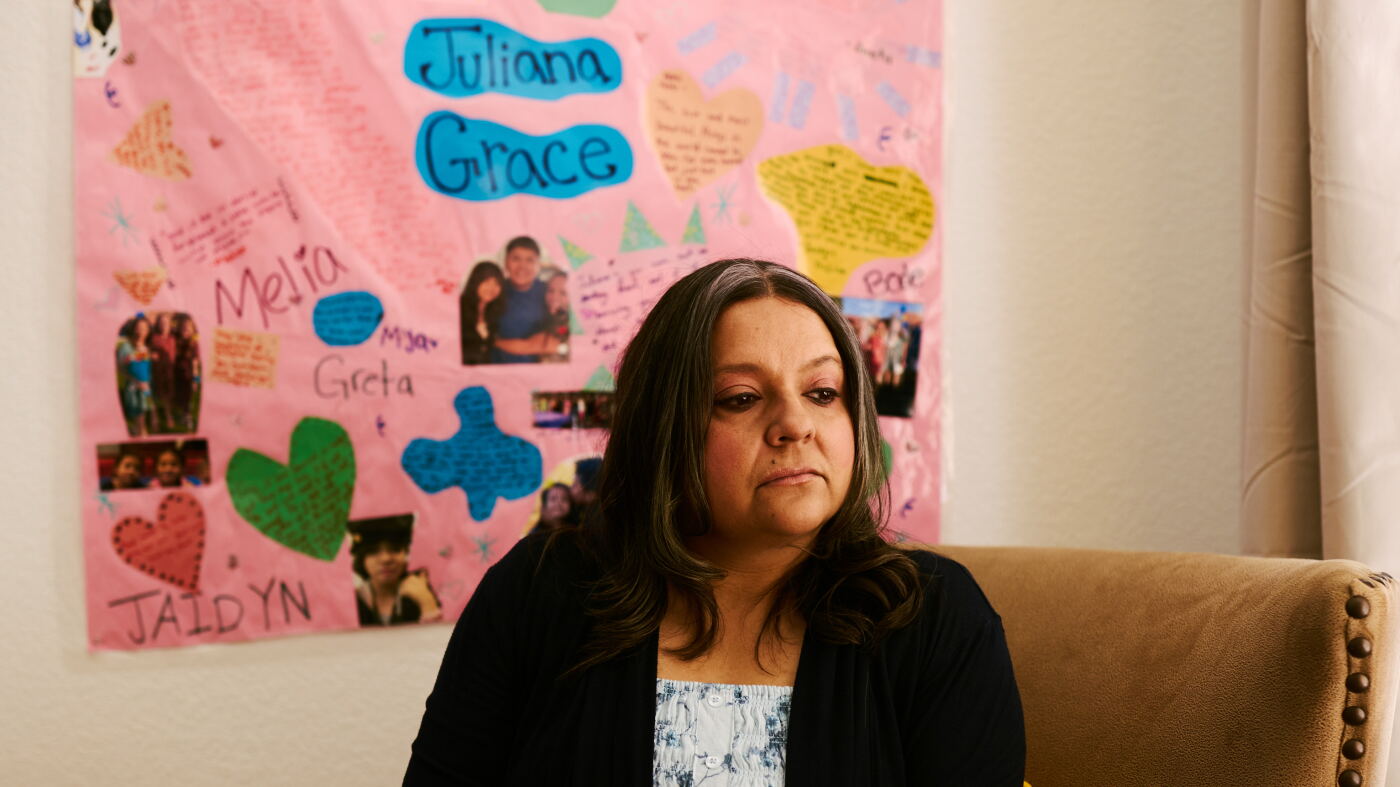
Molly McCann Sanders has a lot in common with many of the other women who helped Donald Trump win a second term as president. A pro-life Catholic who lives in Texas, she has staunchly conservative opinions on immigration and a fierce hatred of eminent domain—the practice of the government taking private property for public use.
Sanders, the president of the Eagle Forum Education & Legal Defense Fund, which was started by Phyllis Schlafly, also describes herself as “a crunchy MAHA mom”—and says she’s been paying particular attention to data centers.
“I'm alarmed by the idea that these data centers can move in and pollute,” she tells me. “I'm not a data center expert. I'm not a tech expert. But I’m suspicious and wary, and want to move slowly.”
She loves Trump, “but I think he’s wrong about data centers,” she says. And she sees the GOP’s effort to court what she calls “the laptop class”—young men who are enthusiastic about technology—at the Republican midterm convention earlier this month as a huge misstep with midterms nearing.
McCann Sanders isn’t alone. More than 60 percent of Americans, including 47 percent of Republicans, say they are opposed to the construction of data centers in a poll released by The New York Times last week. In August, the National Republican Senatorial Committee sent a private memo to AI companies sounding the alarm on how voters perceive data centers, warning that “campaign or party committees can not fix the toxic brand of an entire segment of the economy.” Last week, GOP strategist Tony Fabrizio issued a memo to the party’s candidates claiming that “unqualified support for building more AI data centers is a losing position.”
But the GOP is facing one big hurdle: Trump himself. In recent weeks, facing mounting scrutiny on his policies and support for the industry, Trump has doubled down on his defense of both data centers and AI. In late August, he wrote in a Truth Social post that only communities that wanted to be “backwards and poor” would refuse data centers coming to town.
Last week, he issued yet another series of posts boosting AI data centers. Users on his own Truth Social platform pushed back. An analysis from The New York Times of thousands of responses found that anti-data-center and anti-AI comments—including from staunch MAGA accounts—outnumbered positive comments by four to one.
Sanders says she sometimes “looks past” the wilder things Trump says, but she can’t fully overlook his pro-data-center rhetoric.
“That is not the right way to go about this,” she says of the “backwards and poor” post. “We do have legitimate concerns. There are real problems.”
My colleague Hugo Lowell, who covers the White House and writes our Inner Loop newsletter, says he’s not surprised by Trump’s attitude. “He’s bullish on AI,” he tells me. “He’s been told that restricting data center development means restricting compute, which means the US loses to China.”
The China competition angle is being publicly echoed by tech accelerationists and White House allies, including former White House AI czar David Sacks and investor and Palantir cofounder Joe Lonsdale. The latter debated Steve Bannon’s tech editor Joe Allen—whom I profiled last month—at an auxiliary event during the convention. That conversation between Lonsdale and Allen, Sanders says, was the only time she heard data centers brought up during the entire midterm convention.











 English (US) ·
  French (CA) ·
  French (FR) ·