

 2 months ago
59
2 months ago
59
PROTECT YOURSELF with Orgo-Life® QUANTUM TECHNOLOGY
Orgo-Life the new way to the future Advertising by Adpathway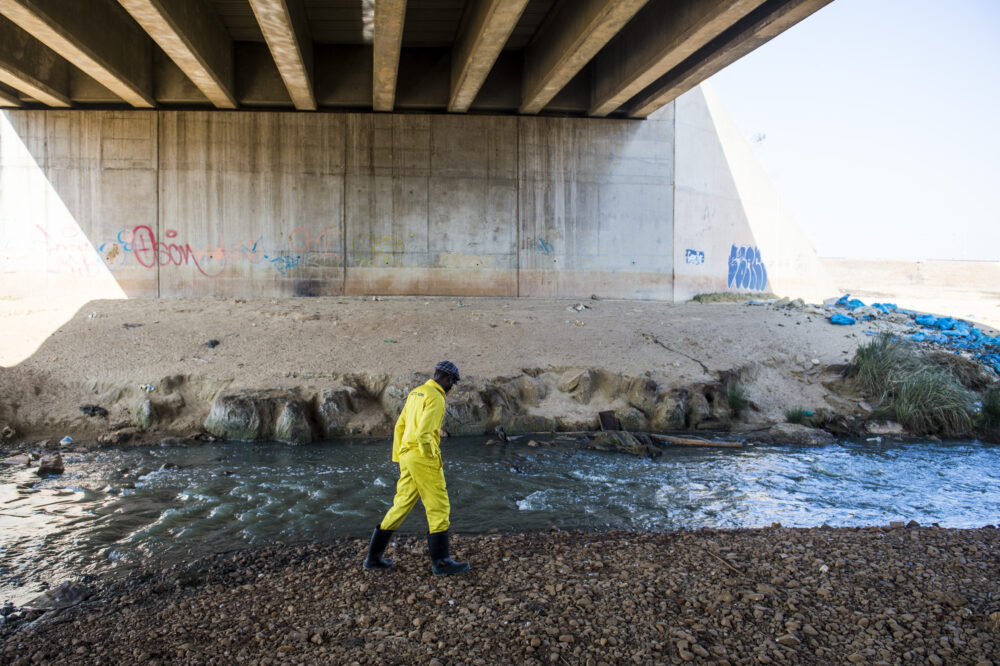
At its core, the Constitution is meant to serve those most vulnerable to exclusion: the poor, workers, rural communities, people living next to mines, refineries and industrial zones and those denied healthcare, clean water, decent housing and meaningful participation in decisions affecting their lives. It recognises that without dignity and material justice, freedom would remain incomplete. (Delwyn Verasamy/M&G)
There is a tired accusation that resurfaces every time communities resist pollution, challenge mining licences, oppose gas projects or question government decisions: communities and NGOs are “anti-development”.
It is an accusation designed to delegitimise dissent; to suggest that those raising concerns about health, livelihoods, land, water or democratic participation are obstacles to progress. But South Africa’s history tells a different story. In fact, many of the rights and freedoms people enjoy today exist because civil society organisations (CSOs) refused to remain silent when silence would have been easier and politically convenient.
To understand the role of CSOs, one must first understand what the Constitution was meant to do.
The Constitution was never written to comfort the powerful. It emerged from the violence and exclusions of apartheid as a system in which the law was used to deny dignity, land, healthcare, movement and political voice to most people.
The democratic Constitution therefore carried a deeper responsibility, not only to establish democratic institutions but also to protect people from abuses of power, whether by the state or private interests.
At its core, the Constitution is meant to serve those most vulnerable to exclusion: the poor, workers, rural communities, people living next to mines, refineries and industrial zones and those denied healthcare, clean water, decent housing and meaningful participation in decisions affecting their lives. It recognises that without dignity and material justice, freedom would remain incomplete.
This is why the Treatment Action Campaign’s (TAC) role remains one of the defining examples of democratic civil society in post-apartheid South Africa. The TAC did not invent rights. It gave life to rights that existed on paper. At the height of the HIV/Aids crisis, when denialism and political paralysis cost lives daily, the TAC organised communities, educated the public and challenged the state in court to force the rollout of antiretroviral treatment.
At the time, activists were accused of embarrassing the government, creating instability and undermining authority. Yet history has since rendered its judgment on the matter clearly. Had the TAC remained silent in the name of political convenience or “stability”, countless more South Africans would have died waiting for treatment that proved to save lives.
The TAC tested whether constitutional rights would mean anything for poor black South Africans dying in public hospitals and townships. Section 27 guarantees the right to access healthcare services but rights written into law mean little if governments can ignore them without consequence.
Through litigation, mobilisation and public pressure, the TAC demonstrated something essential about democracy: rights are not self-executing. They must be defended, demanded and deepened through public participation and accountability. The legacy matters profoundly today.
The same Constitution that protects access to healthcare also guarantees the right to an environment that is not harmful to health or well-being. It protects dignity, equality, access to information and just administrative action. The rights were never intended to exist in isolation from one another. Together, they form part of a democratic vision in which people are not treated as disposable in the pursuit of profit or political ambition. This is why environmental justice struggles are constitutional struggles.
When communities challenge toxic air pollution in Mpumalanga, they are defending constitutional rights. When residents question oil and gas exploration that threatens water sources and livelihoods, they are defending constitutional rights. When people demand meaningful consultation before projects proceed on their land, they are not obstructing development and democracy; they are exercising it.
Yet increasingly, CSOs and community organisations are portrayed as enemies of development whenever they challenge powerful political and economic interests. The framing deliberately avoids more uncomfortable questions: Development for whom and at whose cost?
For too long, development has been narrowly defined through extraction and large-scale industrial expansion alone: more mines, more fossil fuel projects, more pipelines and more infrastructure. Communities are repeatedly told to sacrifice in the name of jobs, growth and investment. Yet many of the areas carrying the heaviest environmental burdens remain among the poorest and most neglected in the country. People living next to coal plants struggle with unemployment. Communities near refineries continue to suffer from pollution-related illnesses. Rural areas targeted for extraction often lack basic services long after companies have extracted wealth from the land.
Communities therefore have every right to ask difficult questions. If development destroys water sources, deepens inequality and leaves people sick while profits flow elsewhere, who is benefiting? These are not anti-development questions. They are democratic questions.
Civil society organisations often step into these struggles because ordinary people do not have equal access to power. People cannot always afford lawyers, scientific experts or policy specialists capable of challenging corporations and state institutions. CSOs help level the playing field. They create space for participation where decisions are otherwise made behind closed doors. They force transparency. They ensure that constitutional obligations are not reduced to symbolic promises. This is not sabotage. It is democracy functioning as intended.
Importantly, environmental justice organisations are not simply saying “no”. Across the country, NGOs and community movements continue advocating for cleaner energy systems, affordable electricity, public accountability, resilient human settlements, safer public transport, sustainable livelihoods and development models that prioritise human well-being over short-term extraction. They are not opposed to development. They are opposed to forms of development that treat poor and working-class communities as sacrifice zones.
There is also a deeper irony in the accusation. Many of the voices that dismiss CSOs benefit from rights secured through decades of civil society struggle. From access to HIV treatment to anti-corruption work, housing rights and environmental protections, organised civil society has repeatedly strengthened South African democracy when institutions alone proved insufficient.
South Africa’s progress has never come from unquestioning obedience to power. It has come from organised people insisting that the country live up to its constitutional promises. The TAC understood this. Environmental justice movements understand it too. Safeguarding rights is not anti-development. It is how democracies prevent development from becoming exploitation.
Siphesihle Mvundla is groundWork’s climate and energy justice campaigner.





















 English (US) ·
  French (CA) ·
  French (FR) ·