

PROTECT YOURSELF with Orgo-Life® QUANTUM TECHNOLOGY
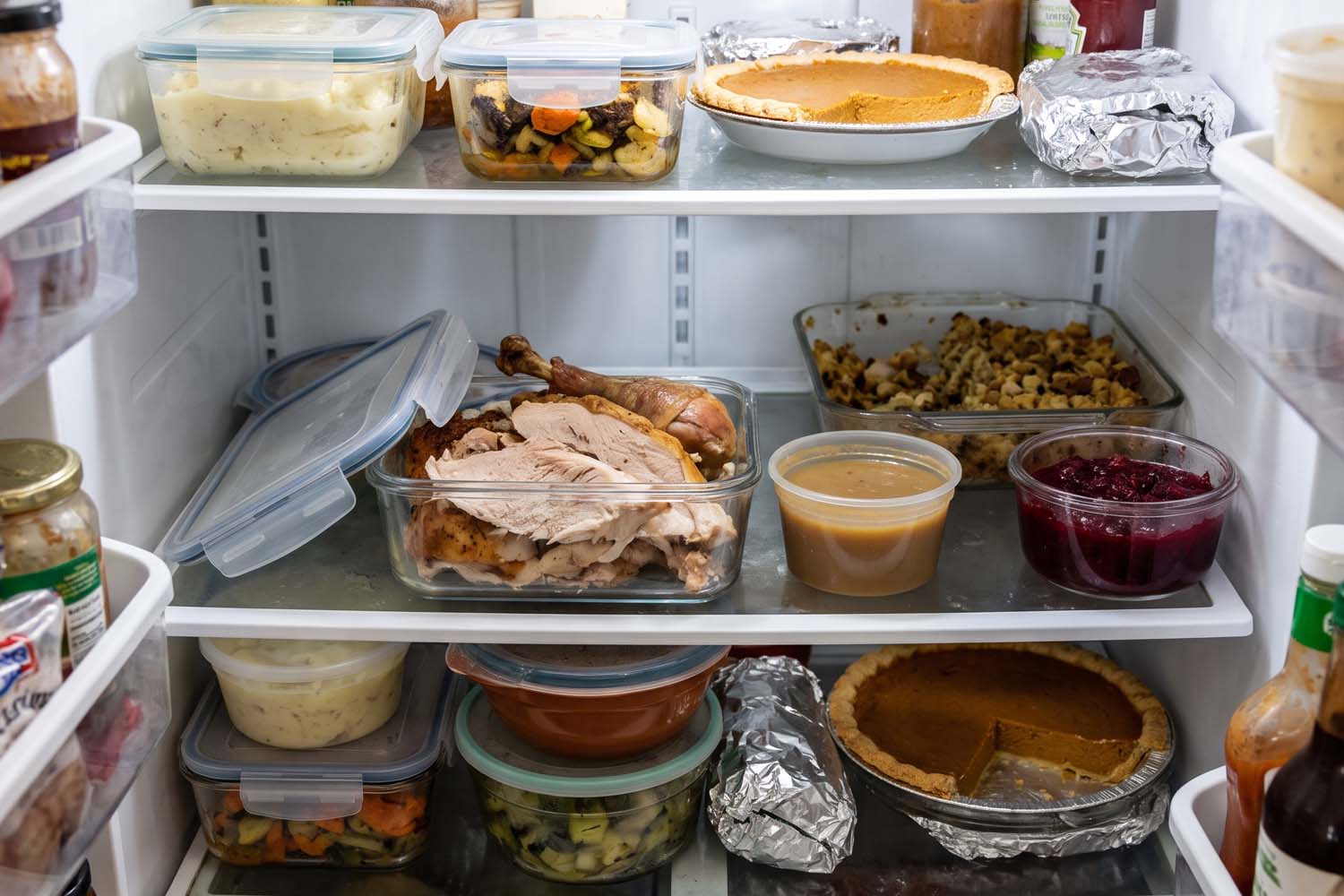
Orgo-Life the new way to the future Advertising by AdpathwayThe turkey is picked over, the carcass is sitting in the refrigerator, and the pot of stock you simmered over the weekend is cooling on the stove. Or there is an opened carton of turkey stock left from the gravy. How long does any of it last, and how do you know when to pour it out? Here is what USDA, extension guidance and the carton labels say about turkey stock and broth, the carcass, freezing and spoilage.
Does turkey stock go bad?
The Short Answer: Yes. Penn State Extension says finished turkey or chicken stock keeps up to three days in the refrigerator, and New Mexico State Extension says about three. USDA’s Keep Food Safe chart lists gravy and meat broth at 3 to 4 days, while an FDA chart lists them at 1 to 2 days. We use up to 3 days for homemade turkey stock and for opened stock with no label time. Some cartons give longer, such as 7 days on Kitchen Basics’ site and 7 to 10 days on Pacific Foods’ FAQ, so follow the label when it has one. Refrigerate stock within 2 hours of cooking, or 1 hour above 90°F, in shallow containers. Freezer times of 2 to 3 months are about quality. Throw out stock with mold or a sour smell.
For a complete pantry and fridge reference, see our Food Storage Guide. For the same question about other broths, see whether chicken broth and bone broth go bad.
📋 Turkey Stock Shelf Life: At a Glance
| Homemade stock, refrigerated | Up to 3 days. Penn State and NMSU say about 3. USDA’s chart lists meat broth at 3 to 4 days, and an FDA chart says 1 to 2 |
| Turkey carcass from a cooked bird | Make stock within 2 days, or freeze it, per NMSU’s limit for bones. USDA allows 3 to 4 days for cooked turkey but doesn’t mention carcasses |
| Opened carton of turkey stock | The label time if it has one. Otherwise we use up to 3 days |
| Unopened shelf-stable carton | Follow the best-by date and storage directions. USDA says dates are about quality, not a safety cutoff |
| Left out on the counter | 2 hours at most, 1 hour above 90°F, per USDA |
| Freezer at 0°F | 2 to 3 months for best quality. USDA says frozen food stays safe |
| Mold, sour smell, bulging or leaking package | Discard it |
Key Takeaways
- USDA’s Keep Food Safe chart lists gravy and meat broth at 3 to 4 days in the refrigerator and 2 to 3 months in the freezer. An FDA chart (March 2018) lists them at 1 to 2 days and 2 to 3 months. USDA’s Turkey Basics page lists cooked turkey and cooked dishes and gravy at 3 to 4 days.
- Penn State Extension (updated July 2026) says finished chicken or turkey stock can be refrigerated for up to three days. New Mexico State Extension says homemade broth, including stock, keeps up to about 3 days.
- USDA’s cooked turkey rule is 3 to 4 days, and it doesn’t mention carcasses. NMSU says raw or cooked bones should not be refrigerated for more than two days before use. For the cautious approach, make stock within two days or freeze the carcass.
- USDA says to divide leftovers into shallow containers so they cool quickly, and that hot food can go directly into the refrigerator. Perishable food left out more than 2 hours, or 1 hour above 90°F, should be thrown away.
- Carton labels differ from USDA’s figure. Kitchen Basics’ site says to use stock within 7 days, and Pacific Foods’ FAQ says to refrigerate and use within 7 to 10 days. Follow the label when it gives a time.
- USDA says freezer storage times are for quality only and that frozen food remains safe indefinitely. The CDC says C. perfringens outbreaks most often involve food cooked in large batches and held between 40°F and 140°F, including poultry and gravy.
Turkey Stock or Turkey Broth?
OSU Extension describes stock as made from bones and simmered longer, and broth as made from meat and simmered for less time. We found no storage guidance that treats them differently, so everything here applies to both, along with turkey bone broth. For dishes made with stock, see how long leftovers last and how long cooked turkey can sit out.
How Long Does Turkey Stock Last?
Homemade turkey stock keeps up to about 3 days in the refrigerator, and the federal charts disagree on whether that can stretch to 4. USDA’s Keep Food Safe cold storage chart lists gravy and meat broth at 3 to 4 days in the refrigerator and 2 to 3 months in the freezer. FDA’s Refrigerator & Freezer Storage Chart (March 2018) lists gravy and meat broth at 1 to 2 days in the refrigerator and 2 to 3 months in the freezer. USDA’s Turkey Basics page lists cooked turkey, and cooked dishes and gravy, at 3 to 4 days. Penn State Extension’s page on homemade chicken or turkey stock (updated July 2026) says finished stock can be refrigerated for up to three days. New Mexico State University Extension, in an undated fact sheet, says homemade broth, including bone broth and stock, should be kept at 40°F or below for up to about 3 days. USDA’s leftovers guidance gives 3 to 4 days for cooked leftovers.
These are rows for cooked broth, gravy and turkey, and none is written only for turkey stock. Applying them to stock is our own reading. FoodSafety.gov’s cold food storage chart, reviewed in 2023, has no broth row. It lists soups and stews with vegetable or meat added at 3 to 4 days in the refrigerator and 2 to 3 months in the freezer.
| Homemade stock, refrigerated | Up to 3 days | Penn State and NMSU: up to about 3 days. USDA’s Keep Food Safe chart: gravy and meat broth 3 to 4 days. FDA’s chart: 1 to 2 days |
| Cooked turkey carcass, refrigerated | Make stock within 2 days of cooking, or freeze it | NMSU: raw or cooked bones no more than two days before use. USDA: cooked turkey 3 to 4 days, with no mention of carcasses |
| Opened carton of turkey stock or broth | The label time if it has one. Otherwise up to 3 days, and write the date on the carton | Kitchen Basics’ site: stock within 7 days. Pacific Foods’ FAQ: 7 to 10 days. Federal charts for meat broth: 1 to 4 days |
| Unopened shelf-stable carton | Follow the best-by date and storage directions on the package | USDA: dates are about quality. Its shelf-stable page gives no separate carton shelf life |
| Left out on the counter | 2 hours at most, 1 hour above 90°F | USDA: perishable food left out longer should be thrown away |
| Frozen at 0°F | 2 to 3 months for best quality | USDA: gravy and meat broth 2 to 3 months. Its Turkey Basics page lists gravy at 4 to 6 months. Quality only |
| Soup made with turkey stock | 3 to 4 days refrigerated | FoodSafety.gov: soups and stews 3 to 4 days refrigerated, 2 to 3 months frozen |
| Pressure-canned stock | Only by a tested pressure-canning procedure | Penn State: best quality within a year. NCHFP gives a pressure-canning process |
Those timings assume the stock went into the refrigerator promptly and the refrigerator is at 40°F or colder. Penn State and NMSU support the 3-day limit for homemade stock, and choosing it over the federal charts’ 1 to 4 days is our own judgment. For cartons, the time on the package is the manufacturer’s direction for that product, so follow it when it gives one.
How Long Does Homemade Turkey Stock Last in the Fridge?
Plan on up to three days. Penn State Extension and NMSU say about three, USDA’s chart says 3 to 4 for gravy and meat broth, and FDA’s chart says 1 to 2. Because the federal charts differ, we’d use the stock early in that window and freeze what you won’t use, which is our own suggestion.
Label the container with the date you made the stock, and count the days from that date. Refrigerate it within 2 hours of cooking. Cooling the stock doesn’t restart the storage clock.
The bigger risk with a big pot is how it cools. The CDC says C. perfringens outbreaks most often involve food cooked in large batches and held between 40°F and 140°F, and that poultry, meat and gravy are commonly involved. That is why the cooling steps below matter more than the exact number of days.
How Long Can You Keep a Turkey Carcass Before Making Stock?
USDA’s Turkey Basics page lists cooked turkey at 3 to 4 days in the refrigerator. The page doesn’t mention carcasses. NMSU Extension’s fact sheet says raw or cooked bones should not be refrigerated for more than two days before use. The guidance isn’t settled, so we’d take the cautious approach: make the stock within two days of cooking the turkey, or freeze the carcass promptly. Treating 3 to 4 days as the outer limit for a cooked carcass is our own reading of USDA’s cooked turkey rule.
That means a bird roasted on Thursday is best in the stockpot by Saturday, and Sunday or Monday is the outer edge. If you can’t get to it, freeze the carcass. USDA says it is safe to freeze leftover turkey and trimmings, and lists plain turkey pieces at 4 months for quality. Breaking the carcass into pieces that fit in a bag or pot is our own suggestion.
Get the carcass into the refrigerator within two hours of serving. USDA says perishable food left out more than 2 hours, or 1 hour above 90°F, should be thrown away. If the carcass sat out on the counter overnight, we would throw it out rather than make stock from it. USDA’s rule has no exception for simmering it afterward.
How Long Does Store-Bought Turkey Stock Last?
Unopened, a shelf-stable carton keeps to the date and storage directions on the package. USDA’s food product dating guidance says that apart from infant formula, product dates are not an indicator of safety, and its shelf-stable food page says to store canned and shelf-stable foods in a cool, dry place. That page gives no separate shelf life for cartons, so we’d use the best-by date.
Once opened, check the label first, because turkey stock cartons give longer times than USDA does. Kitchen Basics’ site says stock should be kept in the refrigerator once opened and used within 7 days. It says unused stock can be frozen and used within 60 days for best flavor. Pacific Foods’ FAQ says to refrigerate and use within 7 to 10 days, in a general answer about its packaged products. If your carton gives a time, that is the manufacturer’s direction for that product. If it gives none, we’d plan on up to 3 days.
Can You Freeze Turkey Stock?
Yes. USDA’s Keep Food Safe chart lists gravy and meat broth at 2 to 3 months in the freezer, and FoodSafety.gov lists soups at the same 2 to 3 months. USDA’s Turkey Basics page says freezer storage times are for quality only and that frozen foods remain safe indefinitely. So stock kept constantly at 0°F stays safe past the quality window, though flavor and texture may fade. As we read the guidance, freezing doesn’t repair earlier mishandling, so freeze stock that was cooled quickly and handled safely. USDA’s Turkey Basics page lists gravy and cooked poultry dishes at 4 to 6 months in the freezer, and turkey covered with broth or gravy at 6 months. USDA’s own pages give different quality windows, and we use the 2 to 3 months for meat broth.
Cool it first, in shallow containers or an ice-water bath. Penn State Extension says to leave space at the top of the container for expansion. Freezing in small portions, or in ice cube trays, is our own suggestion, so you thaw only what you need. Thaw it in the refrigerator and use it within about 3 days, like any leftover. Kitchen Basics’ site gives 60 days for freezing its own carton stock, which is that manufacturer’s time for its product.
How Do You Cool a Big Pot of Turkey Stock?
Divide it into shallow containers and refrigerate it within two hours of cooking, or within one hour above 90°F. USDA’s leftovers guidance says to divide large amounts of food into shallow containers so they cool quickly. It says hot food can go directly into the refrigerator or be chilled in an ice or cold water bath first, so you don’t need to wait for room temperature. USDA’s Turkey Basics page also says to refrigerate or freeze leftovers promptly in shallow containers.
Penn State Extension says to divide stock into small containers so it cools to room temperature within two hours, and to stir often in an ice bath. We’d avoid putting one enormous stockpot in the refrigerator, because it cools slowly, which is our own judgment. A full stockpot cooling slowly is the large-batch situation the CDC’s C. perfringens guidance describes.
Can You Leave Turkey Stock Out Overnight?
No. USDA says perishable food left out more than 2 hours, or more than 1 hour above 90°F, should be thrown away. USDA’s rule has no exception for boiling it again, so we would pour it out. This applies to perishable stock, meaning homemade, refrigerated or opened stock. An unopened shelf-stable carton in the pantry is a different case, and the CDC says to keep food heated to 140°F or hotter until serving.
How Can You Tell if Turkey Stock Is Bad?
Look for mold, a sour or off smell, or a package that is bulging, leaking or badly dented. These are reasons to discard stock, and their absence does not prove it is safe. USDA’s mold guidance says not to sniff a moldy item because it can cause respiratory trouble. We don’t suggest tasting stock to find out. A normal look and smell don’t prove stock is safe, so rely on the number of days and how it was cooled and stored.
How Do You Reheat Turkey Stock?
USDA’s Turkey Basics page says to bring gravy to a rolling boil and to reheat leftovers to 165°F or until hot and steaming. Its leftovers guidance says to bring sauces, soups and gravies to a boil, and to reheat other leftovers to 165°F as measured with a food thermometer. So we’d bring stock to a rolling boil, and use 165°F for other leftovers. Reheating is a safety margin on correctly stored stock. It does not rescue stock that was left out too long or kept too many days.
Can You Can Turkey Stock?
Only with a tested pressure-canning procedure. The National Center for Home Food Preservation gives a process for chicken or turkey stock, adapted from USDA’s Complete Guide to Home Canning, that uses a pressure canner. It processes pints for 20 minutes and quarts for 25 minutes, at a pressure that depends on the gauge type and your altitude. Penn State Extension also describes pressure canning and says canned stock has the best quality within a year. We found no tested water-bath process for stock, so don’t improvise one. Follow the full directions on those pages.
How Long Does Soup Made With Turkey Stock Last?
FoodSafety.gov lists soups and stews at 3 to 4 days in the refrigerator and 2 to 3 months in the freezer. Refrigerate soup promptly and plan to use it within that window, counted from the day you make it. If you make soup from stock that has been in the refrigerator for a few days, don’t assume cooking it extends the stock’s storage life. Use older stock promptly or freeze it sooner, which is our own judgment. Cooking does not make stock safe that was stored too long or left out. For soup tips, see common soup mistakes.
What Can You Make With Turkey Stock?
Use it within 3 days or freeze it. Gravy is the obvious use, and USDA lists gravy at 3 to 4 days too, so see whether gravy goes bad. We have several soups on the site: red lentil soup, tortilla soup, clam corn chowder and New Orleans seafood gumbo. Check each recipe for the type and amount of stock it calls for. If a soup comes out thin, see how to thicken soup without cream. Cooking rice or grains in stock instead of water is our own suggestion for using up the last cup. Refrigerate any finished dish promptly and use it within 3 to 4 days.
Signs Something Is Wrong
- Visible mold on or in the stock. Don’t sniff it. Discard it.
- A sour, rancid or off smell. This is our own checklist, not an agency list.
- A bulging, leaking or badly dented package. USDA says not to use or taste food from such a can. We’d treat a swollen or leaking carton the same way, which is our own judgment.
- Left out more than 2 hours (1 hour above 90°F). Throw it out, even if it looks fine.
- Open or stored longer than the label or USDA allows. With no label time, we use up to 3 days.
- Unknown history. If you can’t remember when you made it or how it was cooled, discarding it is the cautious choice.
We don’t suggest tasting stock to test it. USDA says you can’t see, smell or taste harmful bacteria that may cause illness, so count the days.
Things That Don’t Automatically Mean Trouble
- A layer of fat on top that sets firm when chilled. Penn State Extension says the fat will solidify on top of cooled stock.
- A jelly-like set when the stock is cold. OSU says bone collagen thickens stock, so it can be normal. It doesn’t show the stock is safe, so go by the days and how it was cooled and stored.
- A best-by date that has passed on a sealed shelf-stable carton with no bulge, leak or dent. USDA says dates are about quality.
These are quality observations, not safety tests. Days since cooking or opening, and how the stock was cooled, matter more.
Quick Storage Reference
- Homemade stock: Up to 3 days, refrigerated within 2 hours in shallow containers.
- Cooked carcass: Stock within 2 days of cooking, or freeze it.
- Opened carton: The label time, otherwise up to 3 days.
- Counter: 2 hours at most, 1 hour above 90°F.
- Freezer: 2 to 3 months at 0°F for best quality.
- Reheat: Stock to a rolling boil. Other leftovers to 165°F.
| Stock made Sunday, now Wednesday in the refrigerator | Day 3. This is within Penn State’s up to three days. Bring it to a rolling boil and use it today, or freeze it. |
| Stock made Sunday, now Friday in the refrigerator | Day 5. This is past every source we read, so we’d discard it. |
| Pot of stock cooled on the stove overnight | Discard it. USDA says perishable food left out more than 2 hours should be thrown away. |
| Turkey carcass left on the counter overnight | We’d throw it out. USDA’s 2 hour rule has no exception for simmering it afterward. |
| Turkey roasted Thursday, carcass in the refrigerator, now Monday | Day 4. This is the end of USDA’s cooked turkey range and past NMSU’s two days for bones. Make the stock today or freeze the carcass, and if you’re unsure how it was stored, we’d discard it. |
| Opened carton of turkey stock, 6 days in the refrigerator | Check the label. If it gives a time, such as 7 days, that governs. If it gives none, this is past our up to 3 days, so we’d discard it. |
| Stock with mold on top | Discard it. Don’t sniff it. |
| Cold stock that has set like jelly | Likely collagen from bones, which OSU says thickens stock. That doesn’t show it is safe, so go by the days and how it was cooled and stored. |
| Frozen stock, 6 months in the freezer | A quality question. USDA says frozen food stays safe, though flavor may have dropped. |
How We Checked This
In November 2026 we read USDA’s Turkey Basics page on handling cooked dinners and its leftovers guidance. We also read its Keep Food Safe page and cold storage chart, its shelf-stable food page, its food product dating guidance and its Molds on Food page. We read FoodSafety.gov’s cold food storage chart, reviewed September 2023, and FDA’s Refrigerator & Freezer Storage Chart, dated March 2018. We read Penn State Extension’s page on homemade chicken or turkey stock, updated July 27, 2026. We also read an undated New Mexico State University Extension fact sheet on homemade bone broth storage, which gives about three days for broth and two days for bones. We read OSU Extension’s Chow Line column on broth and stock. We read the CDC’s C. perfringens pages and the National Center for Home Food Preservation’s chicken or turkey stock page, which is adapted from USDA’s Complete Guide to Home Canning. We also read the Kitchen Basics site and Pacific Foods’ FAQ. USDA’s and FDA’s rows are for cooked broth, gravy and turkey, and the two charts differ on meat broth. None is written only for turkey stock. Applying them to stock and to a cooked carcass is our own reading. The 3-day limit for homemade stock, the cooling and freezing tips and the signs checklist are our own judgment. Our own suggestions say we’d or we suggest. This article is general information, not medical advice.
Does Turkey Stock Go Bad FAQ
Does turkey stock go bad?
Yes. Homemade turkey stock keeps up to about 3 days in the refrigerator, per Penn State and NMSU. For unopened shelf-stable cartons, the best-by date is about quality, not a safety cutoff.
How long does turkey stock last in the fridge?
Plan on up to three days. Penn State Extension and NMSU say about three, USDA’s Keep Food Safe chart lists gravy and meat broth at 3 to 4 days, and an FDA chart lists them at 1 to 2. We use up to 3 and freeze the rest.
How long does turkey broth last in the fridge?
The same as stock, as far as we found. Homemade broth keeps up to about 3 days. An opened carton follows its label, such as 7 to 10 days on Pacific Foods’ FAQ, and we’d plan on up to 3 days if it gives none.
Is turkey stock different from turkey broth for storage?
We found no guidance that says so. OSU describes stock as bone-based and broth as meat-based, and NMSU treats broth, bone broth and stock as one category. We use up to 3 days for both.
How long can you keep a turkey carcass before making stock?
NMSU says raw or cooked bones should not be refrigerated for more than two days before use. USDA lists cooked turkey at 3 to 4 days but doesn’t mention carcasses. We’d make stock within two days of cooking the turkey, or freeze the carcass.
Can you make stock from a turkey carcass that sat out overnight?
We wouldn’t. USDA says perishable food left out more than 2 hours should be thrown away, and its rule has no exception for simmering it afterward.
Can you freeze a turkey carcass to make stock later?
USDA says it is safe to freeze leftover turkey and trimmings and lists plain turkey pieces at 4 months for quality. Applying that to a carcass is our own reading. Freeze it promptly, ideally within two days of cooking.
How long does turkey stock last in the freezer?
USDA’s Keep Food Safe chart lists gravy and meat broth at 2 to 3 months, and its Turkey Basics page lists gravy at 4 to 6 months. It says freezer storage times are for quality only and that frozen foods remain safe indefinitely.
Can you freeze turkey stock?
Yes. Cool it quickly, leave room at the top of the container for expansion, and freeze it in small portions. Thaw it in the refrigerator and use it within about 3 days.
See also

How long does opened store-bought turkey stock last?
Follow the carton. Kitchen Basics’ site says stock should be used within 7 days, and Pacific Foods’ FAQ says to refrigerate and use within 7 to 10 days. With no label time, we plan on up to 3 days.
How long does unopened turkey stock last?
For shelf-stable cartons, follow the best-by date and storage directions on the package. USDA says dates are about quality, not a safety cutoff, and gives no separate shelf life for cartons.
How do you cool a big pot of turkey stock?
Divide it into shallow containers and refrigerate it within two hours of cooking, or one hour above 90°F. USDA says hot food can go directly into the refrigerator or be chilled in an ice or cold water bath first, so you don’t need to wait for room temperature.
Can you leave turkey stock out overnight?
No. USDA says perishable food left out more than 2 hours, or 1 hour above 90°F, should be thrown away. Boiling it again does not change that.
Can you put hot turkey stock in the fridge?
Yes. USDA says hot food can be placed directly in the refrigerator. For a large pot, divide it into shallow containers first so it cools quickly, and refrigerate it within 2 hours of cooking.
How can you tell if turkey stock is bad?
Mold, a sour or off smell, or a bulging, leaking or badly dented package. The smell test is our own checklist, and their absence does not prove stock is safe. We don’t suggest tasting it, and don’t sniff anything with visible mold.
Why did my turkey stock turn to jelly?
Bone collagen. OSU says bones add collagen that thickens stock, so a jelly-like set can be normal. It doesn’t show the stock is safe, so go by the days and how it was cooled and stored. If you see mold or smell something sour, discard it.
Should you remove the fat from turkey stock?
Penn State Extension says the fat will solidify on top of cooled stock, and to skim and discard it. A firm fat layer is not a spoilage sign by itself, but it does not show the stock is safe, because storage time and temperature still matter.
How do you reheat turkey stock?
Bring it to a rolling boil, per USDA’s guidance for soups, sauces and gravies. USDA’s 165°F figure, checked with a food thermometer, is for leftovers generally.
Can you refreeze thawed turkey stock?
Yes, if it was thawed in the refrigerator. USDA says refrigerator-thawed leftovers can be refrozen without reheating, though quality may decline. We’d not refreeze stock that sat at room temperature.
Can you can turkey stock?
Only with a tested pressure-canning procedure. The National Center for Home Food Preservation gives a pressure-canning process for chicken or turkey stock. We found no tested water-bath process, so follow its full directions.
Can you boil turkey stock again to make it last longer?
We found no USDA or extension guidance that says boiling resets the clock. USDA’s reheating advice covers how to serve leftovers safely, and its 3 to 4 day storage limit is separate. We’d count the days from when the stock was made.
How long does soup made with turkey stock last?
FoodSafety.gov lists soups and stews at 3 to 4 days in the refrigerator and 2 to 3 months in the freezer, counted from when you make the soup. If the stock was already several days old, don’t assume cooking it into soup extends its life. Use older stock promptly or freeze it sooner.
How long does turkey gravy last?
USDA lists gravy at 3 to 4 days in the refrigerator. See our post on whether gravy goes bad for details.
Can bad turkey stock make you sick?
Yes. The CDC links C. perfringens outbreaks to food cooked in large batches and held between 40°F and 140°F, which can describe a pot of stock left to cool. USDA says you can’t see, smell or taste harmful bacteria that may cause illness.
Why do labels and websites give different times for stock?
Some commercial labels allow longer, such as 7 days on Kitchen Basics’ site and 7 to 10 days on Pacific Foods’ FAQ. Some websites say a week or more for homemade stock with no label or agency behind them. We found no support for that on the USDA, FDA, FoodSafety.gov and extension pages we read. They give 3 to 4 days at most, and FDA’s chart gives 1 to 2.
Why do federal charts give different times for meat broth?
USDA’s Keep Food Safe chart lists gravy and meat broth at 3 to 4 days, while an FDA chart from March 2018 lists them at 1 to 2 days. We found no explanation on either page. Penn State and NMSU address homemade stock directly and say about three days, so we use up to 3.
What can I make with leftover turkey stock?
Soup and gravy are the easiest uses. We have recipes for red lentil soup, tortilla soup and clam corn chowder, among others. If you can’t use it within 3 days, freeze it in small portions.
Does turkey stock need to be refrigerated?
Homemade stock does, within 2 hours of cooking. A sealed shelf-stable carton doesn’t, since USDA says to store shelf-stable foods in a cool, dry place. Once opened, refrigerate it. A carton sold in the refrigerated section should stay cold, which is our own reading of the label.
Further Reading

Better Living may earn commissions through affiliate links and may occasionally feature sponsored or partner content. If you make a purchase through our links, we may receive a small commission at no cost to you.






















 English (US) ·
 French (CA) ·
 French (FR) ·