

 2 months ago
23
2 months ago
23
PROTECT YOURSELF with Orgo-Life® QUANTUM TECHNOLOGY
Orgo-Life the new way to the future Advertising by Adpathway3 min readDelhiJun 9, 2026 03:16 PM IST
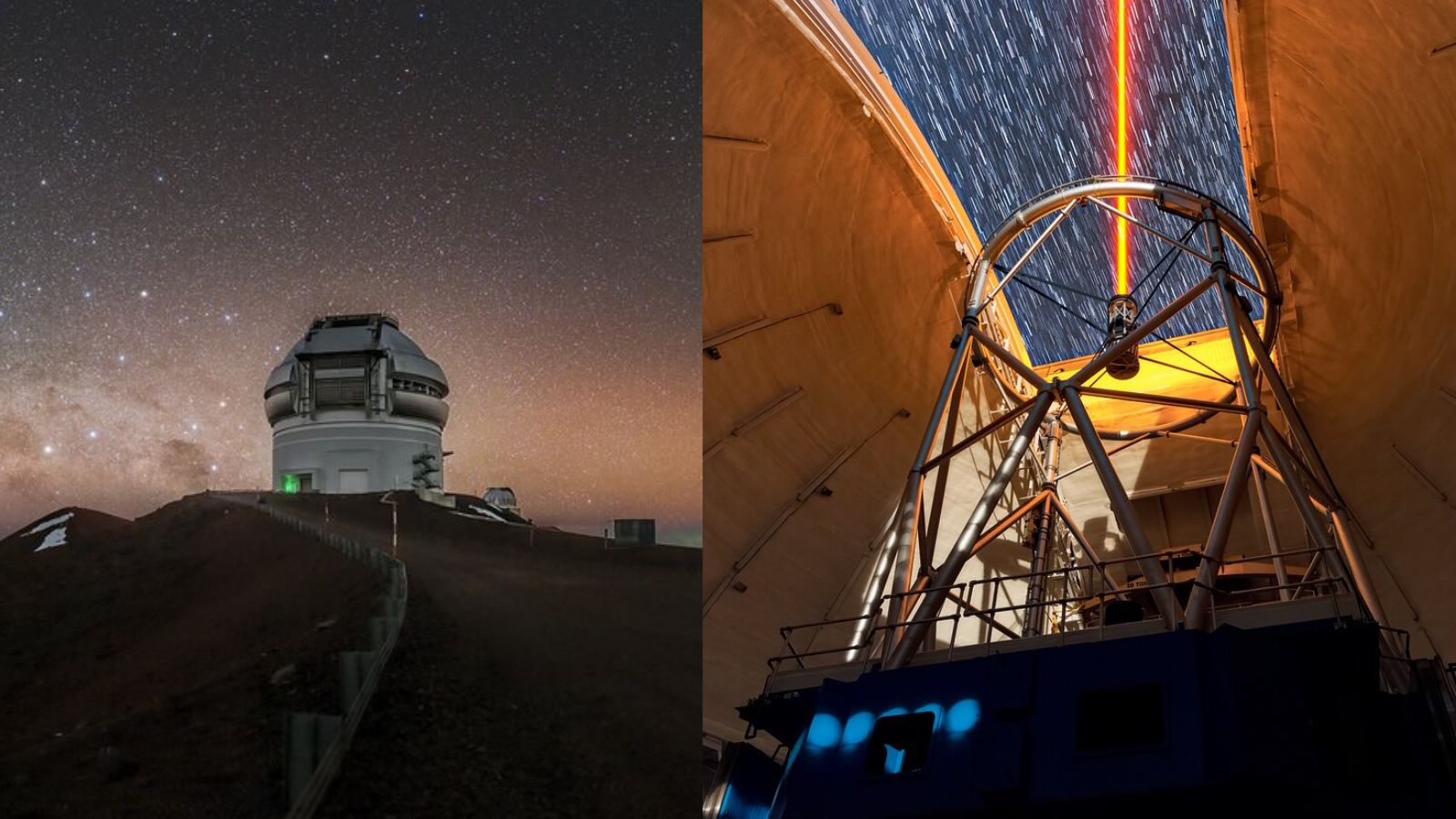 Photos of Gemini North Telescope. (source: NOIRLab)
Researchers captured the image of NGC 1514, named the Crystal Ball Nebula, with the Gemini Multi-Object Spectrograph. The spectrograph is an optical instrument that divides incoming light into its individual wavelengths and records the results in a spectrum using a detector. It is mounted on the Gemini North telescope atop Maunakea, a dormant volcano in Hawaii.
The nebulae are huge, glowing clouds of gas and dust floating in space. The planetary nebulae were formed when dying stars cast out their outer layers, which created a region of dust and gas across the star’s core, a white dwarf. This nebula is unique as it includes two stars. The first star is ejecting its outer layers, while the second, by orbiting around it is stirring the expanding gas and sculpting it into the nebula’s stunning, cloudlike shapes, which is similar to the way of making spun cotton candy out of sugar.
The nebula’s striking colours derive from a filter that separates specific wavelengths of light. The reddish colour tallies to hot hydrogen; the vibrant blue to hot oxygen. These gases are amply produced by planetary nebulae.
Not chosen for science but for beauty
“It’s a way to share with people just how amazing our universe is, so the nebula was not a science target; it was one that was chosen just because it looks really cool,” said Rector, a member of the National Science Foundation’s National Optical-Infrared Astronomy Research Laboratory.
Why scientists keep watching
Nebulae have a short dying phase, which is about 10,000 years, that allows scientists to observe them as they are nearing the end of life.
“I’ve seen many images, and at some point, you think, I probably have seen most of it, and then you get something like this and oh my god, it’s spectacular again,” said Astronomer Jan Cami of Western University.
The term “planetary nebula” was coined by the German-British astronomer, William Herschel, who first captured NGC 1514 back in 1790.
Story continues below this ad
(This article has been curated by Seekriti Saha, who is an intern with The Indian Express.)


















![New Japanese convenience store rice balls taste like instant noodles [Taste test]](https://soranews24.com/wp-content/uploads/sites/3/2026/09/0_c8e809.jpg?w=1200&h=630&crop=1)





 English (US) ·
  French (CA) ·
  French (FR) ·