

 1 month ago
28
1 month ago
28
PROTECT YOURSELF with Orgo-Life® QUANTUM TECHNOLOGY
Orgo-Life the new way to the future Advertising by AdpathwaySince the 2021 military coup, Myanmar’s economy has foundered. The number of tourists and other visitors has fallen dramatically. Most foreign residents have fled the ensuing civil war. Given the shortages of goods and the sky-high prices, including for staples, most locals are finding it difficult to scratch out a living. Faced with this dire situation, it appears that some art dealers and black marketeers are ramping up the trade in illegal and counterfeit goods. This is not a new phenomenon, but the heightened level of criminal activity in Myanmar today has given rise to a saying among collectors of Burmese artifacts and other artworks: if it looks like a bargain, it is most likely bogus.
Antiquities
Burma boasts a rich artistic tradition, based mainly on Buddhism, the country’s diverse ethnic communities and its abundant natural resources. Despite the ravages of the Second World War, when Myanmar (then known as Burma) suffered two invasions, and the later depredations of countless insurgent groups and criminal gangs, there were still many public monuments to traditional arts and crafts when General Ne Win seized power in 1962. These statues, carvings, paintings, silverware, ceramics and other precious artworks, however, were vulnerable to thieves and smugglers. Gem extraction and related industries (including jade mining) were open to exploitation by armed groups.
Under Ne Win, the purchase and export of Burmese antiquities was illegal. Newcomers to the small foreign community in Rangoon (now Yangon) were told that, if they wanted to buy an antique Buddha, or something similar, they would be better off doing so in Bangkok, rather than in Rangoon or Mandalay. In the Thai capital, there were stores filled with Burmese artworks that had been smuggled over the border. Not being from Thailand, and thus not subject to strict Thai laws against cultural theft and abuse of the kingdom’s religion, such items could be sold openly to foreigners and shipped overseas.
That said, Burmese antiquities were also available in Myanmar itself. There were black marketeers who, at a price, could find almost anything that was wanted. During the Ne Win era (1962–1988), for example, diplomats posted to Rangoon were able to fill their houses with Buddha images, traditional carvings and other objets d’art. After the 1988 uprising, and the relaxation of visa restrictions, foreign businessmen and tourists joined in the free-for-all. Helped by the payment of “tea money” to the right officials, they were able to ship their acquisitions home at the end of their stay, either for display or resale.
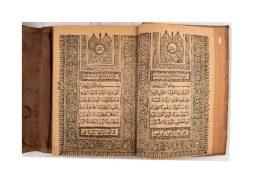
This trade was quite brisk, encouraging Burmese smugglers (and Thai shopkeepers) to maintain a lively traffic in stolen goods. It helps explain the fact that museums in places like the United States, United Kingdom, Germany, France and Australia now have collections of rare and beautiful Burmese antiquities. High-end design magazines like Architectural Digest and Elle Décor occasionally feature photographs of sumptuous houses, with Burmese artwork prominent in the background. Gilded Buddha images (some life-size), woven kalaga tapestries and framed kammavaca religious texts are clearly considered fashionable domestic decorations by so-called celebrities and other wealthy society figures.
After 1988, the new military government made some effort to restrict the trade in cultural contraband but, as the journalist Robert Bociaga found when he visited Yangon in 2023, it never really stopped.In 2025, the state-run Global New Light of Myanmar tried to raise public awareness, by calling on Myanmar citizens to “cultivate a spirit of valuing and preserving cultural heritage as part of their national duty”. Official agencies were encouraged to take a greater interest in the problem. The 2021 coup, however, effectively ended measures to enforce the relevant laws and regulations. Indeed, the breakdown in civil order seems to have encouraged exploitation of the system’s weaknesses.
For every genuine antique on sale in Myanmar, however, there are now plenty of fakes, as local traders and foreign dealers try to capitalise on the global demand for distinctive pieces of traditional Myanmar culture. There is an entire industry turning out fake religious statues, carvings and other collectibles. To those opposed to the looting of the country’s art treasures, this is not seen as a particularly bad thing, as it means that real artworks are less likely to be stolen and smuggled out of the country, for sale on the international market. To the foreigners intent on acquiring such artifacts, however, particularly inside Myanmar, it is a case of caveat emptor, or “buyer beware”.
One scam dates from 1975, when a 6.5 magnitude earthquake severely damaged more than 500 pagodas and temples in the ancient capital of Pagan (now Bagan). Fake metal Buddha statues and folk figurines had always been around, but after the earthquake the number of such items on offer to collectors greatly increased. Traders claimed that the earthquake had revealed caches of old bronzes and other votive offerings deposited when the religious structures were built, between the 11th and 13th centuries. It was true that a few original items were uncovered at the time, but most in circulation had been quickly knocked out by local blacksmiths and passed off as genuine to gullible tourists.
To take another example, ever since the American actor Lauren Bacall revealed that she possessed two bronze Karen frog drums (pa zi), foreigners in Myanmar have been keen to acquire one, either for display or to use as a novel coffee table. However, genuine examples were rare and expensive (up to US$8,000 each). To satisfy this market, shrewd craftsmen in Mandalay started making imitations. They melted down scrap metal like truck springs and old nails, then poured the result into moulds fashioned from carved petroleum wax and clay. To give the fake drum the appropriate patina, they buried it in the garden and asked family members to urinate over that spot for a couple of months.
One item that has become notorious for the number and range of fakes being sold is so-called “opium” weights (known in Burmese as a le). It has been speculated that the earliest examples date back to the Pagan era. They may have once been used to weigh opium, but their more common use was to measure grains, spices or metals. The weights came in sets, were of varying sizes, and were usually made of bronze or brass. The most common were cast in the shape of a hintha bird (Brahmani duck), or a toe aung (horned lion). They are widely available in curio shops and market stalls in Myanmar but, as the Asian art expert Sylvia Fraser-Lu has noted, “because of their popularity with tourists, fakes and reproductions of opium weights abound”. Some replicas are quite convincing.
Imitations
The antiquities market has not been the only area plagued by fakes and imitations. Even in more legitimate areas of trade, there has been an apparent increase in attempts to trick customers with fraudulent goods. This has not only been prompted by economic circumstances but also advances in technology and the creation of new materials.
To take one obvious example, Myanmar’s rubies are famous the world over. Most of the trade is controlled by the official Myanmar Gems Enterprise, which covets the foreign exchange made from international sales. Also, some good stones are smuggled out to places like Hong Kong and Bangkok. The rubies on public sale in Myanmar itself tend to be pretty ordinary, and have often been heat-treated to give them the characteristic “pigeon-blood red” colour of higher-quality gems. There are also glass, garnet or spinel “rubies” on sale. “Burmese rubies” are plentiful in Thailand, but some are synthetic stones made in a laboratory. Such creations are often accompanied by false certificates, stating that they are from well-known Myanmar gem mining centres like Mogok.
There are two types of jade found in Myanmar, jadeite and nephrite. They differ greatly in quality and price. The best jadeite is known as imperial jade, which has a deep, rich green colour and a high degree of translucency. However, it can be very expensive. Cheaper pieces are available but many items on sale have been treated to mislead the customer. For example, some have been bleached with acid and impregnated with polymer resin to improve their colour and texture. Others have been dyed to enhance their appearance. There are also fakes made from quartzite or glass. Some pieces sold as imperial jade are in fact made from nephrite, which can still be attractive (as light coloured “mutton fat” jade, for example), but should demand lower prices.
Myanmar is justly famous for its amber. Known as burmite or Kachin amber, it is found mainly in the far north of the country. The prehistoric resin of trees, many pieces contain small invertebrates like mosquitos, or fragments of extinct animals. These deposits have been commercially exploited since the first century AD, when dark orange and red amber (known as payin) was exported to China and elsewhere. However, here too there are fakes aplenty. Occasionally, pieces are softened and small insects inserted, to give them a greater sense of authenticity (and a higher asking price). Fragments are sometimes fused together to make larger, more attractive pieces. Also, bracelets and necklaces made from coloured plastic, glass or resin are sold in Myanmar’s markets, described as local amber.
Myanmar’s pearls too have been gathered and exported for thousands of years. The “gold” and “silver” varieties have been described by some experts as “the best quality pearls in the world”. Reputable dealers usually offer certification documents, sourcing such pearls to Myanmar’s Myeik (formerly Mergui) Archipelago in the Andaman Sea. However, in recent years, the market has been flooded with fakes. Usually made of glass or plastic, they lack the texture and lustre of the genuine article. They are also much cheaper than natural Burmese pearls, which are now becoming more difficult to find. Also, cultivated Chinese pearls (grown in freshwater mussels) are sometimes sold as Burmese sea pearls. There are also fake seed pearls, made from powdered oyster shells.
As might be expected in a country famous for its herds of elephants, ivory carving has long been a traditional craft in Myanmar, known as sinswe pan pu. Yet here too fakes are becoming more common. Myanmar does not permit wild elephants to be hunted, which makes genuine ivory tusks rare. Also, in 1997 the Myanmar government joined the Convention on the International Trade in Endangered Species of Wild Fauna and Flora and many ivory workshops were forced to close. There is still a modest trade, based on ivory from privately-owned elephants that have died from natural causes, but more often oxen or buffalo bone is used as a substitute. Carvings made from resin can also be found. Cracks are artificially added to give the impression of old age, and a false patina added by soaking the carving in a concoction of boiled tea and tobacco leaves.
A more recent development has been the proliferation of forged paintings by famous Burmese artists. From small beginnings in the 1970s, the market for European styles of visual art in Myanmar ballooned with the influx of foreign residents and tourists.This coincided with the advent of a mixed civilian-military government in 2012, and the lifting of various sanctions after Aung San Suu Kyi’s quasi-democratic administration took office in 2016. The country soon became awash with forged art. It included oil paintings and water colours supposedly by popular contemporary artists like U Marlar and U Win Pe, but examples also covered earlier periods. Some fakes claimed to date back to the British colonial era, when well-known figures like Sayar Chone and U Ba Nyan produced a range of accomplished paintings. Such forgeries have realised high prices.
It is worth noting too that, for nearly 100 years, there has been a lively trade in forged Burmese postage stamps. Following the Second World War, for example, Japanese occupation period stamps, which included pre-war British definitives over-stamped with various peacock devices, were in great demand in global philatelic circles. It was not long before enterprising Burmese and Indian traders started to produce their own versions for sale to collectors. Stamps produced by the independent government of Burma in 1943 have also been copied and passed off as genuine to stamp collectors around the world.A few other wartime postal items, such as envelopes postmarked “Chin Hills” (a remote district never occupied by the Japanese), are exceedingly rare and can fetch up to US$5,000 at auction. This has encouraged the creation of yet more fakes.
Artworks
Ironically, if it is simply an example of traditional Burmese culture and craftmanship that is wanted, then there is no need to run the risk of breaking the law or losing money on a fake artwork. There is a much simpler, safer and cheaper solution.
Myanmar prides itself on its “ten flowers” (pan se myo), namely the ten arts and crafts which have been the backbone of its national culture and aesthetic since at least the 10th century. These include the arts of drawing and painting (pan chi), sculpture (pun put), blacksmithing (pan be), lacquerware (pan yun), wood working (pan bu), masonry and bricklaying (pan yan), stucco relief (pan taut), stone carving (pan tamaut), gold and silver working (pan dein) and bronze casting (pan din). Other occupations sometimes mentioned in this context include puppet making, tapestry and longyi (sarong) weaving, ivory carving, gem cutting and pottery.
Most of these professions are still widely practised in Myanmar, and usually to a high standard. In 2020, the main ten were celebrated by a special issue of postage stamps. In 2025, the entire set of stamps was re-issued by Myanmar Post as a special souvenir sheet.
Given the survival of such skills, it is possible to buy modern artworks in Myanmar that are close to the real antiques. There are artists who can produce, on demand, exact copies of historical artifacts. They often use the same tools, the same techniques, and the same materials, as the originals. There are neighbourhoods in Mandalay, for example, that specialise in carving teak nat (spirit) figures and sculpting alabaster Buddha statues. The old capital is also home to gold-leaf workshops that mimic centuries-old techniques. Bagan still hosts numerous lacquer factories, where items like tsun-ok offertory bowls and kun-it betel boxes are still produced in the time-honoured manner. Shan State is renowned for tapestry and longyi weaving, and Inle Lake is famous for its pottery.
If a foreigner (or local collector) wished to acquire a fine example of traditional Burmese arts and crafts, it is a relatively simple matter (or used to be, before the civil war intervened) to visit these places and buy a facsimile of an antique, or a modern variation on an old theme. Some items can even be made to order and, if preferred, artificially aged, before being sent abroad to grace a foreign home or office. Granted, such items would not be genuine antiques, but they would be so close to the original that very few casual visitors would be able to tell them apart from an illegally acquired national cultural treasure smuggled out of Myanmar at great cost by an unscrupulous dealer.











 English (US) ·
  French (CA) ·
  French (FR) ·