

PROTECT YOURSELF with Orgo-Life® QUANTUM TECHNOLOGY
Orgo-Life the new way to the future Advertising by Adpathway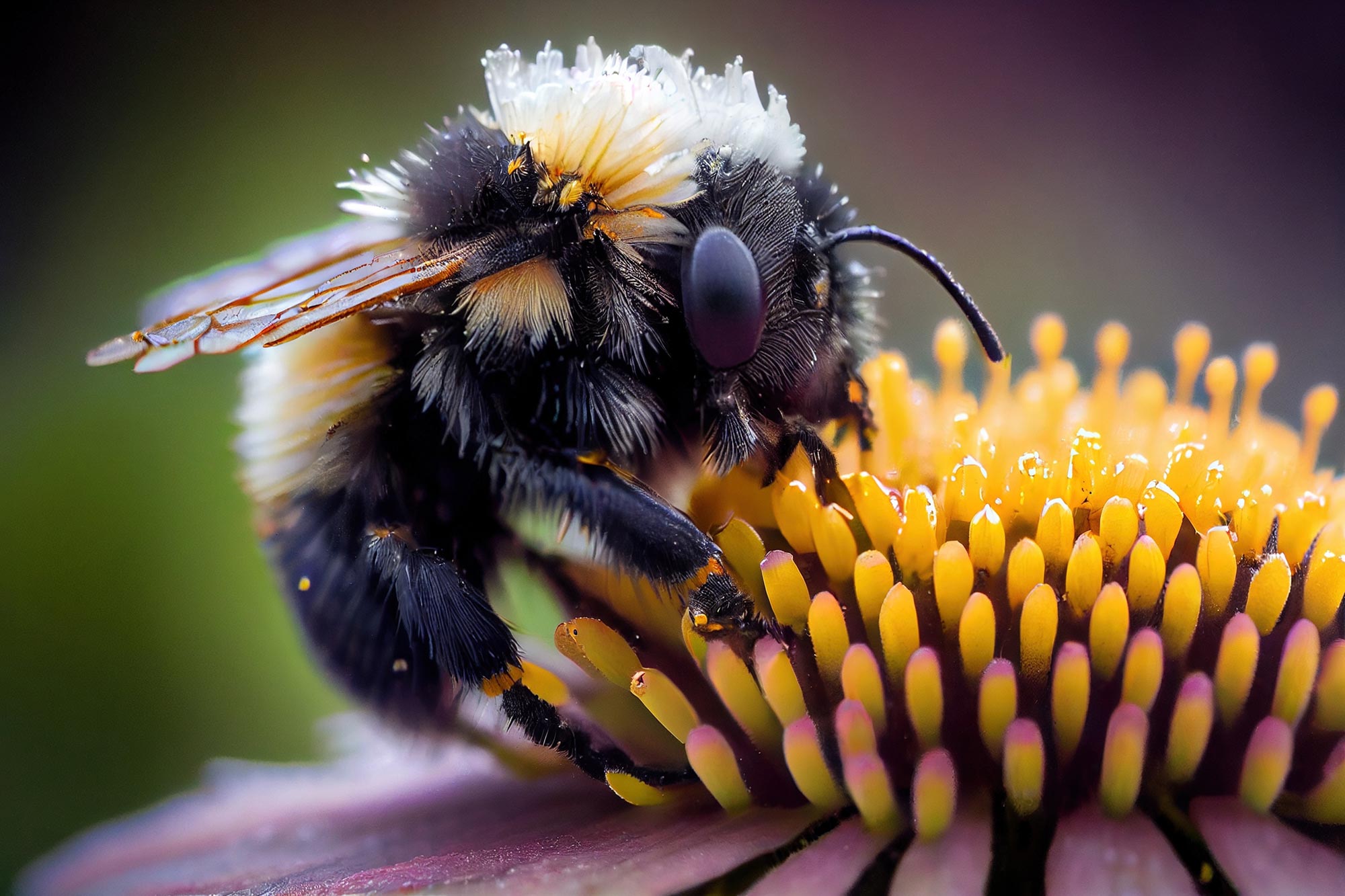 Bumblebees (Bombus) are social insects known for their fuzzy bodies, distinctive buzzing, and vital role in pollinating wildflowers and agricultural crops. Despite their tiny brains, they possess impressive cognitive abilities, including complex learning, spatial memory, problem-solving, and flexible decision-making. Credit: Shutterstock
Ancient neural circuits in insects may hold unexpected clues to how intelligence evolved.
Bumblebees can solve unfamiliar problems, learn complex skills by watching others, and even transmit emotion-like states to their nestmates. They accomplish all this with fewer than a million neurons, challenging the long-standing assumption that sophisticated intelligence requires a large brain.
In a new Perspective published in Science, researchers Lars Chittka and Stanley Heinze examine growing evidence that advanced cognitive abilities may emerge through evolutionary modifications to ancient neural circuits.
Remarkable Intelligence in Tiny Brains
In one experiment, bumblebees learned to move a ball and climb onto it to reach an otherwise inaccessible source of nectar. They could even guide the ball toward a target that was no longer visible, suggesting an ability to mentally represent goals and solve unfamiliar problems.
Another study published in Nature found that bumblebees could learn to open a two-step puzzle box by observing trained nestmates, even though none independently discovered the solution.
Bumblebees also appear capable of transmitting emotion-like states. After receiving an unexpected reward, bees displayed an optimism-like bias when interpreting ambiguous stimuli. Other bees developed a similar bias simply by observing them through a transparent barrier, without physical contact or chemical communication.
Ancient Brain Circuits May Explain Complex Thinking
“The remarkable cognitive abilities of bees may not have required them to evolve entirely new neural algorithms,” Chittka and Heinze write.
One possible explanation lies in the mushroom bodies, insect brain structures involved in learning and memory. Bumblebees possess approximately 50 times as many specialized neurons called Kenyon cells as fruit flies, giving them greater memory capacity. Additional circuits involved in navigation and decision-making may also allow bees to weigh multiple goals and plan their actions.
“More broadly, higher cognitive processes could have evolved many times and might be more widespread than previously thought,” the authors write.
Uncovering the Origins of Intelligence
Scientists have already produced a complete wiring diagram, known as a connectome, of the fruit fly brain. Similar efforts are underway in several bee species. Comparing these neural networks could reveal which evolutionary changes enable sophisticated cognition.
“It seems likely that, just like between birds and mammals, different neural solutions might have evolved to produce similar cognitive traits in different insects,” write the authors. “Both shared and distinct solutions that shape the cognitive abilities of animals might emerge as general principles, and some might apply to both vertebrates and invertebrates.”
Reference: “Bumble bee cognition” by Lars Chittka and Stanley Heinze, 19 November 2026, Science.
DOI: 10.1126/science.aek1724
Never miss a breakthrough: Join the SciTechDaily newsletter.
Follow us on Google and Google News.
























 English (US) ·
 French (CA) ·
 French (FR) ·