

 2 months ago
73
2 months ago
73
PROTECT YOURSELF with Orgo-Life® QUANTUM TECHNOLOGY
Orgo-Life the new way to the future Advertising by AdpathwayBrunei is a boutique storefront in the $3 trillion global oil market.
The Southeast Asian nation’s amber-hued crudes are prized by refineries for their clarity and low sulfur content. A premium fuel like SLEB (Seria Light Export Blend) sells in small quantities but typically costs more than Brent crude, the industry benchmark.
Yet even Asia’s high-grade crudes were not immune to the energy market’s wild swings in March and April, a reaction to the Strait of Hormuz blockade.
Brunei’s “light sweet” crude prices are pegged to Malaysia’s Tapis, a regional benchmark. In April, Tapis was trending slightly above $100 a barrel while the cheaper Brent crude soared to an 18-year high of $141 on the spot market.
The light sweet market “flipped to a discount,” noted a report from the Organization of the Petroleum Exporting Countries.
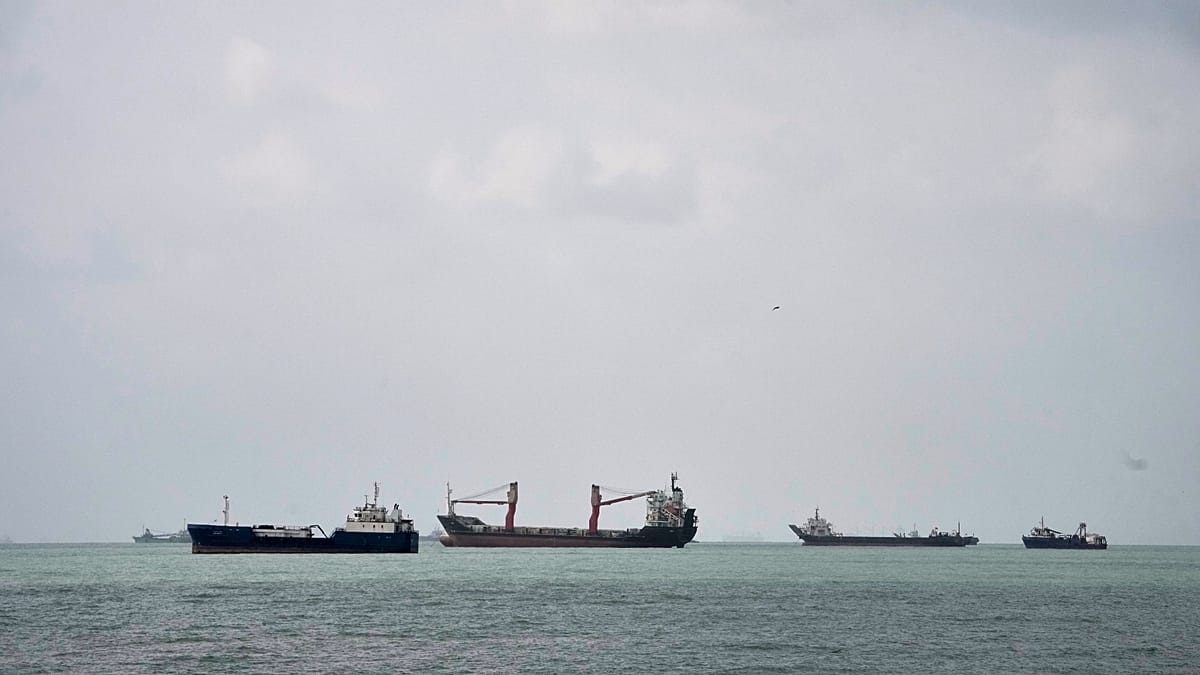
Price volatility, coupled with a global fuel crisis, triggered a surge of orders for light crude oils. Brunei exported 105,000 barrels per day in April, the highest level in five years, according to Kpler, a Brussels-based data company that tracks commodity flows. The Star, a Malaysian newspaper, labeled Brunei one of the energy “winners” of the Persian Gulf conflict.
Nearly 70 percent of Brunei’s April oil exports were shipped to Thailand. Refineries took advantage of the price flip in premium crude even as officials in Bangkok struggled to procure supplies from the United States and Brazil to ease the country’s fuel shortage. Thailand is heavily dependent on Middle Eastern oil, with 50 percent of its imports transiting the Strait of Hormuz.
“We are, of course, advocating for diversifying,” said Kaja Kallas, while on a visit to Brunei in April. The EU’s foreign policy chief was co-chairing the biennial meeting of the Association of Southeast Asian Nations (ASEAN) and European Union (EU) foreign ministers. She urged the region’s oil importers to reconsider purchasing Russian crude amid the fuel crisis, arguing that windfall profits could prolong Moscow’s war against Ukraine. The EU and ASEAN are not always aligned on this issue, but her point on diversification may have resonated with representatives of the 11-member bloc.
Brunei is a regional pioneer in oil exploration. The first oil wells were discovered in the late 1800s when the area was a British protectorate. By 1929, commercial drilling commenced at the Seria oil field, which has famously produced a billion barrels of crude.
The Sultanate of Brunei Darussalam has a lot in common with the Persian Gulf monarchies, including substantial energy reserves, popular royals, and adherence to Islamic law. In early June, Sultan Hassanal Bolkiah appointed his 34-year-old son to the post of foreign minister. The oil wealth is distributed across a population the size of a small city: the per capita GDP of about $36,000 is double that of neighboring Malaysia and comparable to incomes in Kuwait.
Brunei’s oil production peaked at 221,000 barrels per day in 2006. “The upstream oil and gas sector – which accounts for 80 per cent of total exports and government revenue – will continue to shrink as offshore oil and gas fields mature in the coming decades,” wrote an economist at AMRO, an ASEAN-affiliated organization in Singapore.
A decade ago, some petroleum experts were predicting the demise of Brunei’s oil industry. However, the smallest ASEAN nation appears to be more stable at the moment than some of its Persian Gulf peers. Australia is a reliable purchaser of Seria light blends. Thailand and Indonesia are growing markets, refining low-density crudes into products like aviation fuel.
On March 31, the global price for jet kerosene hit an all-time high of $240.50 in the Singapore spot market.
Brunei’s niche in light crude oil looks fairly secure.

![New Japanese convenience store rice balls taste like instant noodles [Taste test]](https://soranews24.com/wp-content/uploads/sites/3/2026/09/0_c8e809.jpg?w=1200&h=630&crop=1)





 English (US) ·
  French (CA) ·
  French (FR) ·