

 2 hours ago
3
2 hours ago
3
PROTECT YOURSELF with Orgo-Life® QUANTUM TECHNOLOGY
Orgo-Life the new way to the future Advertising by AdpathwayAmid mounting concerns over the impact of social media on children’s mental health and safety, Apple has introduced a new suite of features to ensure parents can easily manage the content their children can see, who they can communicate with, and when they have access to apps.
These new child safety features were first previewed by the iPhone-maker at the opening keynote of its Worldwide Developers Conference (WWDC) 2026 in Cupertino, California, United States, on Monday, June 8. They include Ask to Browse, Time Allowances, and a redesigned Screen Time, which will arrive as part of Apple’s new Child Accounts setup that automatically enables safeguards across the system and can be tailored to the child’s age.
Creating a Child Account on Apple devices for children under age 13 is mandatory, with the option also available for children up to 18 years. Users will be able to access these features after downloading the Screen Time update in iOS 27, iPadOS 27, and macOS 27 to be released later this year.
It comes at a time when big tech companies such as Apple, Google, and Meta are facing scrutiny about privacy and child safety on their services. Countries such as Australia and Malaysia have moved to impose total bans on social media access for under-16 users, while others like India are reportedly exploring a more nuanced, graded approach to safeguarding young users online.
“Our approach to helping families create safer digital experiences is grounded in the belief that every child is unique. That’s why we build simple and intuitive tools, based on expert guidance, to let parents tailor their kids’ digital journey. Today, we’re introducing major updates to help families thoughtfully establish age-based protections and develop healthy digital habits,” Sumbul Desai, Apple’s vice president of Health and Fitness, said in a statement.
Parental controls under Child Accounts
Essentially, Child Accounts looks to give parents finer controls to limit children’s access to adult websites and only allow age-appropriate media while setting up age-based restrictions in the App Store.
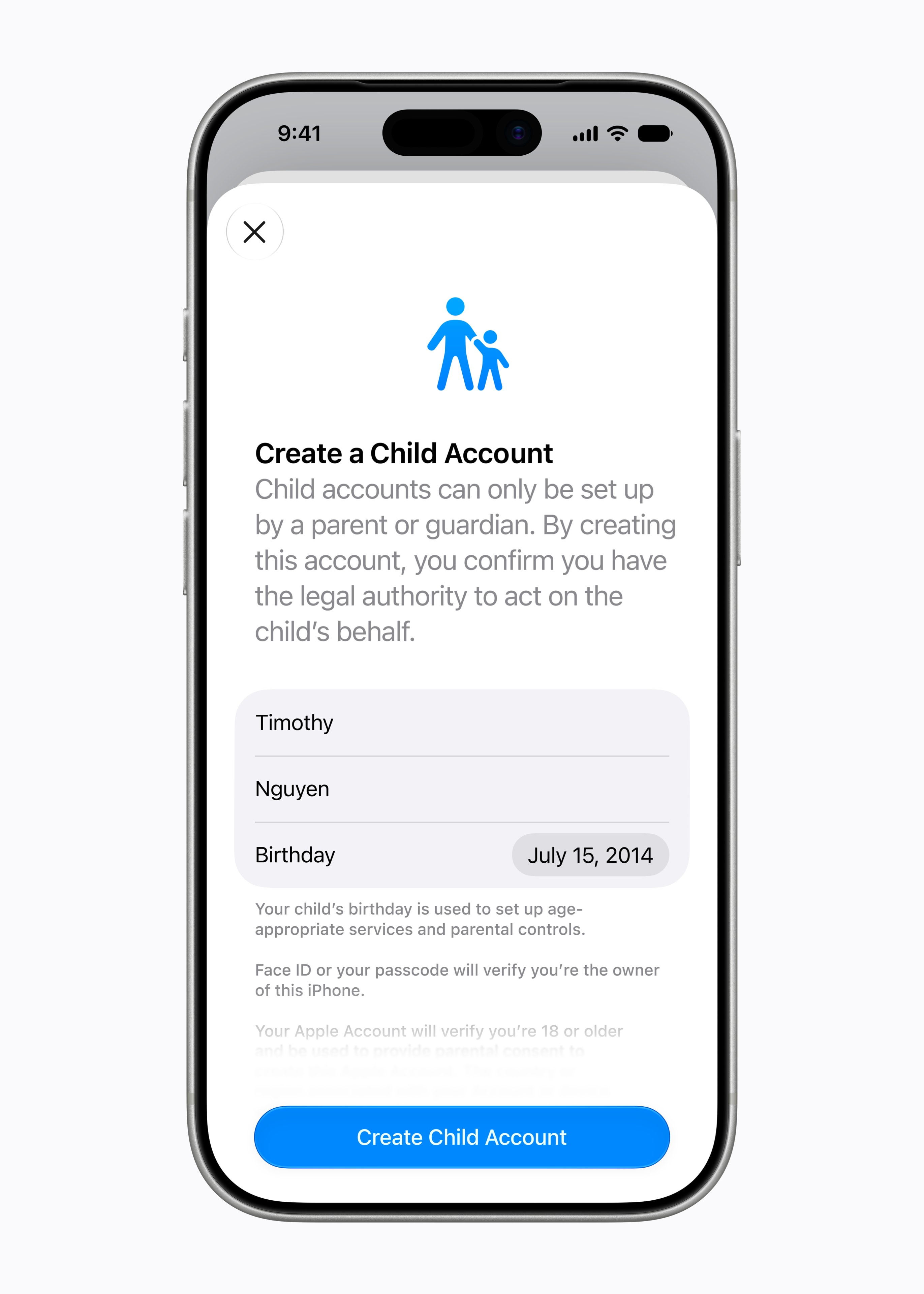 Setting up a Child Account, required for children under age 13 and available for children up to 18. (Image: Apple)
Once a Child Account is created, parents can start by choosing exactly which apps their children can access on their device based on what they feel is appropriate for their child. They also have the option to gradually add more apps to the list over time. Child Accounts also offers additional controls such as:
Story continues below this ad
-Ask to Buy, which enables parents to require that their child get their approval before downloading a free or paid app from the App Store or making an in-app purchase.
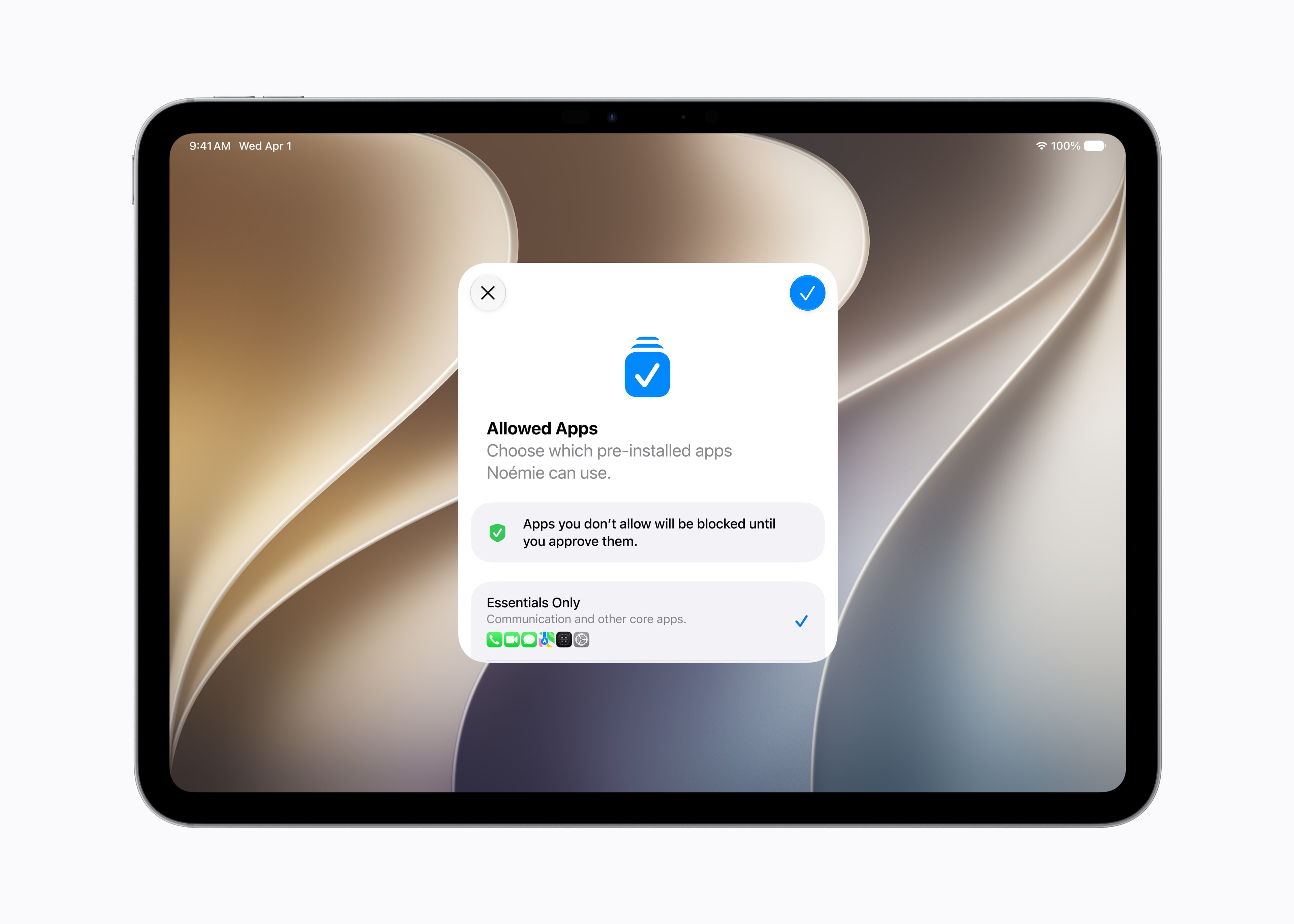 Allowed apps for Child Accounts. (Image: Apple)
-Ask to Browse, which allows parents to require that kids ask permission to access a new website in Safari browser. This feature is supported on iPhone, iPad, and Mac.
-Ask to Approve: When new contacts text, call, or Facetime a designated Child Account, parents can require their kids to ask for approval before connecting with anyone new.
-New content filters: Gore or violent content is blocked when detected in shared images or videos sent to Child Accounts. This builds on existing filters that automatically blurs nudity when detected in Messages and FaceTime calls, and is turned on by default for under-18 users.
Story continues below this ad
-Time Allowances: It gives parents ways to manage the time their kids spend in apps across categories, including Entertainment, Games, and Social Media. Apple will suggest Time Allowances to the parent that is tailored to a child’s age. Parents can also set daily Schedules to manage which apps their children have access to at different times of the day and week, such as before, after, and during school.
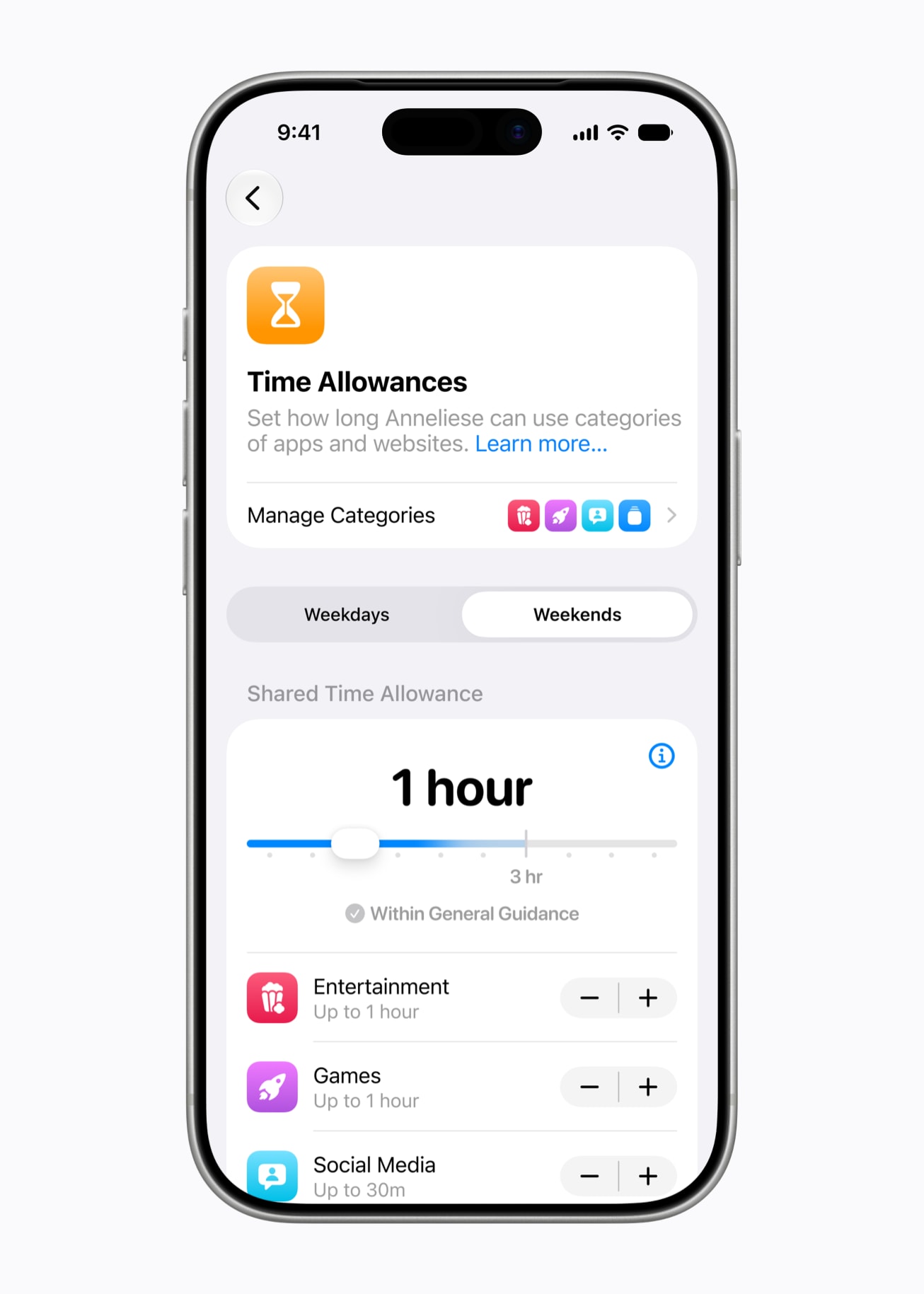 Time Allowances for Child Accounts. (Image: Apple)
-Redesigned Screen Time: Parents can now view their kids’ average device usage and most used apps in a simpler setup. They can also more easily make adjustments to their kids’ access to apps and the web based on the data.
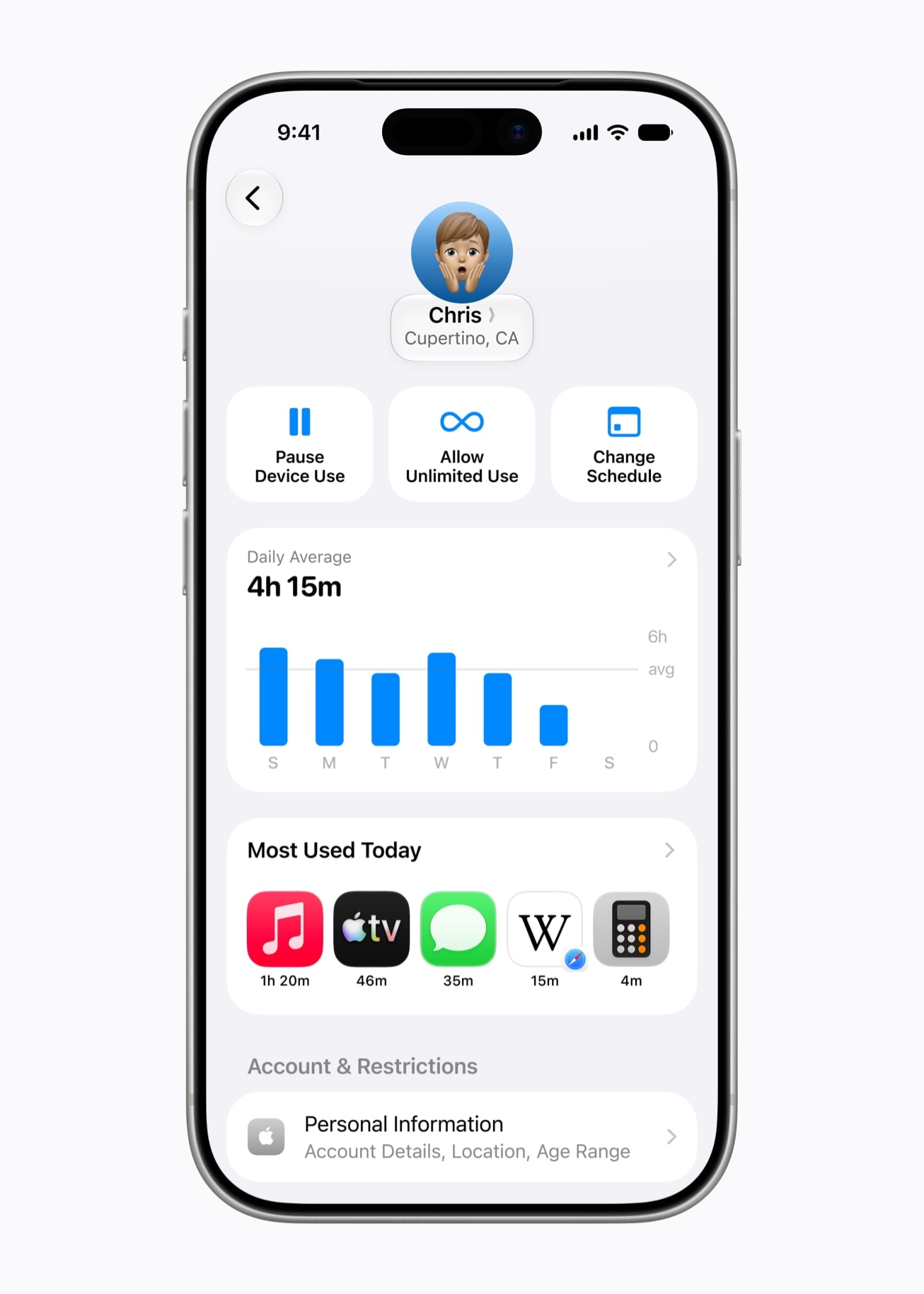 Redesigned Screen Time dashboard for Child Accounts. (Image: Apple)
In addition to these features, Apple said it is working with the American Academy of Pediatrics (AAP) to adapt its Family Media Plan into a guide parents can reference when using Apple products.
It has also launched a dedicated website that features the latest tools, helpful resources, and answers to common questions. Apple’s set of existing child safety tools include Screen Time Passcode Notifications, which alerts parents when their Screen Time passcode has been entered on their child’s device, Schooltime Mode for blocking notifications and disabling apps during school hours, and user reporting tools.
Story continues below this ad
Apple Watch upgrades also make it possible for parents to reach their child and identify their location via Find My, while kids can also connect with family and friends through phone calls and messages.
Battle over age-verification
Apple’s requirement that under-13 users need to have Child Accounts is interesting, considering the company’s stance against online age-verification. It is unclear how exactly Apple will determine the age of users and enforce this rule. But the question of who is responsible for verifying users’ ages and getting parental consent for minors to download apps on their devices is a contentious one, and has previously led to a behind-the-scenes clash between Apple and Google and tech rivals such as Meta.
The Facebook and Instagram-owner has argued that requiring app stores to check ages is the only effective way to enforce limits. However, Apple and Google, which own the largest app stores in the world, have argued that verifying the age of minors could entail mass collection of children’s birth certificates and other sensitive documents.
In addition, age verification laws and requirements have garnered opposition from groups that advocate for digital privacy and free speech such as the Electronic Frontier Foundation. The group has argued that it is impossible to ensure platforms do not retain user data gathered for age-verification, and that age-verification requirements raise serious privacy and free expression concerns.

























 English (US) ·
  French (CA) ·
  French (FR) ·