

 9 hours ago
3
PROTECT YOURSELF with Orgo-Life® QUANTUM TECHNOLOGY
Orgo-Life the new way to the future Advertising by AdpathwayOrganizations face an ever-shrinking window to respond to cyber threats. Tasks that once required months of manual analysis and preparation can now be accomplished in a matter of days thanks to artificial intelligence (AI)—a dual-use technology rapidly expanding the capabilities of both cybersecurity defenders and cybercriminals.
A prime example is the discovery of PHP2Shell, a set of critical vulnerabilities in PHP, a programming language powering a vast share of the internet. In October 2026, these flaws were uncovered with the assistance of advanced AI models and carry the potential to impact nearly 70% of websites worldwide.
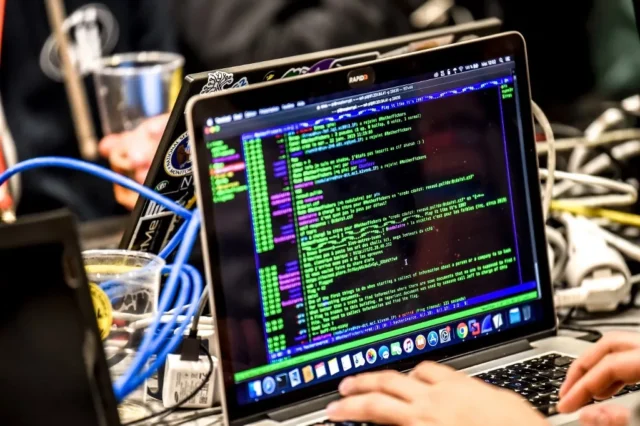
Even more concerning, the vulnerable code had remained hidden for more than ten years. Using AI, a single researcher completed in just one week an analysis that would have traditionally required months of work from a specialized security team.
For José Amado, AI Security Manager at SISAP, this discovery underscores how artificial intelligence is accelerating capabilities on both sides of the digital battlefield.
“Artificial intelligence is changing the time we need to find a vulnerability, as well as the time we have to react. A flaw that remained hidden for years can become an immediate threat the moment someone figures out how to exploit it. This capability is not exclusively in the hands of those protecting systems; it can also be leveraged by attackers,” Amado noted.
Response Speed Becomes the Critical Bottleneck
Uncovering a software vulnerability is only the starting line. Once identified, a race against the clock begins to patch the flaw before threat actors weaponize it.
In the case of PHP2Shell, a cloud service provider detected an exploitation attempt on October 17—four days before PHP released its official security patch on October 21. Shortly afterward, new exploitation methods emerged within hours, triggering larger-scale malicious activity.
Broader industry benchmarks confirm this dramatic compression of reaction timelines:
- Faster Exploitation Windows: The M-Trends 2026 report estimates that the average time to exploit vulnerabilities dropped from 63 days in 2018 to under seven days in 2025. Similarly, the 2026 Data Breach Investigations Report (DBIR) confirms that vulnerability exploitation timelines compressed from 63 days in 2018 to seven days in 2025.
- Slower Patching Cycles: The 2026 DBIR identifies vulnerability exploitation as the leading initial access vector in breaches analyzed during 2025. At the same time, the median time organizations took to complete patch installations actually increased from 32 to 43 days.
This widening gap exposes a severe operational vulnerability: while attackers can weaponize a flaw in less than a week, internal corporate remediation processes often take more than a month.
Prioritizing Patches by Active Risk
According to Amado, these figures highlight the urgent need for organizations to prioritize security updates based on real-world exposure and active attacker behavior rather than routine maintenance schedules.

“Installing a patch can no longer be treated as a task handled whenever spare time is available. Organizations need to identify which vulnerabilities are actively being exploited, determine which ones pose the greatest risk to their operations, and act accordingly. If a threat can be leveraged within days, waiting several weeks to fix it leaves an exposure window that is far too wide,” Amado warned.

- Advertisement -





















 English (US) ·
 French (CA) ·
 French (FR) ·