

PROTECT YOURSELF with Orgo-Life® QUANTUM TECHNOLOGY
Orgo-Life the new way to the future Advertising by Adpathway Chocolate may be a beloved treat enjoyed worldwide, but its future is increasingly uncertain. Disease, rising temperatures, and shifting weather patterns are threatening cacao harvests, putting pressure on the global chocolate supply and the millions of farmers who depend on it. Credit: Shutterstock
A change to just two DNA letters reduced disease in cacao by about 42% under laboratory conditions, suggesting a possible way to protect future chocolate harvests.
Black pod disease is estimated to reduce cacao yields by roughly 30% worldwide, threatening the livelihoods of farmers who grow the crop used to make chocolate. Shifting weather patterns and other environmental stresses are making production even more difficult. With millions of farmers depending on cacao, these pressures are raising concerns about the future of the global chocolate supply.
Scientists at Penn State have developed a new variety of cacao that shows significantly improved resistance to black pod disease in laboratory tests. The researchers used gene editing and traditional breeding to strengthen the plant’s natural defenses, offering a potential way to reduce losses without introducing foreign DNA into the final plant. The promising results are now moving toward field testing and possible commercial production.
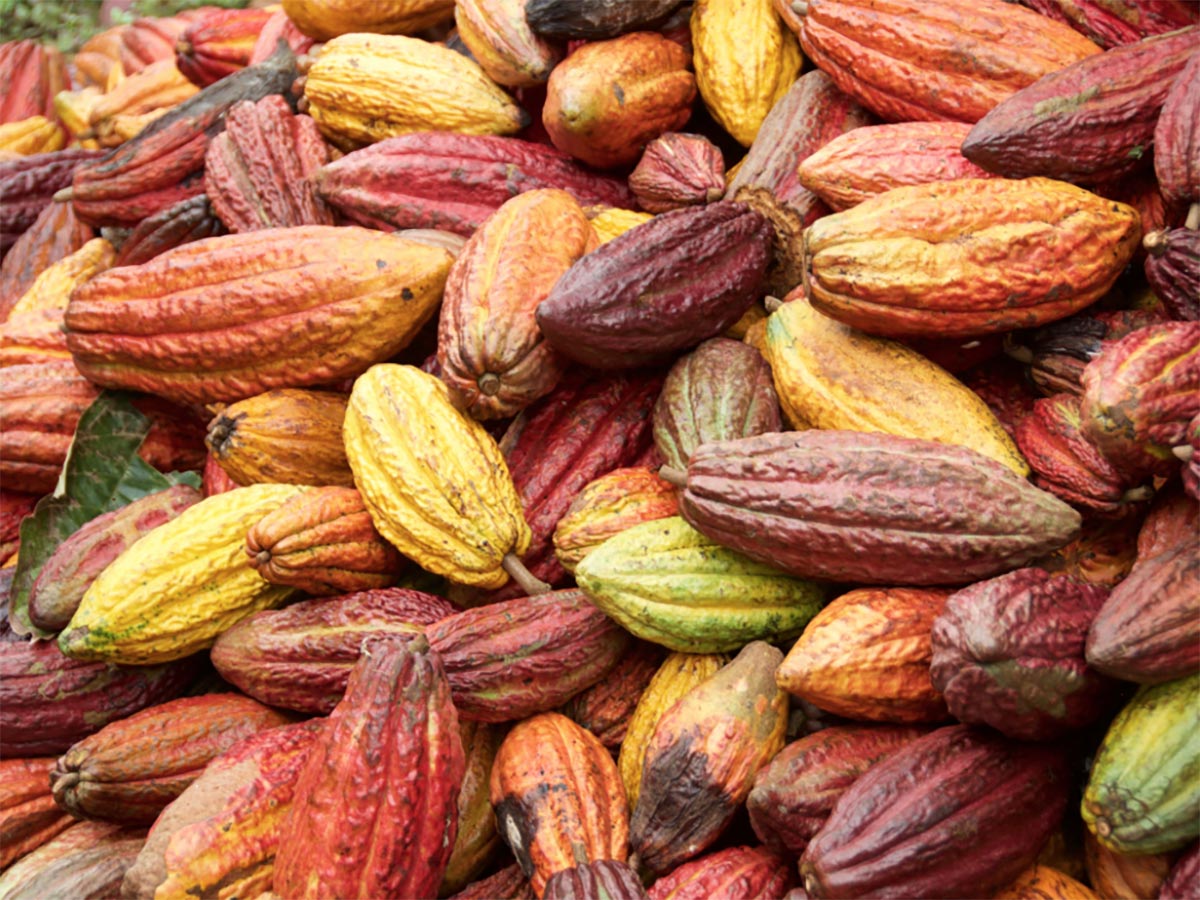 Just-harvested cacao pods display a range of vivid colors. Credit: Mark Guiltinan / Penn State
The work builds on decades of research led by Mark Guiltinan, the J. Franklin Styer Professor of Horticultural Botany and professor of plant molecular biology in the Department of Plant Sciences at Penn State’s College of Agricultural Sciences, and Siela Maximova, a research professor of plant biotechnology in the same department.
“For consumers, chocolate is something they expect to find on store shelves every day, but behind that product is a crop and industry facing significant challenges,” Guiltinan said. “Our goal is to develop tools that help growers continue producing cacao sustainably and profitably.”
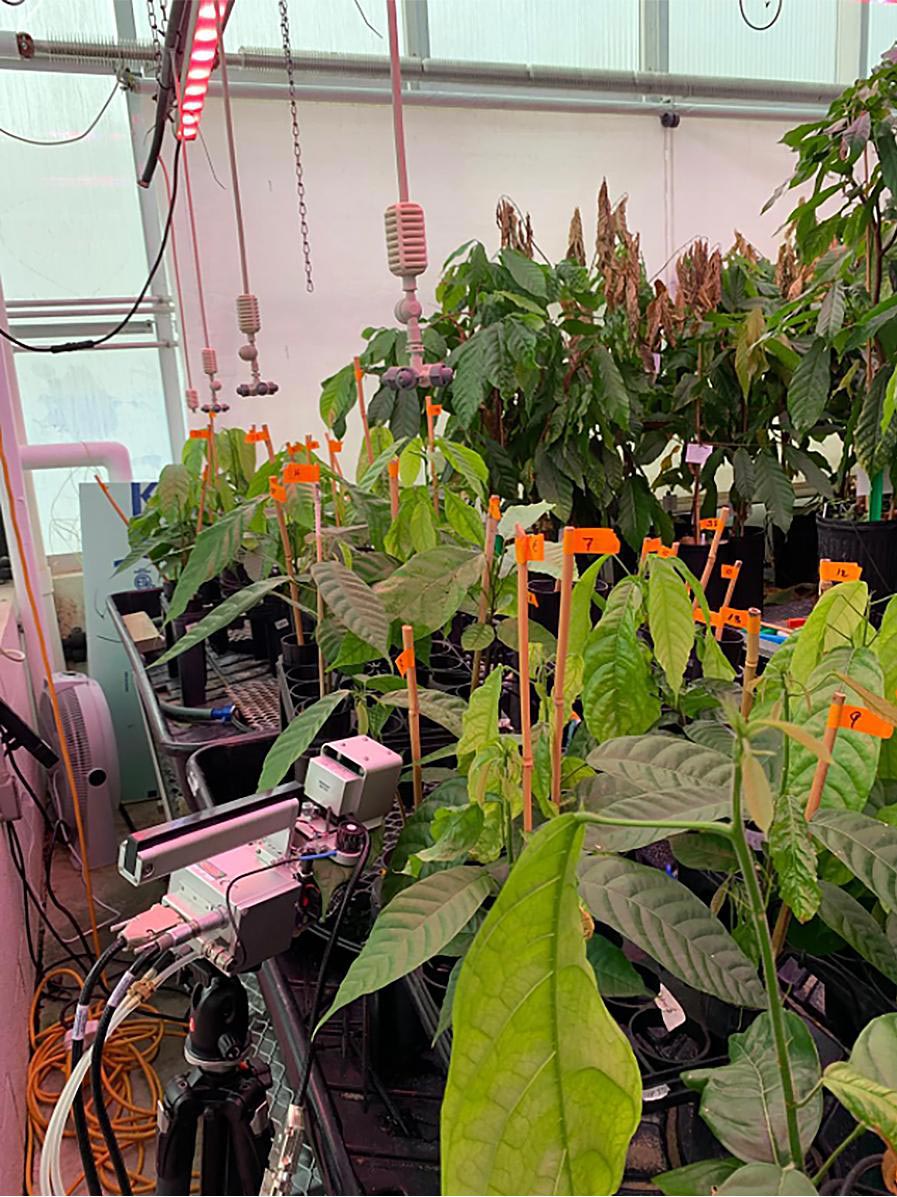 Young cacao trees growing in the experiment in one of Penn State’s plant science greenhouses. Credit: Francisco Menéndez-Burns / Penn State
Cacao’s rainforest origins leave it vulnerable
Cacao is particularly vulnerable to environmental changes because of where it evolved. Native to the Amazon rainforest, the species originally grew beneath the canopy of tropical forests, where surrounding trees helped create relatively stable conditions. Today, cacao is cultivated across tropical regions of Africa, Asia, and Latin America, often in environments quite different from its original habitat.
“Cacao evolved in a very stable rainforest environment,” Guiltinan said. “It’s a delicate plant in many ways. Changes in rainfall, temperature, and humidity can all affect production, and some of those changes can also increase disease pressure.”
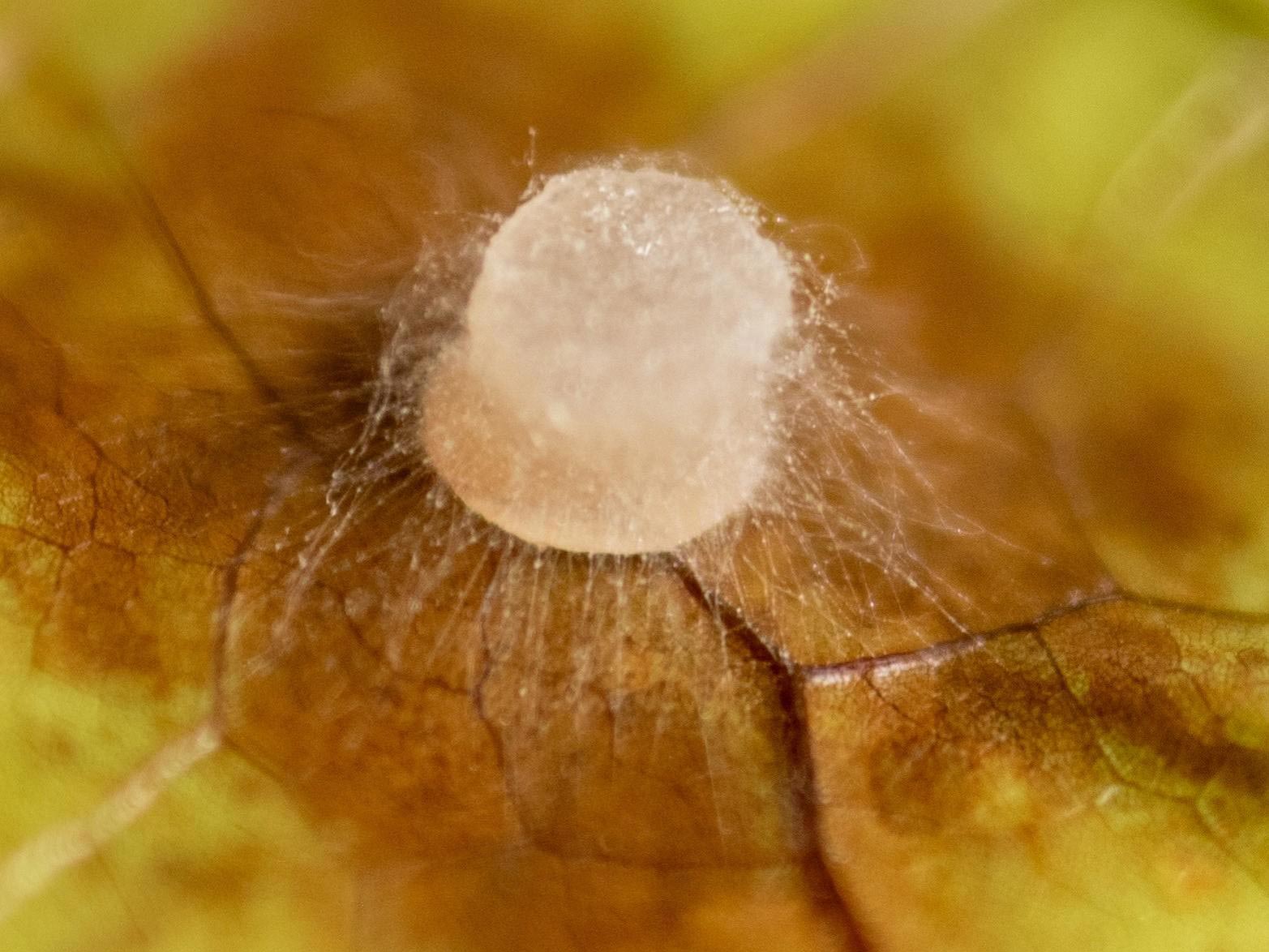 Mycelium of phytophthora palmivora, which can give rise to cacao black pod disease, grows from an agar plug, infecting a cacao leaf 48 hours after inoculation. Credit: Mark Guiltinan/Penn State
These environmental pressures are especially concerning because cacao trees cannot be improved quickly through traditional breeding. A tree takes roughly three years to mature and begin producing seeds, and developing and evaluating a new variety can take decades. Meanwhile, changing weather conditions, including increased humidity and variability, can create more favorable conditions for pathogens and insect pests.
“The climate is changing faster than these trees can naturally adapt,” Maximova said. “One of our goals is to develop tools that help breeders respond more quickly to those challenges.”
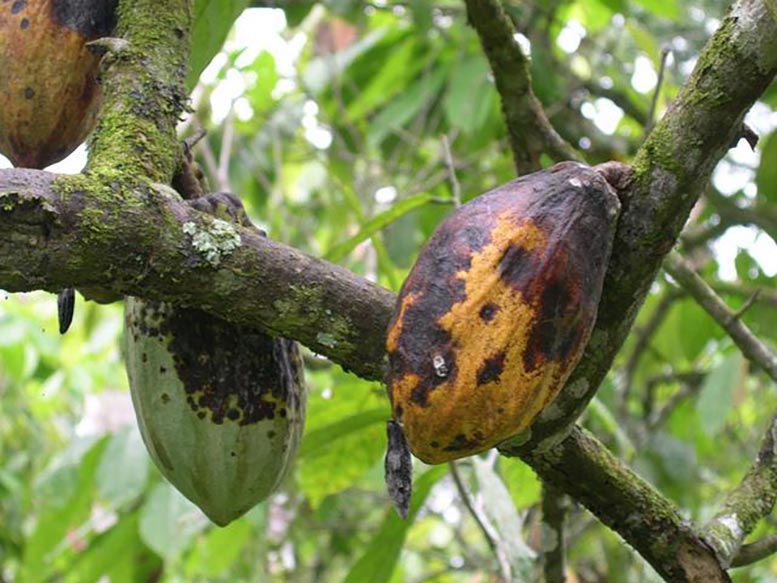 The fungal disease black pod rot, shown here in cacao seed pods, is a serious problem in all areas of the world where the crop is grown. Caused by the fungus Phytophthora, black pod rot causes pod losses of up to 30% and kills as many as 10% of the trees annually. Credit: PlantVillage, Penn State
A tiny DNA edit strengthens cacao’s defenses
In a study published in the Plant Biotechnology Journal, the team combined genome sequencing, CRISPR gene editing, and traditional crossbreeding to develop cacao plants with greater resistance to black pod disease. The disease is caused by a mold-like pathogen that attacks cacao plants and can severely reduce harvests.
The researchers targeted a gene called TcNPR3, which normally acts as a brake on the plant’s immune system. By changing this gene, they partially activated the cacao tree’s natural defense response, giving it greater protection against subsequent pathogen infections.
The genetic change was remarkably small. Rather than introducing a completely new defense system, the scientists adjusted one already present in the plant. After making the edit, they used traditional breeding to remove all transgenic material, including the foreign DNA associated with the gene-editing machinery. The resulting plants retained the beneficial change without carrying foreign DNA.
This distinction is important for how the plants are regulated. According to the researchers, the resulting cacao is no longer considered a genetically modified organism, or GMO, consistent with U.S. and European Union regulatory frameworks that treat certain gene-edited traits similarly to those produced through conventional breeding.
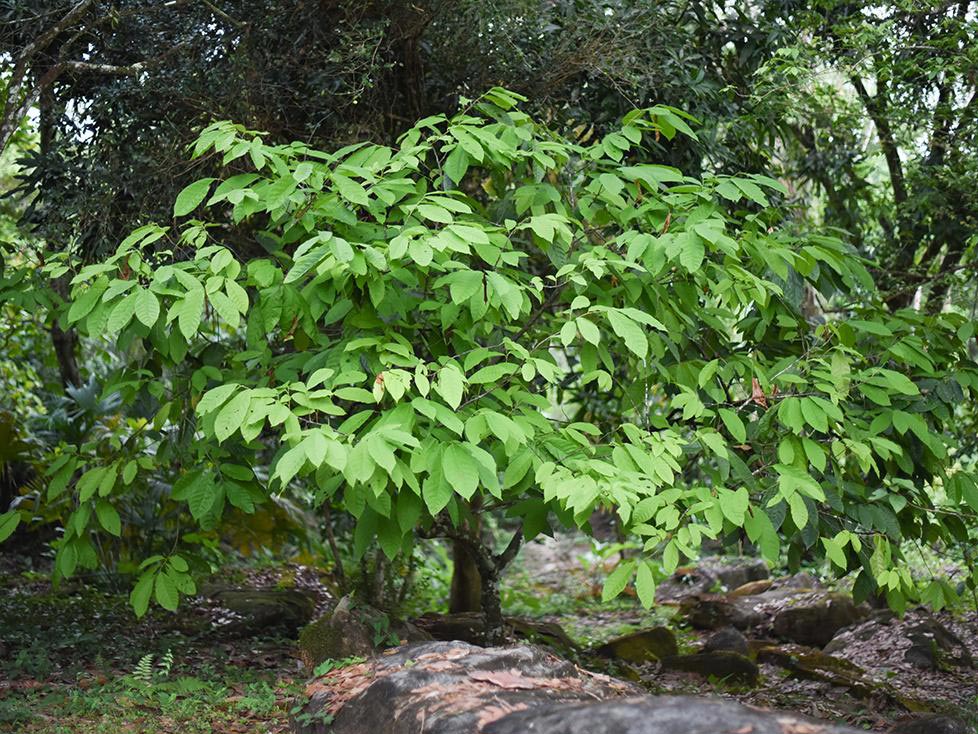 Native to the Amazon rainforest, cacao evolved as an understory tree growing beneath a tropical forest canopy. Credit: Mark Guiltinan/Penn State
“In one case, we only changed two bases in the entire genome of the plant,” Guiltinan said. “Out of roughly 450 million bases, that single change resulted in about a 42% reduction in disease under laboratory conditions.”
That result provides encouraging evidence that a small genetic adjustment can improve cacao’s disease defenses. However, laboratory conditions cannot fully reproduce the environmental challenges trees encounter on farms, and the researchers have not yet established whether the same protection will hold under commercial growing conditions.
Cacao’s disease defenses face field trials
Field evaluations are now underway through collaborations with the U.S. Department of Agriculture in Hawaii and Puerto Rico. These trials will help determine how the edited plants perform in actual growing environments before decisions are made about broader cultivation.
“These plants are specifically designed to improve disease resistance,” Maximova said. “The next step is proving performance in field trials. Scale-up and marketing will be the next challenges should the field testing prove encouraging. That’s where commercial partners can play an important role in helping move the technology forward.”
Penn State has recently entered into a licensing agreement with AgroNetica, a biotechnology company focused on cacao, to advance that process. The company has licensed the commercial rights to plants carrying the disease-tolerance mutation and plans to continue testing, expand production, and eventually market improved cacao varieties directly to growers in cacao-producing countries.
Turning a successful laboratory experiment into a crop that farmers can reliably grow requires considerably more than demonstrating that the genetic modification works. Plants must undergo additional testing, be produced in sufficient quantities, and reach growers through commercial distribution systems. Universities generally lack the resources needed to carry out that entire process.
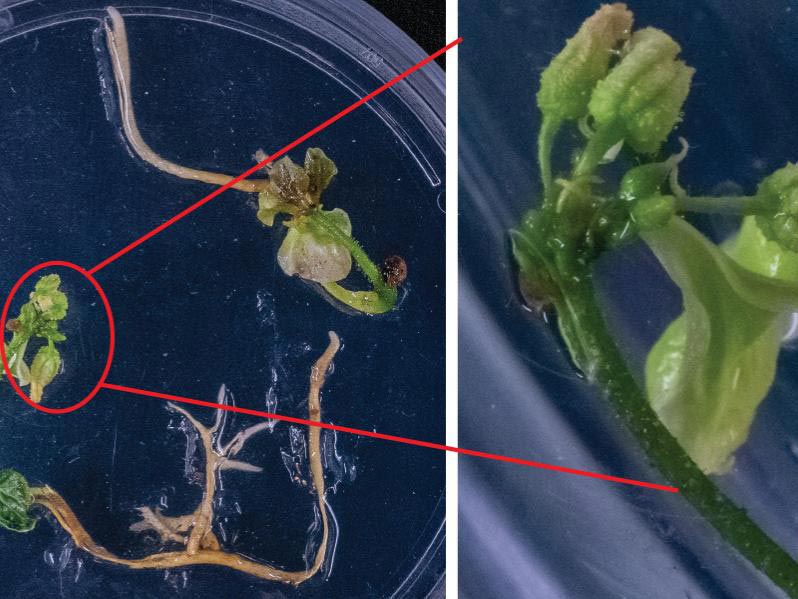 Embryonic cacao is shown developing tiny flowers in a tissue culture. Cacao trees typically don’t flower until they are between three and eight years of age. The team’s work to spur early flowering promises to greatly speed up breeding to develop disease-resistant trees. Credit: Mark Guiltinan/Penn State
“It takes millions of dollars and many years to bring a new crop variety to farmers,” Maximova said. “That’s why partnerships with companies willing to invest in development, testing and deployment are so important.”
The agreement also marks a milestone for Penn State’s Program in the Molecular Biology of Cocoa, which Guiltinan and Maximova co-direct. The program traces its origins to an industry-supported endowment established in the 1980s. Over the following decades, Penn State researchers developed foundational tools for cacao biotechnology, mapped important genetic pathways, and established one of the world’s leading cacao research programs.
Those advances created the scientific foundation for the current gene-editing work. They also demonstrate why maintaining a research program over many years can be necessary before discoveries become practical agricultural technologies.
“Thanks to this long-term investment in research and maintaining a sustained program, we now have an opportunity to begin getting technologies developed here in the lab closer to the hands of farmers,” Maximova said. “The focus was always on helping cacao farmers and the industry. We’re now at the place where we have a partner whose expertise is moving these discoveries into real-world use.”
Improving cacao beyond disease resistance
Disease resistance is only one of the traits that researchers and commercial developers hope to improve. AgroNetica also plans to introduce additional characteristics from its development pipeline, including greater tolerance to heat and drought, reduced cadmium accumulation, and more compact trees that could allow greater mechanization. Other goals include shortening the time before a tree’s first harvest and developing caffeine-free cacao varieties. These remain development objectives rather than demonstrated benefits of the newly licensed disease-tolerant plants.
Guiltinan and Maximova are continuing to investigate traits associated with climate resilience and crop productivity. They expect accelerated breeding and genome editing to play increasingly important roles in helping cacao growers respond to environmental pressures that may change throughout the lifetime of a tree.
“The diseases are changing. The climate is changing. The challenges growers face continue to evolve,” Maximova said. “This is not something you solve once, and then you’re finished. It’s an ongoing effort to develop better plants and provide growers with new options.”
For Guiltinan, the success of the research will ultimately depend on whether these advances translate into meaningful improvements for the people growing cacao.
“We’re trying to solve real problems for farmers,” he said. “If we can help growers reduce losses, improve productivity and adapt more quickly to changing conditions, then that’s the ultimate measure of success.”
Reference: “Reduced Susceptibility to Phytophthora in Non-Transgenic Cacao Progeny Through CRISPR–Cas9 Mediated TcNPR3 Mutagenesis” by Mark J. Guiltinan, Lena Landherr, Siela N. Maximova, Dante DelVecchio, Aswathy Sebastian and Istvan Albert, 9 September 2025, Plant Biotechnology Journal.
DOI: 10.1111/pbi.70365
Never miss a breakthrough: Join the SciTechDaily newsletter.
Follow us on Google and Google News.

























 English (US) ·
 French (CA) ·
 French (FR) ·