

PROTECT YOURSELF with Orgo-Life® QUANTUM TECHNOLOGY
Orgo-Life the new way to the future Advertising by Adpathway Photo by Beowulf Sheehan
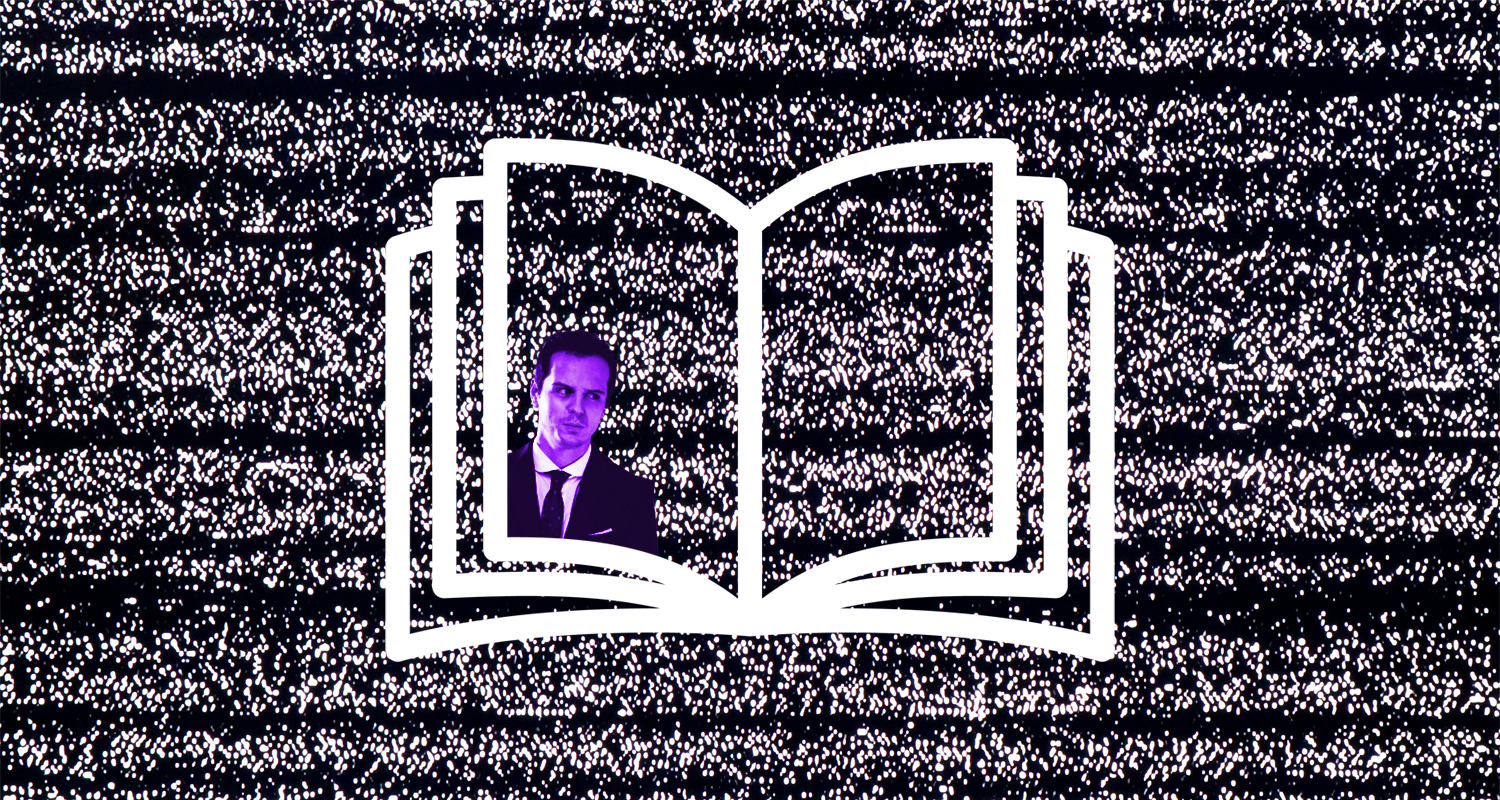
Bothayna Al-Essa accepted the Inside Literary Prize on September 3 in a ceremony at the New York Public Library for her novel The Book Censor’s Library (Restless Books, 2024). The novel, which was translated from the Arabic by Ranya Abdelrahman and Sawad Hussain and nominated for the National Book Award in Translated Literature that same year, is one of nearly a dozen Al-Essa has published in Arabic and one of three published in English. Al-Essa is also, like a character in the novel, a bookseller: in 2016 she founded the Kuwait bookshop and publisher Takween, where she has battled censorship firsthand.
The Inside Literary Prize—run by Freedom Reads, the National Book Foundation, the Center for Justice Innovation, and Interabang Books’ Lori Feathers—is judged entirely by incarcerated readers, who this year chose from a pool of five of last year’s National Book Award finalists, including Kaveh Akbar’s Martyr!, Linnea Axelsson’s Ædnan, Miranda July’s All Fours, and Hisham Matar’s My Friends.
Accepting the award, Al-Essa shared the following remarks.
«السلام عليكم.»
Peace be upon you.
First, I would like to thank the Center for Justice Innovation, the National Book Foundation, and Freedom Reads for creating such an extraordinary initiative—one that I believe should be replicated in every correctional institution in the world.
I would also like to express my deepest gratitude to the remarkable team at Restless Books, my publisher, and to both Sawad Hussain and Ranya Abdelrahman for their outstanding translation.
And to my fellow finalists—Kaveh Akbar, Linnea Axelsson, Miranda July, and my dear friend Hisham Matar: it was an honor for my book to sit beside yours in those reading rooms.
 When I first learned that The Book Censor’s Library was shortlisted for the Inside Literary Prize, I remembered the child in my story.
I had written about a little girl who displayed severe symptoms of imagination—a child who told stories she had never heard from anyone, about wolves and grandmothers, fairies, and the woods. She was a portal to a forbidden world where all the outlawed stories lived—the ones her government had deemed harmful to the public good. My child was a rebel.
She was placed in a rehabilitation center to treat her “illness”: a condition characterized by the ability to imagine a world where stories are read, heard, and truly felt. A world that is simply different—where goodness can still triumph over evil; where good and evil can still be named, and speaking of them is not dismissed as naïve.
That child’s desire to imagine another world is, at its core, a political stance—even when it comes from someone barely six years old.
And I like to think of my story—full of rabbits, fictional characters, inspectors, and banned books—as an attempt to defend our right to transform, as happened with my book censor, and with me personally.
The way I understand literature is very close to the way I understand politics: as the human desire for change; as the pursuit of freedom and justice for all; and as a continuous work of inclusion—bringing back in all those who have been marginalized, excluded, or silenced: those whose personal stories were confiscated and who are trying to reclaim them.
I am, first and foremost, a bookseller. And that work has taught me to see the book as an objective correlative of the human being—a measure of how civilized, and how humane, a society is. What is done to books—the banning, the burning, the seizing, by cold bureaucratic decisions—means that the human being itself is in danger, as it is today, in Gaza and elsewhere.
And so, what I want to say to the readers inside is: thank you.
What I saw in the video of the readers inside engaging with my novel filled my heart with warmth, and my eyes with tears. I felt, in a way that astonished me, that my novel had crossed not only the borders of language and geography but walls as well—to find a reader my own imagination had never dared to reach.
Of all the honors this book could receive, I cannot imagine one that means more than this. Because you, the judges of this prize—hundreds of readers in twelve prisons across six states—chose it freely. In rooms designed for punishment, you did the freest thing a person can do: you read, you argued, you formed your own judgment, and you declared it.
My novel is a dystopia—and as in every dystopia, the walls win. But you have defeated the walls. You have surpassed my imagination.
«شكرًا.»
Thank you.















 English (US) ·
 French (CA) ·
 French (FR) ·